
Besides the expertise in delivery system design and engineering, Creative Biolabs is also dedicated to the areas of LDD formulation for drug packaging and disease treatment by developing customized drug delivery systems with various advanced technology methods. With more than 10 years of experience in bio-conjugation chemistry, the science team at Creative Biolabs can provide customers all over the world with comprehensive services from design to the production.
Ultrasomes are one of the vesicular systems in which UV-endonuclease enzymes encapsulated in multilamellar liposomes. The endonuclease is from Micrococcus luteus. Endonucleases are a kind of enzymes that cleave the phosphodiester bond within a polynucleotide chain, such as deoxyribonuclease I, cut DNA relatively nonspecifically, while some restriction endonucleases or restriction enzymes, cleave only at very specific nucleotide sequences. However, UV damage endonuclease (UVDE) is a distinct DNA-repair enzyme that can recognize and incise different types of damaged DNA, it is a DNA endonuclease that not only recognizes and incises DNA 5’ to cyclobutane pyrimidine dimers (CPDs) and 6-4 photoproducts (6-4PPs), but also non-UV-induced DNA damage such as abasic sites, nicks and gaps. Thus, the natural DNA repair activity for humans is facilitated by of the UV-endonuclease enzymes in ultrasomes.
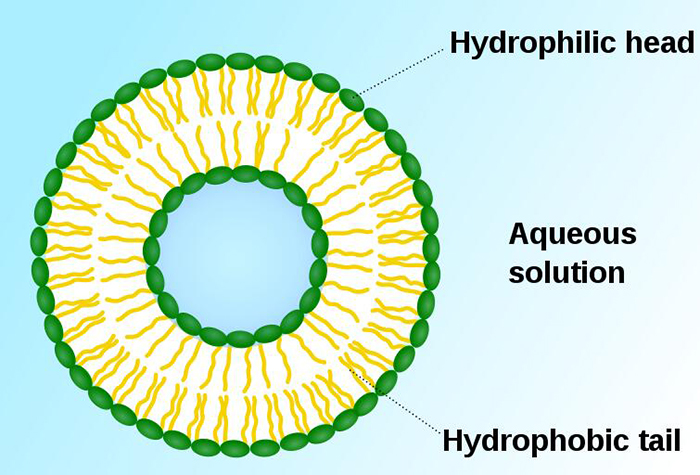 Fig.1 Liposomes.
Ultrasomes are specialized liposomes encapsulating a UV-endonuclease enzyme. Endonuclease recognizes ultra violet (UV) damage and is reported to increase the speed of repair by up to 4 times. Ultrasomes also involved in protecting the immune system by repairing UV-DNA damage and decreasing the expression of tumor necrosis factor (TNF-α), interleukins (IL-1, IL-6 and IL-8). Ultrasomes also can induce the production of melanin by melanocytes in the tanning response following UV exposure and are used in cosmeceuticals and anti-aging formulations. It has been shown a dose-dependent response in vitro detection. Currently, the liposomes (200 nanometers) are formed from pure and 100% natural egg phospholipids.
Ultrasomes is a translucent suspension with a pH of 7.0 - 8.0. Since light activation is not required, Ultrasomes can be used in nighttime skin care products. They are compatible with hydrogels, carbomers, emulsifiers, triethanolamine, dimethicone, sunscreens & sun blocks and phenoxyethanol; incompatible with anionic or ionic detergents and surfactants, 5% ethylene glycol, glycerin or alcohol. The preservative is 1% phenoxyethanol.
Creative Biolabs is one of the forward-looking antibody research institution and provider who leads the development of the era while offering the best service to the customers around the world. Creative Biolabs is pleased to provide high-quality ultrasomes-based drug delivery services to contribute to your project. Our drug delivery systems may help the administration of all kinds of drugs for our worldwide customers. If you are interested in our services, please feel free to contact us for more details and information.
 For Research Use Only. Not For Clinical Use
Supports
Online Inquiry

Creative Biolabs is a world-leading liposome provider with extensive experience in liposome preparation, custom formulation development, and characterization.

© 2026 Creative Biolabs. All rights reserved.