
Emulsion technology has been utilized extensively in the pharmaceutical industry. Pharmaceutical microemulsions have shown a great potential in drug delivery across transdermal or topical applications. Creative Biolabs is fully competent and dedicated to providing a series of liposome development platforms. In addition, we offer customized services of microemulsion for drug delivery. With years of experience and high-end technologies, we provide products and custom services to help you get a milestone development in your drug delivery project.
Microemulsions are transparent, thermodynamically stable dispersions of oil and water stabilized by emulsifiers. They have significantly different properties relative to nanoemulsions and macroemulsions. Microemulsion droplet sizes range from 10 to 100 nm in diameter. The definition of microemulsions is as a single-phase system which possesses a definite proportion of three constituents namely: oil, water and mixture of surfactant and co surfactant. Microemulsion system should There are four types of microemulsions: (i) Type I- biphasic with an upper excess oil phase and lower O/W emulsion, (ii) Type II- biphasic with an upper W/O emulsion and lower excess water phase, (iii) Type III- triphasic with upper excess oil phase, middle bicontinuous microemulsion and lower excess water phase, (iv) Type IV- monophasic, single microemulsion phase. Depending on the emulsifier used, microemulsions can transition between each type quite easily.
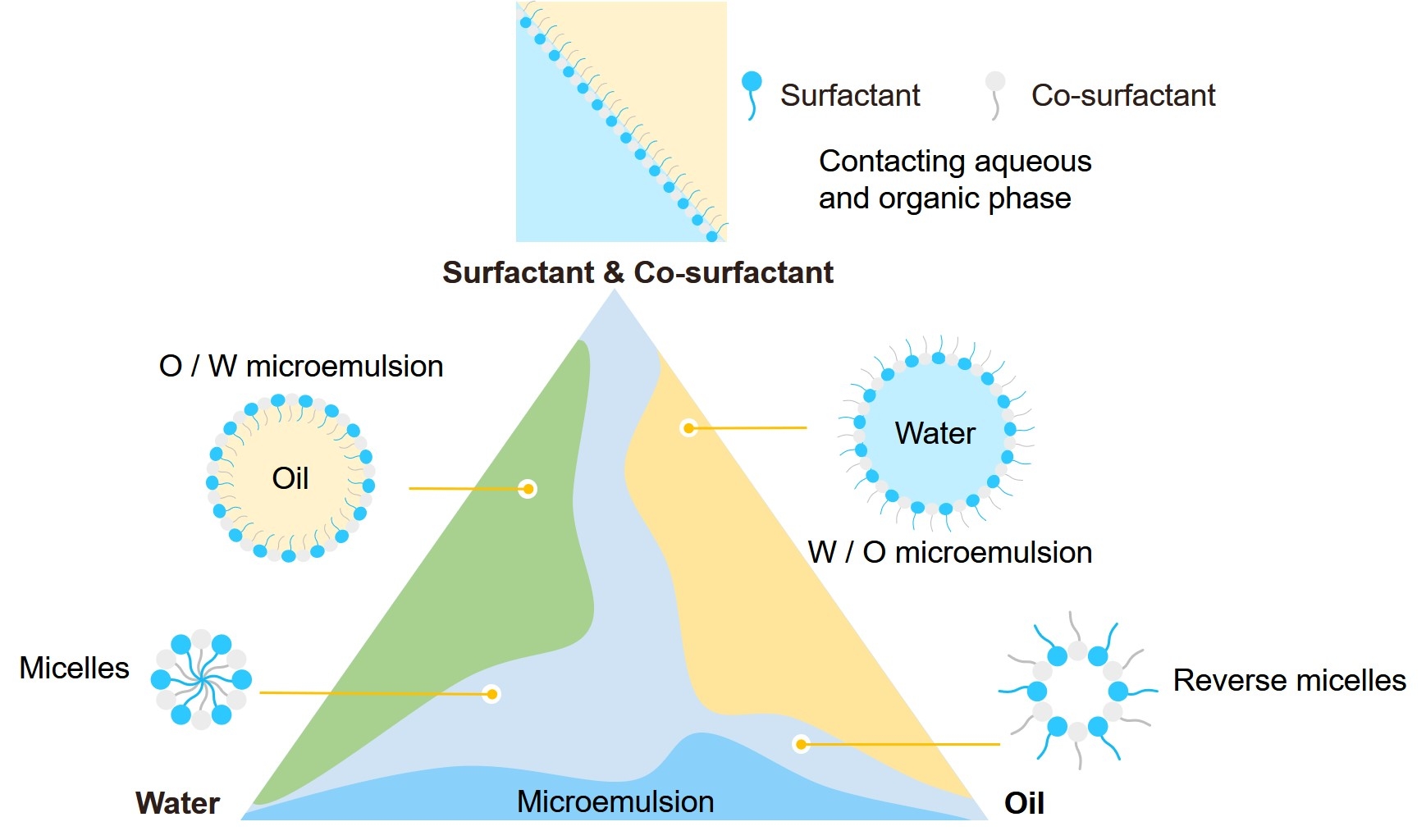 Fig.1 Phase diagram of a microemulsion system.
The microemulsion systems are a great pharmaceutical tool for the delivery of formulations containing multiple hydrophilic and hydrophobic ingredients of varying physicochemical properties. Microemulsions are uniquely equipped for drug delivery. These are the nano-structured systems acting as biocompatible vehicles for enhanced drug solubilisation, modulating drug permeation characteristics across skin. Being transparent and thermodynamically stabile system, microemulsions are formed spontaneously with relative ease of manufacture. Such system has better scaled up potential demonstrating their industrial feasibility as well. These nano-structured vehicles exhibited better solubilisation of drug, higher skin permeation of drug in comparison to conventional formulations when applied on skin. Enhanced drug solubilization, increased flux across skin, decrease in diffusion co-efficients are major attributes of microemulsion system owing to internal phase existed in nanosize droplet, ultralow interfacial tension with enhanced surface free energy.
Microemulsions possess a number of unique characteristics that render them suitable for drug delivery. They have been regarded as more effective topical vehicle than its conventional skin applications like cream and gel. Because of well-established platforms and experienced scientists, we can provide customized services of microemulsions and also provide more LDD formulations for drug delivery.
Relying on our professional team of experts, Creative Biolabs can provide excellent customized services of LDD that meets your unique needs. If you are interested in our services, please contact us for more details.
 For Research Use Only. Not For Clinical Use
Supports
Online Inquiry

Creative Biolabs is a world-leading liposome provider with extensive experience in liposome preparation, custom formulation development, and characterization.

© 2026 Creative Biolabs. All rights reserved.