
As a leader in the field of delivery system research and development, Creative Biolabs is committed to providing the most comprehensive liposome development services for our global clients. Creative Biolabs has accumulated abundant experience in the successful completion of many LDD-related projects. Now we provide emulsomes-based drug delivery services with the best quality and the most competitive prices to suit the exact requirements of our clients.
It is essential to choose an optimal method for drug administration. Thus, the improvement of dosage forms mainly for the prolonged release purpose has been a challenge for scientists. Vesicular drug delivery systems have been developed to overcome problems coupled with the drugs such a poor bioavailability, protection from harsh gastric environment, and from gastric enzymes, which degrade the drug. Emulsomes system is one of the vesicular drug delivery systems, which over throws many disadvantages associated with other systems, developed as a novel lipoidal vesicular system with internal solid fat core surrounded by a phospholipid bilayer. This technology is designed to serve as a vehicle for poorly soluble drugs. The drug is coated in the emulsomes and provides prolong the existence of drug in systemic circulation.
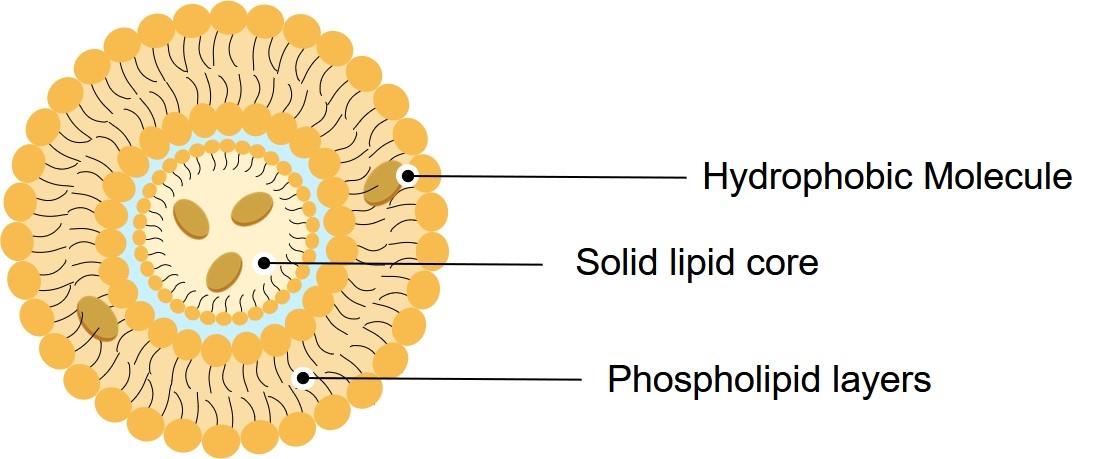 Fig.1 Structure of emulsomes.
The emulsome nanocarrier technology is a lipid-based drug delivery system designed to serve as a carrier for drugs with poor water solubility. Emulsomes as one kind of new dosage form belonging to target-oriented and sustained drug delivery system. Emulsomes are a new generation of colloidal carrier systems in which internal core is made of fats and triglycerides which is stabilized by high concentration of lecithin in the form of emulsion. Emulsomes harbor the characteristics of both liposomes and emulsions. Depending on the solidified or semi-solidified internal oily core, it confers a better opportunity to load lipophilic drugs in high concentration, and simultaneously a protracted controlled release can also be achieved and can encapsulate water-soluble medicaments in the aqueous compartments of surrounding phospholipids layers.
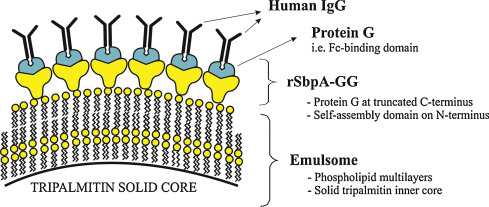 Fig.2 Schematic drawing illustrating the immobilization of HIgG on rSbpA-GG coated emulsomes.1,2
The solvent-free and surfactant-free emulsome technology has demonstrated a high drug-encapsulation capacity for water-insoluble antifungal and anticancer drugs showing enhanced drug delivery and improved preclinical efficacy for parenteral routes. One of the successful applications of the technology is the development of an injectable ready-to-use emulsome-based formulation for the antifungal agent amphotericin B. Moreover, emulsomal-based formulations of genetic drugs such as antisense oligonucleotides and plasmids for gene therapy that have clear potential for systemic utility are increasingly available. Emulsomes have superior bioavailability, reduced toxicity and improved pharmacological activity.
Creative Biolabs has devoted to the development drug delivery system discovery for a long term. Now we provide emulsomes-based drug delivery services for customers all over the world. To date, we have finished a number of projects based on our extensive experience, so we are confident in offering the best services and products for our customers all over the world. If you are interested in our service, please do not hesitate to contact us for more details.
References
 For Research Use Only. Not For Clinical Use
Supports
Online Inquiry

Creative Biolabs is a world-leading liposome provider with extensive experience in liposome preparation, custom formulation development, and characterization.

© 2026 Creative Biolabs. All rights reserved.