
Creative Biolabs is offering the most comprehensive services for antibody development projects. With strict regulation and effective execution, we are dedicated to providing the most valuable solutions to complete your projects.
HighlightsCreative Biolabs is offering the most comprehensive services for antibody development projects. With strict regulation and effective execution, we are dedicated to providing the most valuable solutions to complete your projects.
HighlightsCreative Biolabs has established a broad range of platforms for developing novel antibodies or equivalents. These cutting-edge technologies enable our scientists to meet your demands from different aspects and tailor the most appropriate solution that contributes to the success of your projects.
HighlightsWith deep understanding in antibody-related realms and extensive project experience, Creative Biolabs offers a variety of references to help you learn more about our capacities and achievements, including infographic, flyer, case study, peer-reviewed publications, and all kinds of knowledge that can assist your projects. You are also welcome to contact us directly for more specific solutions.
HighlightsGet a real taste of Creative Biolabs, one of the most professional custom service providers in the world. We are committed to providing highly customized comprehensive solutions with the best quality to advance your projects.
HighlightsPhage display technology has revolutionized molecular biology, providing an efficient means to display peptides and proteins on the surface of bacteriophages. This technique is instrumental in drug discovery, vaccine development, and protein interaction studies.
Key elements of phage display:
Phage display vectors consist of several essential elements that govern their functionality and efficiency.
The structural design of phage display vectors is crucial in determining display efficiency, genetic stability, and ease of selection. The choice between phagemid vectors and full phage vectors depends on factors such as the size of the displayed protein, desired display format (monovalent or multivalent), and application-specific requirements.
Phagemids are engineered plasmid-phage hybrid vectors that encode fusion proteins for display but lack genes for phage assembly and packaging. They require a helper phage to provide missing phage components.
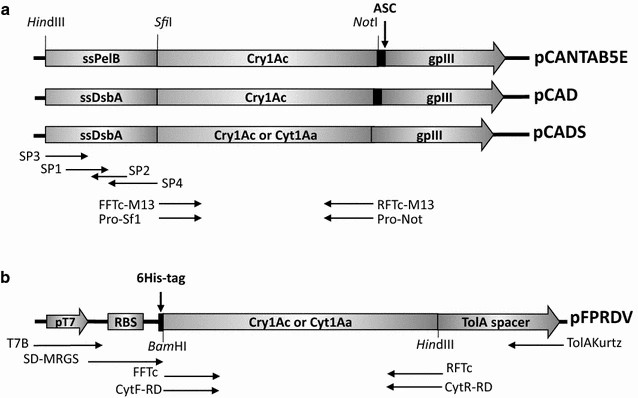 Fig.1 Schematic representation of the phagemid constructs for phage display.1, 3
Advantages of phagemids:
Disadvantages of phagemids:
Helper phage mechanism:
When a phagemid vector is introduced into a bacterial host (e.g., E. coli), it does not form infectious phage particles on its own. A helper phage is required, providing essential phage structural proteins while allowing the phagemid-encoded fusion protein to be incorporated into a subset of the phage particles.
Process:
Phage vectors carry all necessary genes for phage assembly, allowing self-sufficient replication and packaging without the need for helper phage.
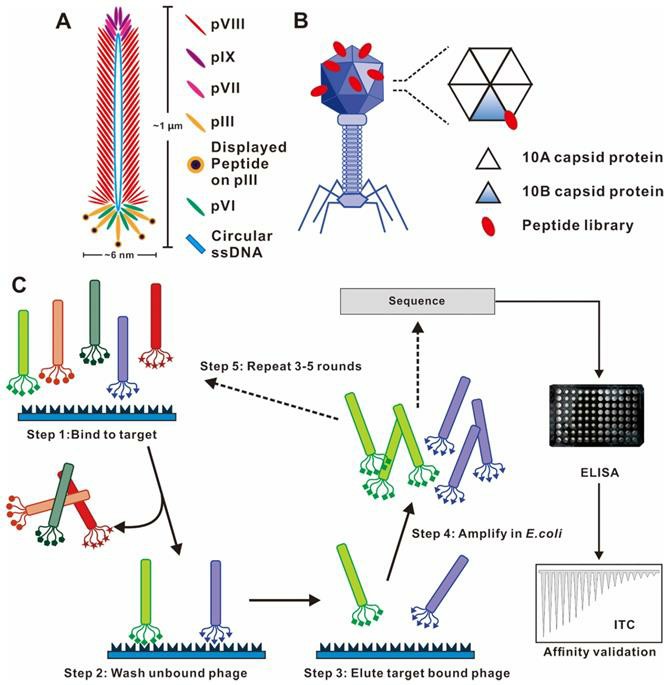 Fig. 2 Phage vector structures and the general biopanning procedure.2, 3
Advantages of phage vectors:
Disadvantages of phage vectors:
| Feature | Phagemid Vector | Phage Vector |
| Genome Type | Hybrid plasmid-phage vector | Single-stranded phage genome |
| Replication Mechanism | Requires a helper phage for packaging | Self-replicating |
| Display Type | Monovalent (single copy per phage) | Multivalent (high-density display) |
| Fusion Protein Site | Primarily pIII, sometimes pVII/pVIII | Primarily pIII (monovalent) or pVIII (multivalent) |
| Advantages | High stability, supports larger proteins (scFv/Fab) | No need for helper phage, efficient propagation |
| Disadvantages | Requires helper phage for amplification | Less stable with large insertions |
| Common Applications | Antibody display, library screening | Peptide display, epitope mapping |
Filamentous phage vectors primarily use M13 phage, which allows versatile display formats based on different coat proteins. While M13-based filamentous phages dominate phage display, T7 and λ phage systems offer alternative advantages.
Key features of phage display vectors:
| Vector Type | Replication | Display Copy Number | Common Use |
| Phagemid | Needs helper phage | Low (monovalent) | Antibody screening (scFv, Fab) |
| Filamentous Phage (M13) | Self-replicating | High (multivalent) | Peptide library screening |
| T7 Phage | Lytic cycle | High | cDNA library screening |
| λ Phage | Cre-loxP recombination | Multi-copy | Vaccine development |
The regulation of foreign gene expression in phage display vectors is critical to prevent toxic effects of overexpression, which can reduce bacterial host viability and compromise display efficiency.
| Promoter | Induction Mechanism | Advantages | Applications |
| lac promoter (Plac) | IPTG induction | Simple, widely used | General peptide/protein display |
| arabinose promoter (PBAD) | Arabinose induction | Tight control, prevents toxicity | Display of toxic proteins (e.g., enzymes, receptors) |
| tetracycline promoter (Ptet) | Tetracycline induction | Gradual induction, ideal for large insertions | Large antibody fragment display |
Key benefits of regulated expression:
To improve library screening and selection efficiency, toxic selection markers are used.
| Suicide Gene | Mechanism | Advantages |
| ccdB | Inhibits DNA gyrase → kills non-recombinant bacteria | Effective negative selection, high accuracy |
| SacB/SacBR | Converts sucrose → toxic product in E. coli | High-efficiency selection in diverse bacterial strains |
Optimization strategy: ccdB → SacBR
To facilitate affinity purification and downstream analysis, phage display vectors incorporate multiple tag systems.
| Tag Type | Function | Common Usage |
| His-tag (6×His) | Nickel affinity purification | Used in protein purification |
| HA-tag | Immunodetection (Western blot) | Screening of displayed proteins |
| FLAG-tag | Epitope-based detection | High-specificity affinity chromatography |
Multi-tag benefits:
Glycine-rich flexible linkers prevent proteolytic degradation of displayed peptides.
| Linker Type | Sequence Example | Key Features |
| Flexible Linker | (GGGGS)n | Prevents steric hindrance, enhances folding |
| Rigid Linker | (EAAAK)n | Provides structural stability |
| Cleavable Linker | (LVPRGS) | Factor Xa cleavage site for protein release |
Applications:
In phagemid vectors, amber stop codons (TAG) can interfere with full-length protein expression, especially in strains lacking amber suppression.
Removal of the amber stop codon: Enables higher display levels in diverse bacterial hosts.
Learn more about Creative Biolabs phage display services:
All listed services and products are For Research Use Only. Do Not use in any diagnostic or therapeutic applications.








