Creative Biolabs is offering the most comprehensive services for antibody development projects. With strict regulation and effective execution, we are dedicated to providing the most valuable solutions to complete your projects.
HighlightsCreative Biolabs is offering the most comprehensive services for antibody development projects. With strict regulation and effective execution, we are dedicated to providing the most valuable solutions to complete your projects.
HighlightsCreative Biolabs has established a broad range of platforms for developing novel antibodies or equivalents. These cutting-edge technologies enable our scientists to meet your demands from different aspects and tailor the most appropriate solution that contributes to the success of your projects.
HighlightsWith deep understanding in antibody-related realms and extensive project experience, Creative Biolabs offers a variety of references to help you learn more about our capacities and achievements, including infographic, flyer, case study, peer-reviewed publications, and all kinds of knowledge that can assist your projects. You are also welcome to contact us directly for more specific solutions.
HighlightsGet a real taste of Creative Biolabs, one of the most professional custom service providers in the world. We are committed to providing highly customized comprehensive solutions with the best quality to advance your projects.
HighlightsThe 2018 Nobel Prize in Chemistry recognized the achievements of Frances H. Arnold alongside George P. Smith and Sir Gregory P. Winter for their revolutionary advancements in protein directed evolution. The Nobel Prize recognized Arnold for her achievements in enzyme evolution and Smith together with Winter for their creation and use of the phage display method which transformed protein engineering and therapeutic antibody development.
Phage display and directed evolution are now fundamental tools in biotechnology, drug discovery, and molecular biology. These methodologies have empowered the industry to:
Phage display is a molecular technique in which foreign peptides or proteins are genetically fused to coat proteins of bacteriophages—typically M13 filamentous phage—so that the encoded proteins are displayed on the phage surface, allowing genotype–phenotype linkage.
Phage display involves:
| Year | Milestone | Contributor |
| 1985 | Invention of phage display of peptides | George P. Smith |
| 1990s | Phage display applied to antibody engineering | Sir Gregory P. Winter |
| 2002 | FDA approval of first phage display-derived antibody | |
| 2018 | Nobel Prize awarded for these contributions | Smith & Winter |
Three researchers who transformed biological molecule manipulation received the 2018 Nobel Prize in Chemistry. Scientists working together on phage display and directed evolution have driven groundbreaking improvements in therapeutic development and protein engineering.
Professor Emeritus George P. Smith from the University of Missouri established the basis for phage display technology in 1985. Smith created a method to display peptides or proteins on M13 bacteriophage surfaces by inserting foreign genes into their genome and fusing them with coat protein pIII. The method established a direct physical connection between genotype and phenotype which allowed researchers to examine billions of phage variants for molecular binding specificity through high-throughput screening.
Smith's invention established a platform technology applicable across various proteins to enhance their binding affinity and functionality and specificity. Biopanning and in vitro selection emerged as foundational techniques within modern protein engineering from this concept.
Sir Gregory P. Winter used Smith's discovery to create a clinical discovery engine with phage display through antibody directed evolution at the MRC Laboratory of Molecular Biology in Cambridge, UK. Winter created techniques to build antibody libraries in phage genomes which allowed for the selection of those that showed specific and strong binding to disease-related antigens. He pioneered techniques to create fully human monoclonal antibodies through complete in vitro selection and optimization processes which eliminated animal immunization requirements.
Key contributions include:
Winter's advancements transformed antibody therapeutics into widely-used medical treatments by introducing a new category of biologic drugs with higher safety and efficacy and improved specificity.
Although not directly tied to phage display, Frances H. Arnold of the California Institute of Technology received the other half of the Nobel Prize for her seminal contributions to the directed evolution of enzymes. Arnold developed a robust method to evolve enzymes for novel or improved functions by:
This technique revolutionized green chemistry, industrial biocatalysis, and biosynthetic engineering. It shares conceptual and technical parallels with phage display, as both rely on iterative cycles of diversity generation and selection.
Applications of her work include:
Table 1. Summary of Contributions
| Laureate | Field | Core Contribution | Impact |
| George P. Smith | Molecular Biology | Invented phage display of peptides on bacteriophage surfaces | Enabled display-based selection and directed evolution of proteins |
| Sir Gregory P. Winter | Antibody Engineering | Applied phage display to human antibody discovery and evolution | Created first fully human antibody drugs and revolutionized biologics |
| Frances H. Arnold | Enzyme Engineering | Developed directed evolution for enzyme improvement | Engineered enzymes for sustainable industry and complex biocatalysis |
Phage display is now the gold standard for:
Phage display libraries enable:
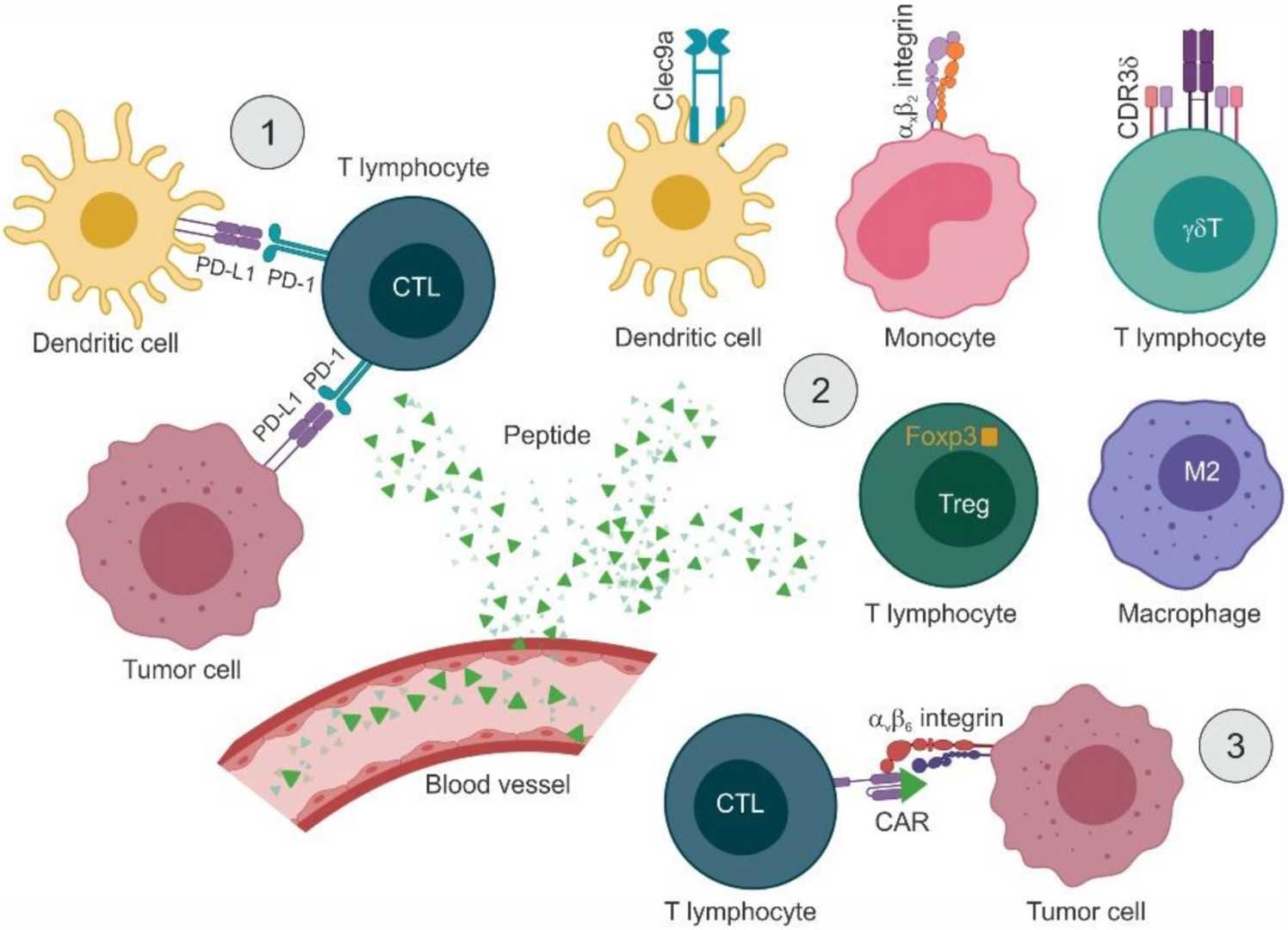 Fig. 1 Phage display-derived peptides as nanomodulators of the immune response.1
Table 2. How Phage Display Revolutionized Drug Discovery
| Area | Impact |
| Antibody Therapeutics | >100 drugs in clinical trials |
| Enzyme Engineering | Improved biocatalysts |
| Personalized Medicine | Rapid antibody generation for patient-specific antigens |
| Synthetic Biology | Modular protein design |
The Nobel Prize of 2018 recognized a technology that initiated a fundamental change in molecular biology. The continuous development of phage display and directed evolution extends the boundaries of targeted therapeutics, synthetic biology and biologic drug discovery. Creative Biolabs stands at the forefront of this legacy through our provision of custom solutions that connect advanced scientific research with large-scale industrial applications.
Learn more about Creative Biolabs custom phage display services and premade phage display library licensing services:
All listed services and products are For Research Use Only. Do Not use in any diagnostic or therapeutic applications.