Creative Biolabs is offering the most comprehensive services for antibody development projects. With strict regulation and effective execution, we are dedicated to providing the most valuable solutions to complete your projects.
HighlightsCreative Biolabs is offering the most comprehensive services for antibody development projects. With strict regulation and effective execution, we are dedicated to providing the most valuable solutions to complete your projects.
HighlightsCreative Biolabs has established a broad range of platforms for developing novel antibodies or equivalents. These cutting-edge technologies enable our scientists to meet your demands from different aspects and tailor the most appropriate solution that contributes to the success of your projects.
HighlightsWith deep understanding in antibody-related realms and extensive project experience, Creative Biolabs offers a variety of references to help you learn more about our capacities and achievements, including infographic, flyer, case study, peer-reviewed publications, and all kinds of knowledge that can assist your projects. You are also welcome to contact us directly for more specific solutions.
HighlightsGet a real taste of Creative Biolabs, one of the most professional custom service providers in the world. We are committed to providing highly customized comprehensive solutions with the best quality to advance your projects.
HighlightsNaïve phage display libraries feature a diverse collection of antibody fragments displayed on bacteriophage surfaces which originate from the untouched B-cell repertoire of healthy individuals. Researchers utilize these libraries as vital in vitro platforms to find high-affinity antibodies targeting different antigens without needing prior immunization or host immune response activation.
The construction of a naïve phage display library follows a multi-step molecular cloning process:
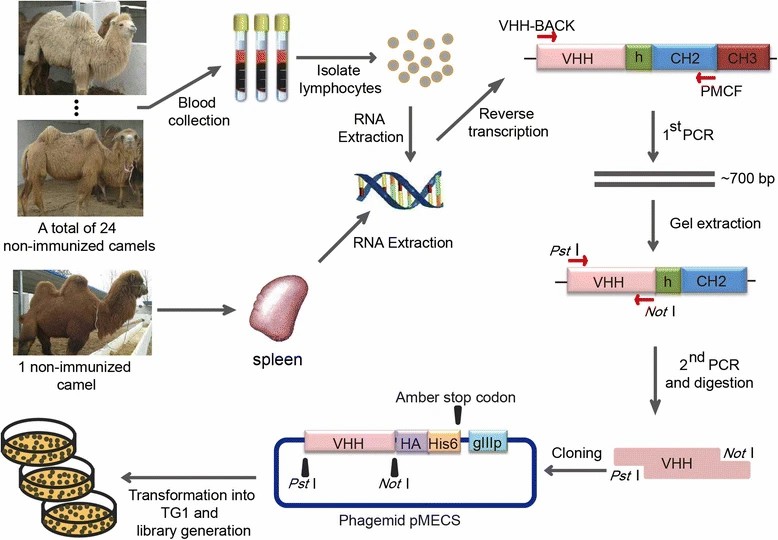 Fig.1 Scheme of strategy to construct the naïve library.1
The screening and selection of antibodies from naïve phage display libraries involve biopanning, a process that enriches phage clones displaying high-affinity antibodies against specific target antigens. This iterative selection process ensures the identification of strong binders with potential therapeutic, diagnostic, or research applications.
After biopanning, high-affinity binders need to be characterized and validated to confirm their specificity and binding strength.
| Screening Method | Description |
| Phage ELISA | Individual clones are tested for antigen binding in an ELISA format. |
| Surface Plasmon Resonance (SPR) | Measures real-time binding kinetics and affinity (Kd). |
| Bio-Layer Interferometry (BLI) | Label-free measurement of binding interactions. |
| Flow Cytometry | Used for cell-based antigen recognition assays. |
| Affinity Maturation | Optimization of high-affinity clones using mutagenesis. |
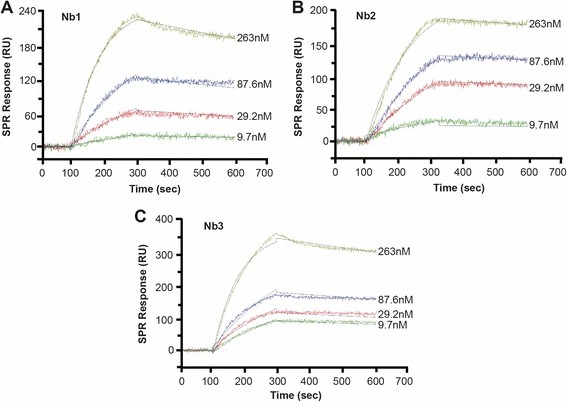 Fig. 2 SPRi binding assay.1
Target: PD-L1 functions as an immune checkpoint protein which cancer cells exploit to evade immune detection.
Strategy: Researchers used a human naïve Fab phage display library to screen for binders to immobilized PD-L1. High-affinity clones were identified after completing four biopanning rounds. The lead antibody underwent conversion to full-length IgG followed by evaluation in tumor suppression assays.
Outcome: This antibody demonstrated exceptional specificity alongside affinity which positions it as a promising checkpoint inhibitor.
Target: SARS-CoV-2 spike protein receptor-binding domain (RBD).
Strategy: The screening process was conducted on a naïve human Fab library with 1011 diversity. The biopanning technique on immobilized RBD protein resulted in the identification of strong binders after three rounds of selection. SPR and ELISA assays validated the presence of antibodies with nanomolar affinity that possess neutralizing capabilities.
Outcome: The discovery of multiple antibodies with powerful virus-neutralizing capabilities initiated fast-paced therapeutic development.
Target: CXCR2 functions as a G-protein-coupled receptor (GPCR) which plays a role in inflammation and cancer development.
Challenges: The complex membrane topology of GPCRs makes them challenging targets for drug development. The hybridoma method used in traditional antibody discovery does not produce effective binders.
Strategy: Whole cells expressing CXCR2 were employed in the cell-based biopanning process. Flow cytometry-based selection procedures were used to screen a VHH library.
Outcome: Researchers discovered high-affinity sdAbs that block CXCR2 which provides new paths toward creating anti-inflammatory medications.
| Feature | Benefit |
| Broad Applicability | Suitable for targeting multiple antigens, including those that are difficult to immunize against (e.g., self-antigens, toxic molecules, and membrane proteins). |
| No Need for Immunization | Eliminates the requirement for animal models, making the process faster and more ethical. |
| Fully Human Antibodies | Reduces the need for humanization, lowering the risk of immunogenic responses. |
| Large Library Diversity | Ensures access to a wide range of potential binders, improving the success rate of antibody discovery. |
| In Vitro Evolution Capabilities | Affinity maturation and optimization can be performed using mutagenesis techniques. |
| Library Type | Source | Affinity | Applications |
| Naïve Library | Non-immunized donors | Moderate (requires maturation) | Broad-range target screening |
| Immune Library | Immunized donors | High | Specific antigen-targeting antibodies |
| Synthetic Library | Designed in silico | Highly customizable | Engineered for stability and affinity |
| Semi-Synthetic Library | Partially engineered sequences | Optimized for diversity and affinity | Drug discovery and diagnostics |
Naïve phage display libraries have revolutionized antibody discovery, offering a powerful platform for developing therapeutic, diagnostic, and research-grade antibodies without the need for prior immunization. The broad diversity and fully human antibody repertoire of naïve libraries make them invaluable for targeting diverse antigens, including pathogens, cancer markers, immune checkpoint proteins, and membrane receptors.
Naïve antibody libraries provide a fully human-derived pool of binders, which is highly beneficial for therapeutic applications. Compared to conventional hybridoma-based approaches, phage display offers:
Phage display-derived antibodies are widely used in companion diagnostics, where they serve as biomarkers to identify patients likely to respond to specific treatments, such as HER2-targeting antibodies in breast cancer diagnostics and PD-L1-specific antibodies for identifying responders to immune checkpoint inhibitors.
Checkpoint Inhibitors: Antibodies against PD-1, PD-L1, and CTLA-4 enhance T-cell immune response against tumors.
Bispecific Antibodies (BsAbs): Engage both tumor cells and immune cells, directing cytotoxicity.
Antibody-Drug Conjugates (ADCs): Tumor-targeting antibodies linked to cytotoxic drugs selectively kill cancer cells.
Antibodies from naïve libraries can be used to map interaction sites between proteins.
Example: Antibodies targeting p53-MDM2 interaction have been used to develop cancer therapeutics.
Antibodies aid in protein crystallization for X-ray crystallography studies.
Example: Anti-GPCR antibodies help stabilize membrane proteins for drug screening studies.
Phage display-derived antibodies serve as tools for identifying new regulatory proteins in pathways such as: Wnt signaling (β-catenin inhibitors), MAPK pathway (ERK phosphorylation blockers), and NF-κB activation modulators.
| Pathogen | Target | Phage-Derived Antibody Application |
| SARS-CoV-2 | Spike protein (RBD) | Neutralizing antibody therapies |
| HIV | gp120 | Broadly neutralizing antibodies for HIV vaccine development |
| Ebola virus | Glycoprotein | Antibodies for Ebola virus treatment |
| Influenza | HA, NA | Antibodies for universal flu vaccines |
Naïve phage display libraries serve as a powerful tool for antibody discovery, enabling rapid and efficient selection of high-affinity binders for therapeutic, diagnostic, and research applications. Creative Biolabs leads in cutting-edge naïve phage display library services. Contact us to leverage our expertise in custom antibody discovery solutions!
Learn more about Creative Biolabs phage display services:
All listed services and products are For Research Use Only. Do Not use in any diagnostic or therapeutic applications.