Creative Biolabs' Custom mRNA based Induced Pluripotent Stem Cell (iPSC) Reprogramming Service delivers synthetic modified transcripts encoding pluripotency factors via optimized cap structure synthesis and LNP-mediated delivery, enabling non-integrative reprogramming of somatic cells into footprint-free iPSCs. This method avoids oncogenic risks and innate immune activation. As a full bench-to-clinic solution, we provide fully characterized clinical-grade iPSC lines ideal for differentiation, disease modeling, and next-generation cell therapies.
Discover How We Can Help - Request a Consultation
The mRNA molecules used for iPSC reprogramming are primarily those encoding classic reprogramming transcription factors. These in vitro-transcribed mRNA molecules are delivered into somatic cells, where they transiently express the corresponding proteins to initiate the reprogramming process. Compared with DNA vectors or viral systems, mRNA carries no risk of genomic integration, ensuring higher safety and faster onset of protein expression. Below are the common types of reprogramming mRNA:
This is the essential foundational cocktail, corresponding to the Yamanaka factors, including:
These are used to replace c-Myc or enhance reprogramming outcomes while reducing safety risks, with common examples including:
Non-essential but capable of further optimizing reprogramming efficiency and cell quality, including:
In addition, to enhance the intracellular stability and translation efficiency of mRNA, modifications are applied to these molecules in practical applications. For instance, uridine is replaced with pseudouridine (ψ) or 5-methylcytidine (m5C), reducing the likelihood of degradation via the cell's innate immune recognition pathways.
At Creative Biolabs, we go beyond standard protocols to offer a high-performance, industrial-grade platform for Custom mRNA based Induced Pluripotent Stem Cell (iPSC) Reprogramming Service. Our infrastructure is designed to bridge the gap between small-scale research and large-scale clinical manufacturing.
We provide bespoke reprogramming factor cocktails tailored to your specific cell type, including the integration of tissue-specific enhancers or custom transcription factors.
Advanced lipid nanoparticle delivery systems optimized for various scales, ensuring uniform transfection even in high-density cultures.
A well-established quality system following Quality-by-Design (QbD) principles and GMP-certified processes for all downstream iPSC expansion.
Full traceability of all raw materials and reagents, with documentation assessed and approved by our internal quality assurance service to meet regulatory standards.
Experience the Creative Biolabs Advantage - Get a Quote Today
Some studies used synthetic RNA to induce peripheral blood mononuclear cells (PBMC) to generate iPSCs. Among them, p53 R175H slightly increased the number of clones, MDM4 mRNA significantly improved the reprogramming efficiency, and the MDM4-S367A mutant produced the most positive clones of TRA 1-60. It is particularly suitable for low-efficiency reprogramming of PBMC batches. The iPSCs derived from PBMC have normal morphology, karyotype, and gene expression, and can further differentiate into corneal epithelial-like cells, with the ability to generate clinically relevant somatic cells.
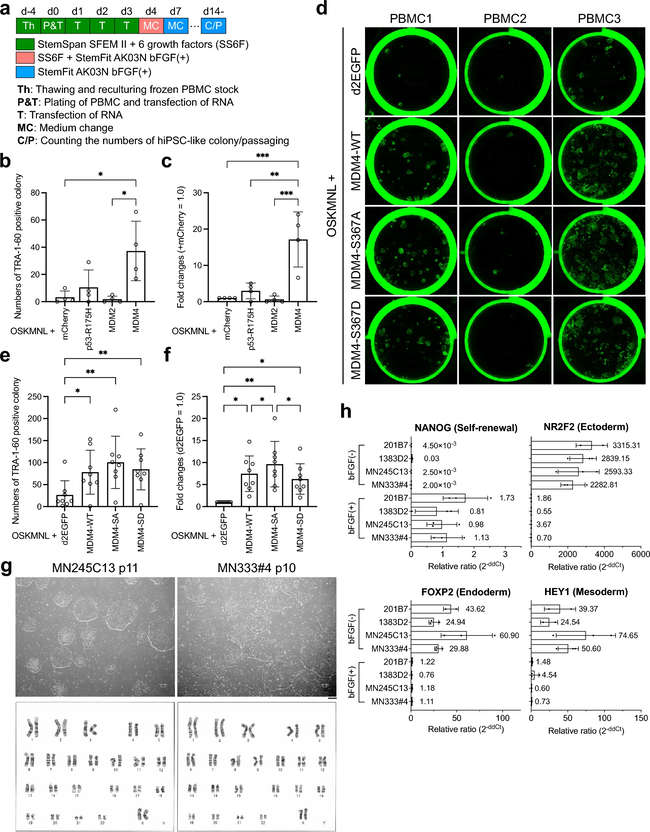 Fig.1 Some studies have used synthetic RNA to induce peripheral blood mononuclear cells (PBMC) to generate iPSCs and detected their morphology and further differentiation potential.1
A: While highly efficient for standard fibroblasts and PBMCs, more challenging starting materials, such as highly senescent cells, endothelial cells, or specialized primary tissues, may require nuanced protocol optimization. At Creative Biolabs, our experts specialize in tailoring the delivery regime, whether through optimized Lipid Nanoparticle (LNP) concentrations or advanced electroporation parameters, to match the unique membrane properties and metabolic states of your specific cell lines.
A: We address this by utilizing 100% replacement of uridine and cytidine with modified nucleosides, specifically pseudouridine and 5-methylcytidine. When combined with our technology that produces mRNA with a natural Cap2 structure, the resulting transcripts are virtually indistinguishable from endogenous mRNA. This ensures that the cell's RNA sensors, such as RIG-I and PKR, are not triggered, preventing the inflammatory cytokine storm that typically causes cytotoxicity in conventional RNA transfection.
A: Reprogramming is an inherently stressful process that often triggers p53-mediated apoptosis, particularly in sensitive cells like donor-derived PBMCs. The MDM4-S367A mutant acts as a potent but transient suppressor of this apoptotic pathway during the critical reprogramming window. By protecting the cells during their transition to pluripotency, this co-factor enables a significantly higher survival rate and a subsequent ten-fold increase in the number of high-quality iPSC colonies recovered.
Creative Biolabs offers the industry's most advanced Custom mRNA based Induced Pluripotent Stem Cell (iPSC) Reprogramming Service, combining optimized cap structure synthesis with novel co-factors to deliver safe, rapid, and efficient iPSC generation. Our end-to-end service ensures that your research moves from the lab to the clinic with absolute genomic confidence.
Contact Our Team for More Information and to Discuss Your Project
Reference
For Research Use Only. Not For Clinical Use.