Creative Biolabs' Custom Viral based Induced Pluripotent Stem Cell (iPSC) Reprogramming Services deliver high-quality clinical-grade iPSCs via advanced Sendai virus, lentivirus, and AAV platforms. We introduce classic transcription factors to overcome epigenetic barriers efficiently, providing fully characterized iPSC lines, high-titer viral vectors, and detailed validation reports. Backed by 20 years of expertise, our streamlined solutions ensure genomic stability, solve low conversion rates and inconsistent colony quality, accelerating drug discovery and therapeutic development.
Discover How We Can Help - Request a Consultation
Reprogramming Modalities: AAV, Lentivirus, SeV, and Adenovirus Reprogramming by Virus involves the introduction of transcription factors (typically Oct4, Sox2, Klf4, and c-Myc) into somatic cells using viral vectors. This method remains the most robust strategy for overcoming the epigenetic barriers of specialized cells. In addition, Viral-mediated reprogramming uses lentiviruses/retroviruses to deliver Yamanaka factors into hADSCs, inducing their conversion into pluripotent iPSCs for disease modeling and regenerative medicine research.
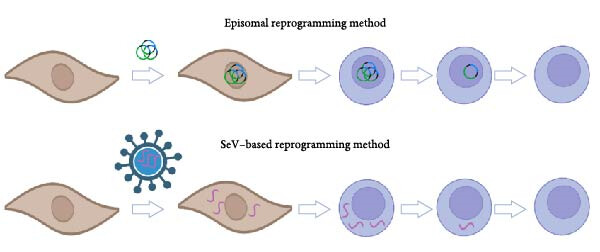 Fig.1 Schematic representation of episomal and Sendai virus (SeV) reprogramming methods.1,3
| Virus Type | Representative Viruses | Key Characteristics | Applicable Scenarios |
|---|---|---|---|
| Integrative | Retrovirus (γ-retrovirus) | Infects dividing cells; high integration efficiency; enables stable expression of reprogramming factors; random integration may lead to insertional mutagenesis with low safety. | Basic research, mechanism exploration |
| Lentivirus (HIV-derived) | Infects both dividing and non-dividing cells; large vector capacity (8-10 kb); high transduction efficiency; carries integration risk, which can be mitigated via Cre excision system optimization. | Basic research, disease modeling | |
| Non-integrative | Sendai Virus (SeV) | RNA virus; does not enter the nucleus; free of genomic integration risk; high transduction efficiency; infects various cell types; viral residues can be removed via screening. | Preclinical research, disease modeling, and studies with high safety requirements |
| Adenovirus (Ad) | No genomic integration; broad host range; short expression cycle; low reprogramming efficiency; extremely low integration probability; strong immunogenicity. | Short-term gene expression research, reprogramming exploration of specific cell types | |
| Adeno-Associated Virus (AAV) | Extremely low integration probability; weak immunogenicity; small vector capacity (~4.7 kb); requires helper virus; limited reprogramming efficiency. | Gene delivery research, short-term expression of specific factors |
The reprogramming process at Creative Biolabs is a rigorous, multi-stage pipeline designed for transparency and reproducibility.
As a global leader in cell engineering, Creative Biolabs provides highly customized Viral based Induced Pluripotent Stem Cell (iPSC) Reprogramming Services tailored to the exacting standards of biology experts. Our offering goes beyond standard protocols to provide end-to-end solutions for your most complex research needs:
Flexible selection of polycistronic or individual factor vectors (Oct4, Sox2, Klf4, c-Myc) optimized for your specific target cell type.
Access to premium-grade, high-titer Lentivirus, AAV, and Sendai virus vectors manufactured under strict quality controls to ensure maximum transduction efficiency.
Specialized Sendai virus and excisable lentiviral systems designed to eliminate exogenous genetic material, ensuring the highest level of genomic purity.
Expert handling and reprogramming of various human and animal cell sources, including blood cells, skin fibroblasts, and rare primary tissue samples.
Deployment of high-standard QC tools, including G-banding, STR analysis, and NGS-based genomic stability assessments to quantify and evaluate product quality.
All procedures follow a well-established quality system and rigorous aseptic verification, ensuring data integrity suitable for IND-enabling studies.
A dedicated technical team provides consultation from initial experimental design through to large-scale expansion and differentiation.
Experience the Creative Biolabs Advantage - Get a Quote Today
The experimenter induced the generation of iPSCs in the peripheral blood mononuclear cells of healthy subjects through Sendai virus. The results showed that on the ninth day of reprogramming, the cells formed closely arranged colonies with clear boundaries. The pluripotency markers (OCT4, SOX2, NANOG, KLF4) were analyzed by qPCR experiments, flow cytometry, immunofluorescence, and other techniques, further confirming the functional pluripotency of the obtained cells.
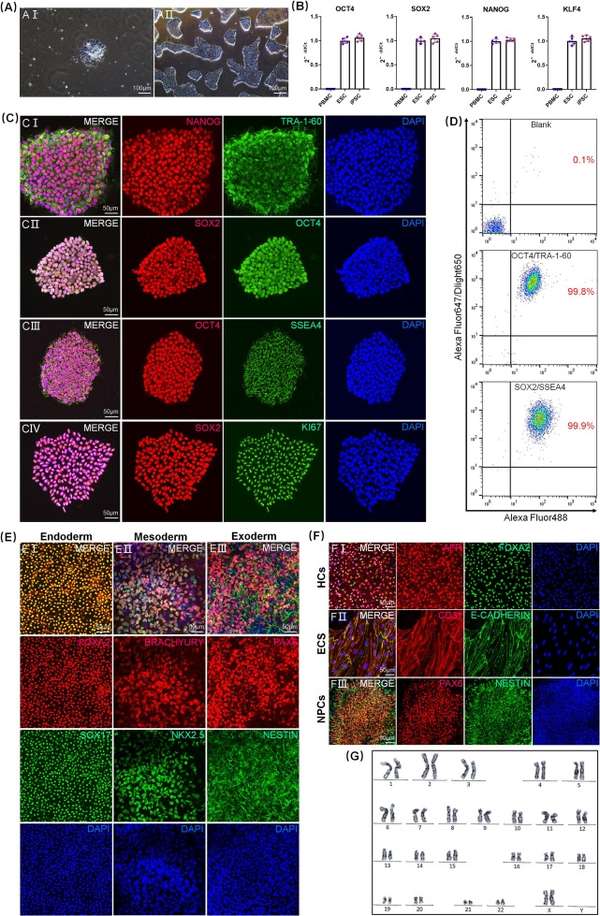 Fig.2 PBMC from healthy donors were reprogrammed into iPSCs using non-integrated Sendai toxins, and pluripotency was verified.2,3
A: Sendai virus is a negative-strand RNA virus that replicates exclusively within the cytoplasm, meaning it entirely circumvents the cell nucleus. Unlike traditional lentiviral vectors, it does not possess a DNA intermediate phase and cannot integrate into the host genome. This "zero-footprint" result is fundamentally superior for clinical applications where maintaining absolute genomic stability is a priority, as it eliminates the risks of insertional mutagenesis or the activation of endogenous oncogenes.
A: Yes, our platform is highly adept at handling "difficult" samples. We recognize that cells from elderly or diseased donors often exhibit significant epigenetic barriers and reduced proliferative capacity, leading to "reprogramming resistance." To overcome this, Creative Biolabs utilizes optimized viral titers and proprietary, cytokine-enriched media formulations specifically designed to rejuvenate these primary cells and drive them toward a pluripotent state with high efficiency.
A: For our Sendai virus protocols, we utilize specialized temperature-sensitive (ts) strains. Once the reprogramming process is complete and colonies are established, we shift the culture temperature to approximately 38.5°C-39°C for a defined period. This shift inactivates the viral replication machinery, leading to a rapid loss of the viral genome. We then rigorously verify the absence of any lingering viral RNA through highly sensitive RT-PCR assays to ensure the footprint-free status of your cell lines.
A: We prioritize the development of clinical-grade cell lines. While we can utilize mouse embryonic fibroblast (MEF) feeder layers if specifically requested, our standard "gold-standard" protocol involves transitioning emerging iPSC colonies directly to feeder-free, vitronectin-coated surfaces and chemically defined media. This eliminates the risk of animal-derived contaminants and ensures maximum compatibility with downstream pharmaceutical applications and large-scale manufacturing workflows.
A: Adeno-associated virus (AAV) provides a uniquely advantageous middle ground for sensitive primary cell types. It offers exceptionally high transduction efficiency across a broad range of human tissues with minimal cytotoxicity. Furthermore, AAV is generally regarded as having very low immunogenicity, making it the preferred choice for primary cells that are prone to apoptosis or stress-induced senescence when exposed to other viral delivery systems, ensuring a higher survival rate during the critical early stages of fate conversion.
Creative Biolabs offers world-class expertise in Reprogramming by Virus, providing the high-quality iPSC lines and viral vectors needed to move your project from the bench to the clinic. Our integrated solutions ensure that your cellular models are robust, validated, and ready for high-throughput applications.
Contact Our Team for More Information and to Discuss Your Project
References
For Research Use Only. Not For Clinical Use.