

HPs are used to functionalize nanocarriers (e.g., liposomes, polymeric micelles) or directly conjugate to cytotoxic agents (PDCs). This ensures selective delivery of chemotherapeutics, avoiding healthy tissue exposure and significantly reducing dose-limiting systemic toxicity.
Tumor-Homing Peptide (HP) based Targeted Drug Delivery Solution
The challenge of achieving precise drug accumulation in the tumor microenvironment (TME) is a major hurdle in oncology. Our Tumor-homing Peptides (HPs) based Targeting Delivery Solution helps you accelerate targeted therapy development through innovative peptide engineering and bioconjugation strategies. By providing ultra-specific targeting modules, we ensure your therapeutic or diagnostic payloads reach their intended cellular and tissue targets efficiently, maximizing efficacy and minimizing systemic toxicity.
Click Here to View more about our Services and Products
Introduction to Tumor-homing Peptides (HPs)
Tumor-homing peptides (HPs), or tumor-targeting peptides (TTPs), are short oligopeptide sequences, typically fewer than 30 amino acids, characterized by their high binding affinity and specificity for markers overexpressed in the tumor microenvironment (TME). These markers can be found on tumor cell surfaces, in the tumor vasculature (angiogenesis markers), or within the extracellular matrix (ECM).
HPs are revolutionary targeting components compared to traditional antibody-based delivery systems. Their small size grants them superior tissue penetration, allowing them to traverse the dense tumor stroma—a common challenge for larger biologics. Furthermore, their low immunogenicity, rapid synthesis through automated solid-phase methods, and chemical stability make them highly attractive for large-scale clinical application.
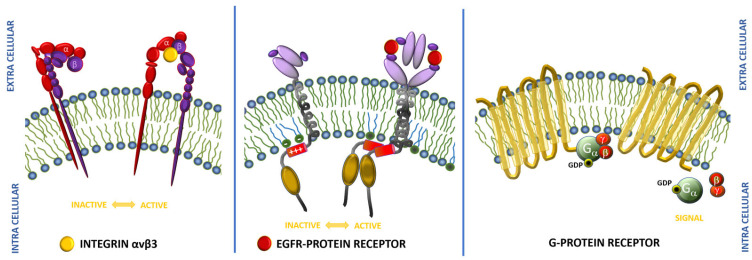 Fig.1 Main receptors interacting with tumor-homing peptides.1
Key examples include the RGD motif (Arginine-Glycine-Aspartic acid), which targets the αvβ3 and αvβ5 integrin receptors often upregulated in neovasculature and many aggressive cancers (melanoma, glioblastoma, prostate cancer). Another critical example is the iRGD (internalizing RGD) peptide, which contains the RGD motif plus a C-end Rule (CendR) motif. After binding to integrins, iRGD is proteolytically cleaved in the TME, exposing the CendR sequence that binds to neuropilin-1 (NRP-1). This two-step mechanism initiates transcytosis, effectively opening a "gateway" for not only the peptide itself but also co-administered or co-conjugated therapeutic agents to penetrate deep into the tumor mass.
The ability of HPs to specifically interact with these overexpressed targets and, in some cases, actively promote tissue penetration, positions them as indispensable tools in the pursuit of next-generation precision oncology.
Applications of Tumor-homing Peptides in Targeted Therapy
The versatile nature of HPs allows for their deployment across various stages of cancer intervention, from non-invasive diagnostics to multimodal therapeutics.
Targeted Drug Delivery
Precision Imaging & Diagnostics
HPs can be conjugated to fluorescent dyes (e.g., NIR dyes), radioisotopes, or MRI contrast agents. Due to their rapid clearance from the bloodstream and fast accumulation in the tumor, they are ideal for real-time surgical guidance, non-invasive imaging, and monitoring treatment response.
Gene & Nucleic Acid Therapy
HPs are employed to deliver fragile payloads, such as siRNA, mRNA, or plasmids, to target cells. By decorating lipid nanoparticles (LNPs) or polyplexes with HPs, we facilitate receptor-mediated endocytosis, dramatically improving the internalization and ultimate efficacy of genetic medicines.
Combination Therapies
The use of tumor-penetrating HPs, like iRGD, can enhance the efficacy of co-administered agents, including traditional radiotherapy. By reducing tumor hypoxia and remodeling the TME, they synergize with existing treatments to overcome therapeutic resistance.
What We Can Offer: Comprehensive HP Development Services
Solid tumors present a formidable barrier to conventional systemic therapies due to their complex, heterogeneous nature, high interstitial fluid pressure, and leaky vasculature. Our HP-based targeting delivery solutions address these issues by providing high-affinity, small-molecule ligands that overcome common delivery limitations.
We deliver customized HP sequences that function as active targeting modules. These modules can be integrated onto various carriers, including liposomes, polymeric nanoparticles, or even directly conjugated to small-molecule drugs (Peptide-Drug Conjugates, PDCs). This approach transitions drug delivery from passive accumulation—relying solely on the Enhanced Permeability and Retention (EPR) effect—to a highly specific, receptor-mediated process.
Specific Deliverables and Solutions:
Optimized Ligand Design
We provide rationally designed or screened HP sequences with verified affinity for specific tumor-associated markers (e.g., integrins, NRP-1, specific matrix components).
Enhanced Payload Accumulation
Our solutions demonstrate improved drug concentration at the tumor site, minimizing off-target effects and increasing the therapeutic index.
Validated Bioconjugation
We offer robust chemical conjugation protocols to link HPs to your chosen payload or nanocarrier, ensuring structural integrity and maintained biological activity in vivo.
FAQs
How do short targeting peptides compare to full-length antibodies for specific tumor binding?
Short targeting peptides offer distinct biophysical advantages over large antibodies. Their small molecular weight facilitates faster extravasation from blood vessels and deeper penetration into solid tumor tissues, which are often poorly perfused. They also typically exhibit faster clearance from the bloodstream, leading to less accumulation in non-target organs and potentially lower systemic toxicity.
My current drug candidate has poor solubility. Can targeted peptides help improve its delivery?
Absolutely. Targeting peptides are rarely used alone. They are often conjugated to the surface of drug carriers—such as lipid nanoparticles or polymeric micelles—specifically designed to encapsulate poorly soluble compounds. The carrier resolves the solubility issue, while the peptide provides the active targeting mechanism, ensuring the stabilized, encapsulated drug reaches the tumor.
What is the biggest challenge in developing an effective tumor-homing peptide, and how is it overcome?
The primary challenge is enzymatic degradation in vivo and rapid renal clearance, leading to a short circulating half-life. We overcome this through strategic peptide engineering, including cyclization, incorporating non-natural D-amino acids, and chemical modifications like PEGylation. These adjustments significantly improve stability and pharmacokinetic profiles without compromising the binding affinity to the tumor target.
Is it possible for a targeting peptide to also help the drug escape the endosome once inside the cell?
Yes, this is a highly advanced strategy. Peptides can be designed not only for targeting but also to include functional sequences (often called "endosome-disrupting" or "membrane-lytic" sequences). Once the payload-peptide conjugate is internalized via endocytosis, this sequence is activated by the endosomal environment (e.g., acidic pH), triggering the release of the drug into the cell cytoplasm before it can be degraded.
If my tumor target is highly heterogeneous, how can I ensure broad therapeutic coverage with a single peptide?
For heterogeneous tumors, we recommend two strategic approaches: multivalent targeting or combinatorial targeting. Multivalent systems use one peptide sequence displayed repeatedly on a single carrier to enhance binding strength. Combinatorial targeting involves using two or more distinct peptide sequences (e.g., one targeting the tumor cell, one targeting the vasculature) on the same carrier. This dual-ligand approach expands the range of cells and tissues covered, improving overall treatment response.
The development of successful tumor therapeutics hinges on effective targeted delivery. Creative Biolabs' expertise in Tumor-homing Peptides provides a robust, customizable solution to this challenge, enabling the development of highly specific Peptide-Drug Conjugates (PDCs) and functionalized nanocarriers. We offer an end-to-end service encompassing rational design, synthesis optimization, bioconjugation, and rigorous validation, guaranteeing high-quality, clinical-ready targeting modules for your next-generation oncology project.
Reference
- Milewska, Sylwia et al. "Tumor-Homing Peptides as Crucial Component of Magnetic-Based Delivery Systems: Recent Developments and Pharmacoeconomical Perspective." International journal of molecular sciences vol. 25,11 6219. 5 Jun. 2024, Distributed under Open Access license CC BY 4.0, without modification. https://doi.org/10.1038/s41392-024-02107-5.
Our services are For Research Use Only. We do not provide services to individuals.
Online Inquiry