
Efficient and targeted delivery of nucleic acids and gene-editing complexes for Composite Hydrogels Development.
Hybrid Delivery System based Nanoparticles for Targeted Drug Delivery
Are you currently facing complexity in delivering therapeutics, low in vivo bioavailability, or systemic toxicity challenges in your drug development cycle? Our Hybrid Delivery Systems-Based Nanoparticles help you accelerate therapeutic discovery and achieve superior drug efficacy. This is achieved through advanced, multi-component nanoparticle designs, including biomimetic and Polymer-Lipid systems, engineered for targeted payload delivery and immune evasion. We transform payload protection into therapeutic success.
Click Here to View more about our Services
Overview of Hybrid Delivery Systems
What are Hybrid Delivery Systems-based NPs?
Hybrid Delivery Systems-Based Nanoparticles (HNCs) represent the next generation of drug delivery vehicles. They are composite nanoparticles formulated by combining two or more distinct material classes—typically a natural component (like lipids or cell membranes) and a synthetic component (like polymers or inorganic materials)—into a single, unified structure. This amalgamation leverages the synergistic strengths of each component: the superior stability and drug-loading capacity of synthetic materials combined with the biological compatibility, inherent targeting, and immune-evasion properties of natural systems.
Hybrid Delivery System Types
Lipid-Polymer Hybrid
Nanoparticles - Core-shell structures for high stability Lipid-Dendrimer Hybrid
Nanoparticles - Combining precise structure with membrane fusion ability Lipid-Chitosan Hybrid
Nanoparticles - Enhancing mucosal or oral delivery Lipid-Coated Mesoporous
Silica Hybrid Nanoparticles - High porosity for large payloads Liposome-Exosome
Hybrid - Integrating natural targeting with liposomal stability Polymeric Hybrid Micelles -
Amphiphilic systems for solubility and stability Exosome-Dendrimer Hybrid
Nanoparticles - Enhanced stability and surface modification Exosomes-Polymer Hybrid
Nanoparticles - Improved mechanical strength Exosomes-Metal Hybrid
Nanoparticles - Diagnostic and therapeutic applications Exosomes-Magnetic Hybrid
Nanoparticles - Magnetically guided delivery Exosomes-Quantum Dots (QDs
Hybrid - Imaging and tracking capabilities Exosomes-Silica Hybrid
Nanoparticles - Increased drug loading capacity Exosomes-Graphene
Hybrid - Bio-sensing and advanced functionalization
Application Scenarios
Creative Biolabs specializes in the design, synthesis, and optimization of these sophisticated systems, offering robust solutions for:
Gene Therapy Payload Delivery
Targeted Cancer Therapy
Overcoming multidrug resistance and enhancing tumor accumulation through engineered passive and active targeting strategies.
Chronic Disease Management
Achieving sustained release and tissue-specific delivery for chronic conditions, including CNS and inflammatory disorders.
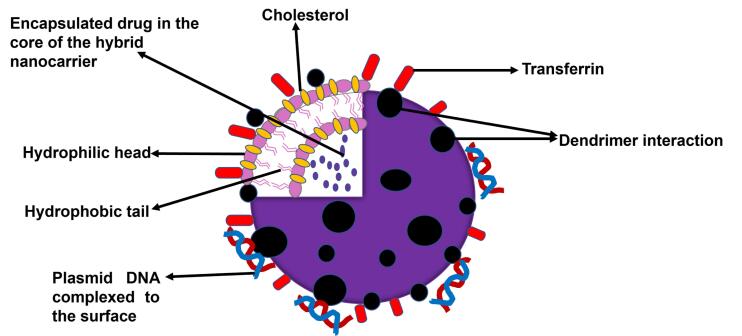 Fig.1 Structural diagram of a transferrin-targeted lipid–dendrimer hybrid nanoparticle for co-delivery of drug and gene.1
Why Choose Us?
By choosing Creative Biolabs, you gain access to a platform dedicated to maximizing the therapeutic potential of your cargo through HNC technology:
Mitigation of Biological Barriers
Superior ability to cross restrictive physiological barriers, including the Blood-Brain Barrier (BBB) and tight epithelial junctions, often mediated by inherited cell membrane proteins.
Immune System Evasion
Utilizing biomimetic coatings to confer "self" recognition signals, significantly prolonging circulation half-life and reducing immune clearance.
Enhanced Stability and Payload Protection
The synthetic core provides high mechanical stability and protection for sensitive payloads against enzymatic degradation.
Tunable Release Kinetics
Precise engineering of the hybrid structure allows for stimulus-responsive or sustained release profiles.
Synergistic Co-Delivery Capability
Optimized systems for simultaneously delivering two or more therapeutic agents for combinatorial therapies.

Key Technologies
At Creative Biolabs, the success of our HNC platform is rooted in our precise control over the design, synthesis, and functionalization of these multi-component carriers.
Engineering Key Points: Achieving Functional Superiority
Expertises allows precisely control of the factors that dictate in vivo performance:
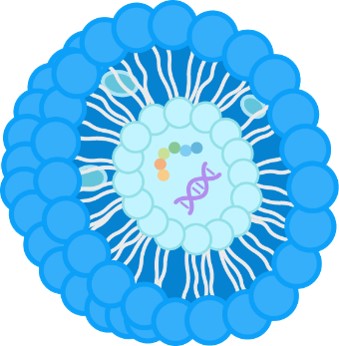
Utilizing advanced methods like microfluidics and optimized sonication protocols to ensure narrow size distribution for ideal systemic circulation and targeting.
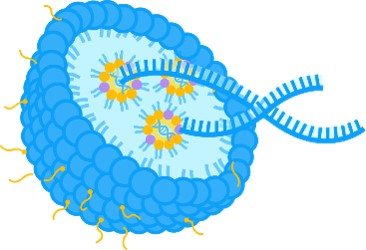
Fine-tuning the zeta potential to maximize colloidal stability, reduce non-specific protein adsorption, and enhance cell membrane interactions for endosomal escape.
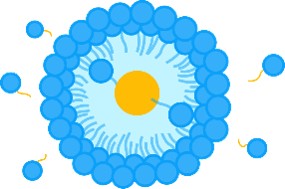
Empirically the optimal ratio of synthetic core to natural shell to ensure structural integrity while maximizing inherited biological function.

Employing functionalized PEGylation on the synthetic components to further enhance passive targeting and minimize reticuloendothelial system (RES) uptake.
Find Out How We Can Help - Schedule a Consultation!
Cutting-Edge Technology
A core offering of our Hybrid Drug Delivery Systems is the use of cell membrane coatings to confer specific, innate biological targeting mechanisms. This table highlights key cell sources and their advantages:
| Cell Membrane Source | Targeting Advantages & Inherited Properties | Application Examples |
|---|---|---|
| Macrophages | Immune Evasion: Confers "self" status. Inflammation Homing: Natural tropism toward inflamed tissues and tumors. | Autoimmune disease treatment, inflammatory bowel disease, systemic delivery. |
| Platelets | Injury/Tumor Targeting: Natural affinity for damaged blood vessels and specific tumor microenvironment proteins. | Hemorrhage control, delivery to metastatic niches, cardiovascular therapeutics. |
| Cancer Cells | Homotypic Targeting: Recapitulates the cancer cell's surface proteins, enabling specific binding to the parent tumor cells for high-efficiency, localized delivery. | Personalized oncology, overcoming drug resistance, highly specific gene delivery. |
| Brain Endothelial Cells | BBB Crossing: Confers innate ability to traverse the blood-brain barrier. | CNS disorders, neurodegenerative disease therapy, stroke recovery. |
QC Method: Building Trust and Reliability
The clinical viability of any nanoparticle hinges on consistent quality and reproducibility. Rigorous quality control (QC) protocols using state-of-the-art analytical techniques can ensure batch-to-batch consistency for all our Hybrid Delivery Systems-Based Nanoparticles.
Morphological Analysis
Transmission Electron Microscopy (TEM) and Cryo-TEM are used for visual confirmation of the hybrid core-shell structure and assessment of morphological integrity.
Physicochemical Characterization
Dynamic Light Scattering (DLS) and Nanoparticle Tracking Analysis (NTA) are employed to precisely measure hydrodynamic size, polydispersity index (PDI), and concentration.
Surface Potential
Laser Doppler Electrophoresis determines the zeta potential, a critical indicator of colloidal stability and biological interaction.
Payload Encapsulation Efficiency (EE)
Advanced separation and quantification techniques (e.g., HPLC, UV-Vis Spectroscopy, or fluorescence assays) are used to confirm the quantity and stability of the cargo loaded into the HNC.
Functional Assays
In vitro cellular uptake, endosomal escape efficiency, and specific target engagement are validated using flow cytometry and live-cell imaging, ensuring biological activity is maintained.
Key Benefits
Our Hybrid Delivery Systems-Based Nanoparticles deliver measurable, market-differentiating advantages over traditional delivery methods.
Immune Evasion
Biomimetic surfaces minimize recognition by the mononuclear phagocyte system (MPS).
Targeted Delivery
Active targeting via inherited ligands or passive targeting via the EPR effect.
Barrier Penetration
Unique capability to traverse restrictive biological barriers.
Superior Stability
Combined physical strength of polymer core with the biocompatibility of the lipid shell.
Combinatorial Therapy
Capacity to load and control the release of multiple distinct therapeutic agents.
Boost Your Advantage with Creative Biolabs - Obtain a Quote Today!
Products
| Products | Description | Inquiry |
|---|---|---|
| Functionalized Lipid Products | Functional lipids like DSPE-PEG-TAT and DSPE-PEG-RGD for precision in therapeutic and imaging applications. | |
| Lipid Nanoparticle Products | LNPs, as a leading non-viral vector platform for nucleic acid delivery, are precisely engineered self-assembling systems designed to protect and deliver therapeutic payloads |
Frequently Asked Questions
What types of therapeutics are best suited for your Hybrid Delivery Systems-Based Nanoparticles?
Our HNCs are exceptionally well-suited for sensitive and high-molecular-weight payloads, particularly nucleic acids, gene-editing tools, and complex proteins/peptides. Their protective shell ensures cargo survival, and the targeting elements maximize cellular uptake—far outperforming traditional liposomes in stability and efficacy.
How do your HNCs compare to standard Lipid Nanoparticles (LNPs) in terms of in vivo performance?
While LNPs are effective, HNCs offer enhanced versatility. Our hybrid systems, particularly those with biomimetic coatings, demonstrate significantly improved immune evasion and prolonged systemic circulation due to natural surface proteins. Furthermore, the inclusion of a polymer or silica core often leads to superior mechanical stability and tunable release kinetics.
What are the primary regulatory considerations for using a novel hybrid nanoparticle?
Regulatory bodies are increasingly focused on the safety and reproducibility of complex nanoparticles. At Creative Biolabs, we provide extensive support, focusing on: 1) Full characterization (per Section 3 QC methods), 2) Material safety and biocompatibility, and 3) Demonstrating functional stability across different conditions.
Creative Biolabs is a leading provider of advanced Hybrid Delivery Systems-Based Nanoparticles, offering a comprehensive platform for the design, synthesis, characterization, and scale-up of multi-component drug delivery solutions. Our expertise in biomimetic systems, polymeric cores, and targeted functionalization is dedicated to solving the most challenging delivery hurdles in the biopharmaceutical industry. To discuss your specific therapeutic delivery challenge, explore our Composite Hydrogels (Hybrid Systems) Development Service and Hybrid Drug Delivery Systems Service, or request a detailed proposal, please reach out to our team of experts.
Reference
- ZErebor, Joan Onyebuchi, et al. "Targeted hybrid nanocarriers as co-delivery systems for enhanced cancer therapy." Advanced Pharmaceutical Bulletin 14.3 (2024): 558. Distributed under Open Access license CC BY 4.0, without modification. DOI: https://doi.org/10.34172/apb.2024.046.
Our services are For Research Use Only. We do not provide services to individuals.
Online Inquiry