
Using LPHNs to efficiently package and deliver antigens or nucleic acid adjuvants to target immune cells, such as dendritic cells, to maximize immune response and therapeutic index.
Lipid-Polymer Hybrid Nanoparticle for Targeted Drug Delivery
Are you currently facing challenges with rapid payload leakage, systemic toxicity from off-target delivery, or poor stability during long-term storage of complex therapeutics? Lipid-Polymer Hybrid Nanoparticles (LPHNs) help you achieve superior drug bioavailability and precise, controlled release through rational core-shell engineering and synchronous self-assembly technology.
Click Here to View more about our Services
Introduction to Lipid-Polymer Hybrid Nanoparticles
What are LPHNs?
LPHNs are advanced core-shell nanostructures that integrate the superior mechanical strength and sustained-release capacity of polymeric nanoparticles with the enhanced biocompatibility and biomimetic properties of liposomes. This two-in-one architecture—consisting of a dense, drug-encapsulating polymer core enveloped by a stabilizing lipid monolayer and an optional stealth PEGylated outer layer—resolves the structural weaknesses and biological limitations inherent in first-generation nanocarriers. The LPHN platform is uniquely suited for delivering a broad range of therapeutics, including small molecules, hydrophobic and hydrophilic drugs, and complex macromolecules like proteins, peptides, and nucleic acids.
Application Scenarios
Vaccine Development & Immunotherapy
Composite Hydrogels (Hybrid Systems) Development
Integrating LPHNs directly into injectable or topical hydrogel scaffolds for multi-layered, highly localized drug release, crucial for tissue engineering and sustained topical therapy.
Combinatorial Oncology Therapy
Co-encapsulating multiple therapeutic agents with distinct physicochemical properties (e.g., a hydrophobic drug in the polymer core and a hydrophilic drug in the lipid shell) to achieve synergistic effects in tumor environments.
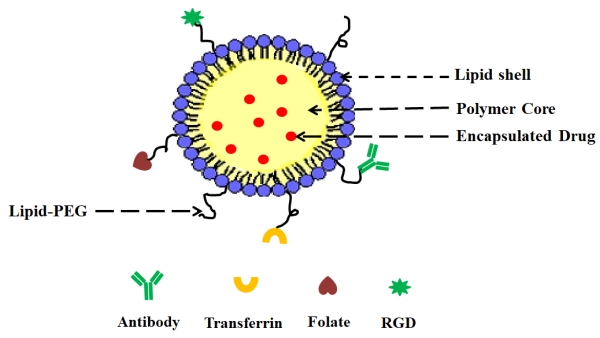 Fig.1 Overview of LPHN architecture featuring a drug-encapsulating polymer core, a surrounding lipid shell, and an exterior lipid–PEG layer.1
Why Choose Us?
The LPHN system provides a robust solution for translational nanomedicine by addressing the fundamental instability and biodistribution limitations of legacy carriers:
Enhanced Structural Integrity
The polymeric core provides mechanical rigidity, drastically reducing the rapid leakage and structural disintegration seen in traditional liposomes upon systemic administration.
Prolonged Circulation
The PEGylated lipid outer shell confers "stealth" properties, thereby extending blood circulation half-life and maximizing systemic bioavailability.
High Payload Flexibility
The distinct core-shell structure allows for the simultaneous encapsulation of both hydrophilic and hydrophobic therapeutics, a capability essential for advanced combinatorial therapies.
Key Technologies
Engineering Key Points: Achieving Functional Superiority
Creative Biolabs' expertise lies in the precise engineering of the LPHN structure to achieve defined performance metrics. We demonstrate precise control over the key compositional factors that govern stability, release, and cellular interaction:
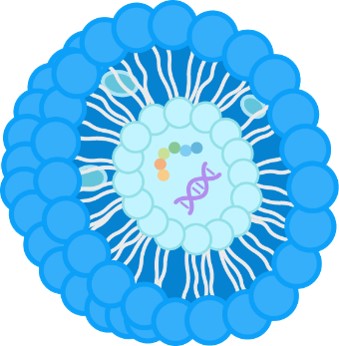
Use cholesterol as a crucial membrane-stabilizing material. Our validated protocol shows that increasing cholesterol concentration in the lipid layer, up to an optimal level (e.g., 20% cholesterol in published models), dramatically reduces the permeability of the shell. This leads to enhanced stability and reduced drug leakage.
Address the critical stability challenge of aggregation during storage by introducing DSPE-PEG. While necessary to mitigate the fusion of high-cholesterol particles over time, PEGylation is a double-edged sword that requires careful optimization.
Discover How We Can Assist - Book a Consultation!
Cutting-Edge Technology
The LPHN platform is designed for active targeting, maximizing drug concentration at the site of action while minimizing off-target exposure. Functionalize the highly flexible lipid surface with specific ligands or cellular components.
| Targeting Mechanism | Component Source / Ligand Type | Primary Application Target | Therapeutic Advantages |
|---|---|---|---|
| Active Targeting (Ligand-Directed) | Folic Acid, RGD Peptide, Transferrin | Cancer cells overexpressing specific receptors (e.g., folate receptors) | Significantly increased therapeutic index; reduced systemic toxicity; enhanced cellular internalization. |
| Biomimetic Targeting (Cell Membrane-Coated) | Macrophage/Platelet Cell Membranes | Inflamed endothelium, atherosclerotic plaques, circulating pathogens | Immune evasion and natural homing capability conferred by the native membrane proteins. |
| Stimuli-Responsive Release | pH-sensitive polymers, Redox-cleavable linkers, Photothermal agents | Tumor microenvironment (low pH, high glutathione (GSH) concentration) | On-demand, spatiotemporal release of the payload only when conditions are met, ensuring safety and precision. |
QC Method: Building Trust and Reliability
Creative Biolabs establishes trust through rigorous quality control processes for every LPHN formulation. Our core analytical methods validate the vector's physicochemical properties and biological readiness, ensuring every batch meets the stringent requirements for stability and performance.
Physicochemical Characterization
Measuring Particle Size and Polydispersity Index (PDI) via Dynamic Light Scattering (DLS) to confirm uniform size distribution. Zeta potential analysis is used to verify surface charge and stability.
Encapsulation and Loading Efficiency
High-performance liquid chromatography (HPLC) or spectrophotometry is used to accurately quantify the loading efficiency (LE) and encapsulation efficiency (EE) of the therapeutic payload within the polymeric core.
Serum and Storage Stability Assessment
Monitoring particle size, PDI, and aggregation behavior in physiological buffers and human serum over defined time points to confirm integrity and long-term storage viability.
In vitro Release Kinetics
Utilizing dialysis or sink conditions to establish the precise sustained or stimuli-responsive release profile of the drug/antigen, ensuring predictable therapeutic delivery.
Key Benefits
The Creative Biolabs LPHN platform offers distinct advantages for drug developers seeking to overcome the limitations of legacy delivery systems:
Simultaneous Delivery of Multiple Drugs
Our engineered LPHNs enable the co-encapsulation of therapeutics with diverse polarities, offering maximum flexibility for complex, combination drug regimens.
Enhanced Biocompatibility
The outer lipid shell provides a biomimetic interface, significantly reducing immune recognition and increasing tissue compatibility compared to bare polymeric carriers.
Superior Drug Bioavailability
By evading RES clearance and maximizing targeted accumulation, LPHNs dramatically improve the overall pharmacokinetic and pharmacodynamic profile of the encapsulated therapeutic.
Validated Performance Data
Optimized formulations consistently demonstrate controlled release and enhanced cellular uptake in key immunological models, as detailed in internal and published studies.
Strengthen Your Edge with Creative Biolabs - Request a Quote Today!
Products
| Products | Description | Inquiry |
|---|---|---|
| Functionalized Lipid Products | Functional lipids like DSPE-PEG-TAT and DSPE-PEG-RGD for precision in therapeutic and imaging applications. | |
| Lipid Nanoparticle Products | LNPs, as a leading non-viral vector platform for nucleic acid delivery, are precisely engineered self-assembling systems designed to protect and deliver therapeutic payloads |
Frequently Asked Questions
How does the LPHN system address the primary instability issues of traditional liposomes?
LPHNs replace the liposome's fluid, unstable inner core with a solid, rigid polymer matrix. This mechanical support prevents structural collapse and acts as a molecular barricade, significantly reducing drug leakage and providing sustained release that is superior to lipid-only systems.
I need to deliver a highly hydrophobic drug; will the LPHN core accommodate a high payload?
Yes. The hydrophobic polymeric core (typically PLGA) provides an ideal, high-capacity reservoir for poorly water-soluble drugs. We tune the polymer and lipid composition to maximize the partition coefficient, allowing for significantly higher drug loading efficiency compared to conventional liposomes or micelles.
My project requires targeted delivery to immune cells. How effective is the LPHN platform for targeting specific cell types like dendritic cells?
LPHNs are highly effective for targeted delivery, particularly in vaccine applications. We demonstrated significantly enhanced uptake efficiency by dendritic cells by precisely controlling the lipid layer composition. Furthermore, the lipid surface is easily functionalized with specific ligands (active targeting) to further increase selectivity for target immune or diseased cells.
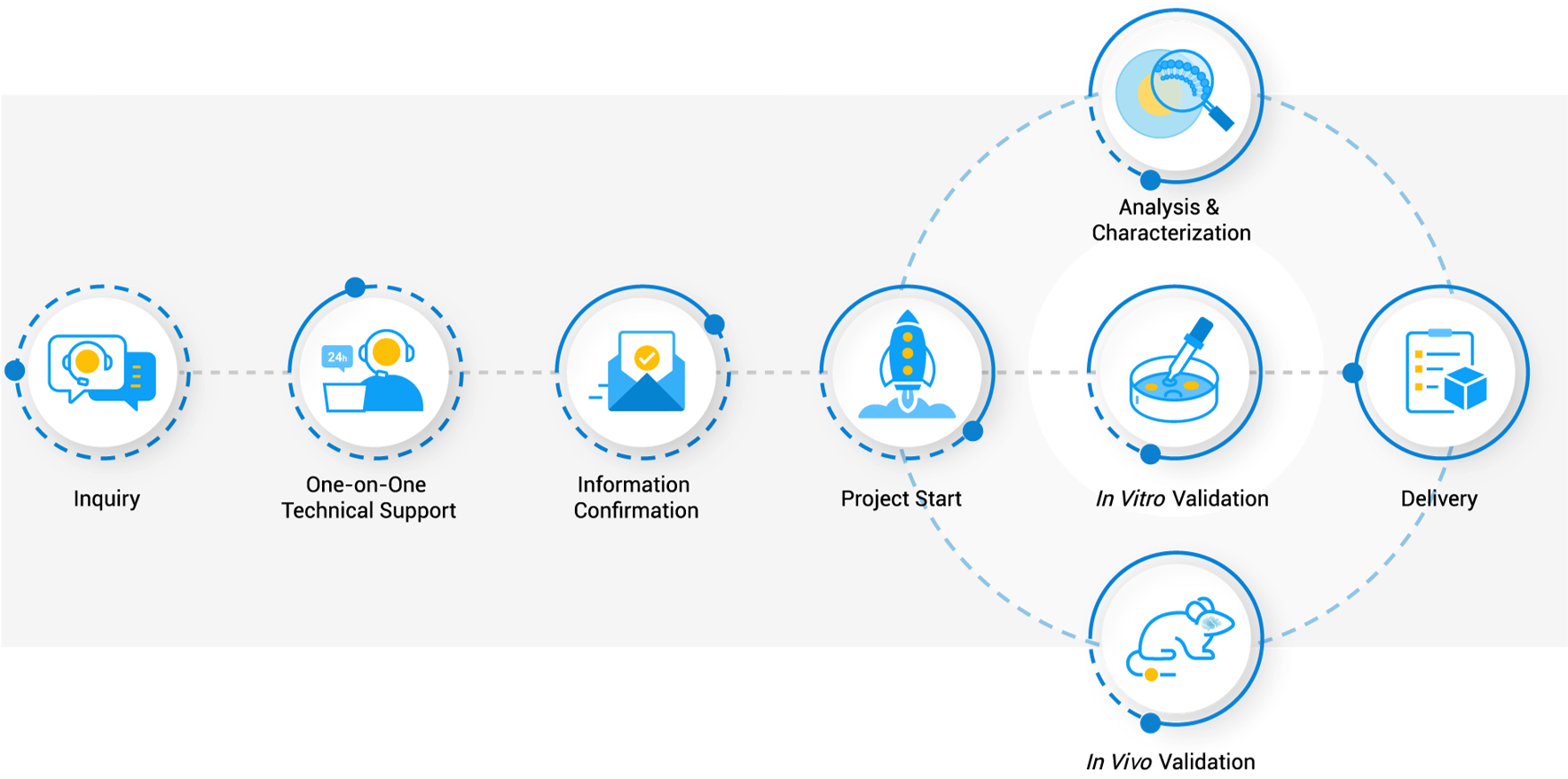
Creative Biolabs offers comprehensive contract research and manufacturing services for the development, characterization, and scale-up of customized Lipid-Polymer Hybrid Nanoparticles. From initial R&D into enhanced stability and targeting to validated QC and pre-clinical batch production, our platform ensures your therapeutic delivery system is optimized for performance and clinical viability. Reach out to our expert team today to discuss your specific therapeutic cargo, targeting requirements, and project goals.
Reference
-
Jain, Shweta, et al. "Lipid–polymer hybrid nanosystems: a rational fusion for advanced therapeutic delivery." Journal of Functional Biomaterials 14.9 (2023): 437. Distributed under Open Access license CC BY 4.0, without modification. https://doi.org/10.3390/jfb14090437.
Our services are For Research Use Only. We do not provide services to individuals.
Online Inquiry