
Protein ligands, including full monoclonal antibodies, bispecific antibodies, or single-chain variable fragments that target Tumor-Associated Antigens (TAAs) (e.g., HER2, CD20), are foundational for targeted cancer treatment. These systems enable the precise delivery of highly toxic small molecules, radionuclides, or gene editors directly to malignant cells, significantly boosting local efficacy while protecting healthy tissues.
Protein based Targeted Drug Delivery Solution
In the pursuit of groundbreaking therapies, the journey from a promising molecule to a viable treatment often stalls at a single, formidable obstacle: non-specific distribution. Protecting fragile payloads and guiding therapeutics to their precise site of action are challenges that make or break a project. Our Proteins based Targeting Delivery Solution helps you accelerate therapeutic development and minimize off-target toxicity through advanced biological conjugation and receptor-mediated active targeting technology, ensuring your drug reaches its destination with maximum efficacy.
Click Here to View more about our Services
Introduction of Proteins based Targeting Delivery Solution
Protein-based targeting delivery represents an advanced strategy in nanomedicine, capitalizing on the highly specific and natural interactions that govern cellular communication. This methodology uses intact proteins or functional protein domains as the targeting moiety, providing unparalleled selectivity compared to passive delivery systems.
The Power of Protein Ligands
Proteins serve as ideal targeting ligands due to their complex, three-dimensional structures that allow for high-affinity binding to complementary receptors. This high affinity ensures that the delivery vehicle efficiently homes to the target tissue even when systemic concentrations are low. The delivery system typically involves a therapeutic payload encapsulated within or conjugated to a nanocarrier, which is surface-functionalized with a targeting protein ligand.
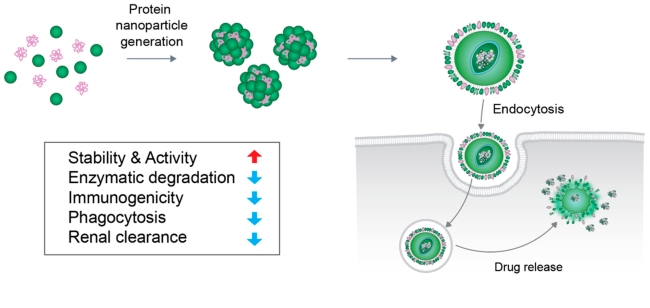 Fig.1 Delivery of protein nanoparticle to the cell.1
The Mechanism: Receptor-Mediated Endocytosis (RME)
The dominant mechanism employed is RME. Upon binding of the protein ligand to its specific, overexpressed receptor on the target cell surface, the cell membrane invaginates, forming an endocytic vesicle that internalizes the entire delivery system. This process is crucial because it not only delivers the cargo to the intended cell but also circumvents common extracellular degradation pathways. Research validates that utilizing natural transport proteins, such as Transferrin, can effectively hijack existing physiological pathways to transport therapeutics across formidable barriers like the blood-brain barrier (BBB).
Credibility and Evidence
The efficacy of protein-based delivery is well-established, with multiple therapeutics demonstrating the clinical benefit of this strategy, particularly in oncology. Studies consistently show that protein-conjugated nanocarriers achieve superior accumulation profiles at the disease site compared to non-targeted systems, leading to a significant expansion of the drug's therapeutic window.
Protein Ligands for Active Targeted Delivery
We utilize a diverse panel of biological ligands, carefully selected for their affinity to receptors overexpressed in various pathologies:
| Targeting Protein Ligand | Biological Target/Receptor | Therapeutic Application Focus | Delivery Mechanism |
|---|---|---|---|
| Transferrin (Tf) | Transferrin Receptor 1 (TfR1) | Cancer (highly up-regulated in proliferating cells), CNS delivery (BBB transcytosis) | Receptor-mediated Endocytosis |
| Epidermal Growth Factor (EGF) | Epidermal Growth Factor Receptor (EGFR) | Solid Tumors (Head and Neck, Colorectal, Breast) | Receptor-mediated Endocytosis |
| Monoclonal Antibodies/scFvs | Tumor-Associated Antigens (TAAs), e.g., CD30, HER2 | Highly specific Cancer Therapy, Antibody-Drug Conjugates (ADCs) | Receptor-mediated Endocytosis |
| Growth Factors (e.g., FGF) | Fibroblast Growth Factor Receptors (FGFRs) | Regenerative Medicine, Targeted Cancer Therapy | Receptor-mediated Endocytosis |
| Albumin | gp60 (Albondin) Receptor | Enhanced circulation half-life, Tumor Accumulation (via leaky vasculature and specific receptor binding) | Passive & Receptor Binding |
Applications of Protein-Based Delivery in Modern Therapeutics
The structural diversity and biological specificity of protein ligands unlock critical applications across various therapeutic areas, making previously undruggable targets accessible.
Precision Oncology
CNS Drug Delivery and the Blood-Brain Barrier (BBB)
For drug development targeting the central nervous system, protein-based systems offer a key strategy to bypass the BBB. Specific transport proteins, like Transferrin (Tf), which naturally cross the BBB via RME, can be conjugated to nanocarriers. This "Trojan horse" approach leverages the cell's natural machinery to shuttle large therapeutic molecules and their carriers into the brain parenchyma, enabling treatment for neurodegenerative diseases and brain malignancies.
Active Immunomodulation
In immunology, protein ligands can be engineered to target specific immune cell populations, such as activated T-cells or dendritic cells, by binding to their surface receptors (e.g., specific Cluster of Differentiation, or CD, markers). This allows for highly localized delivery of immunomodulators, adjuvants, or genetic material to manipulate the immune response, critical for developing advanced vaccines or cell-based therapies.
What We Can Offer: Comprehensive Targeted Delivery Services
Creative Biolabs specializes in harnessing the inherent specificity of biological recognition to create sophisticated active targeting delivery systems. We do this by engineering protein or peptide ligands—such as antibodies, receptor fragments, or Cell-Penetrating Peptides (CPPs)—and conjugating them to your chosen drug carrier (nanoparticles, liposomes, polymeric systems, or even the drug itself).
The core value we deliver is the transformation of a passively distributed drug into a highly specific therapeutic agent. Our solutions are designed to:
Enhance Targeting Specificity
Achieve high affinity binding to specific, often overexpressed, receptors on diseased cells (e.g., tumor cells, activated immune cells, or cells behind the blood-brain barrier).
Facilitate Internalization
Utilize natural cellular uptake pathways, such as receptor-mediated endocytosis, to actively pull the therapeutic cargo inside the target cell, where it can be most effective.
Improve Pharmacokinetics (PK) & Biodistribution (BD)
Reduce systemic exposure and subsequent side effects, while increasing the concentration of the drug at the pathological site.
Our project approach is fully customized, starting with the identification of the optimal ligand for your target receptor, followed by precise chemical conjugation and rigorous functional validation.
FAQs
What are the primary factors that determine the successful in vivo function of a protein-targeted delivery system?
Success depends on three primary factors: the specificity and affinity of the protein ligand for its target receptor; the stability of the conjugation bond in circulation; and the pharmacokinetic profile of the carrier, which determines its ability to avoid clearance and reach the target site.
Since proteins are large, is there a risk of them provoking an unwanted immune reaction?
While all foreign proteins carry some risk of immunogenicity, our strategy mitigates this by utilizing humanized antibodies, natural human transport proteins (like Transferrin), or specific structural domains, which are inherently less immunogenic. Furthermore, strategic surface modification of the carrier can help mask the protein ligand during systemic circulation.
How is the binding efficiency of the targeting protein validated after it has been conjugated to the nanocarrier?
We employ a multi-step validation process. This includes measuring the functional binding of the entire protein-nanocarrier construct to the purified target receptor in vitro (e.g., via ELISA) and confirming the cellular uptake specificity against target cells that overexpress the receptor compared to control cells that do not.
Can a protein-targeted delivery solution be customized to carry multiple different therapeutic agents simultaneously?
Yes, nanocarriers can be engineered with sufficient payload capacity to encapsulate or conjugate multiple therapeutic agents. Furthermore, the carrier's surface can potentially be functionalized with two or more different protein ligands, creating a multi-targeting or bispecific delivery system for enhanced precision.
How can a researcher ensure that their targeting approach is superior to simple passive accumulation at a tumor site?
To demonstrate superiority, the targeted system must show significantly higher cellular uptake in target cells compared to non-targeted controls, both in vitro and in vivo. Crucially, the system must achieve higher local therapeutic concentrations and better efficacy, particularly at lower doses, proving that the active protein-mediated pathway is dominant over passive accumulation.
Protein-Based Targeting Delivery Solutions represent the next generation of precision medicine. By integrating high-specificity protein ligands with robust nanocarriers, Creative Biolabs provides sophisticated, ready-to-translate platforms that maximize therapeutic efficacy and mitigate off-target effects. Our comprehensive services, from custom protein engineering to preclinical validation, ensure that your groundbreaking therapeutic candidates realize their full potential.
Reference
- Hong, Seyoung et al. "Protein-Based Nanoparticles as Drug Delivery Systems." Pharmaceutics vol. 12,7 604. 29 Jun. 2020, Distributed under Open Access license CC BY 4.0, without modification. https://doi.org/10.3390/pharmaceutics12070604.
Our services are For Research Use Only. We do not provide services to individuals.
Online Inquiry