The challenge of precise drug delivery—getting a therapeutic payload exclusively to the diseased cell—is the single greatest bottleneck in modern biopharmaceutical development. Our Aptamer based Targeting Delivery Solution helps you accelerate therapeutic development and minimize systemic toxicity. This ensures maximum therapeutic index and unlocks the full potential of novel drug candidates.
Click Here to View More about Our Services and Products
Introduction of Aptamer based Targeting Delivery Solution
Aptamers, often referred to as "chemical antibodies," are synthetic nucleic acid molecules (DNA or RNA) capable of binding to target molecules with high affinity and selectivity. Unlike traditional antibodies, which are proteins derived from biological systems, aptamers are synthesized chemically. This fundamental difference grants them unique and compelling advantages in targeted drug delivery.
Fig.1 A variety of aptamer conjugates for targeted drug-delivery system.1
Structure & Function
Aptamers typically range from 20 to 100 nucleotides in length. Through intramolecular interactions, they fold into distinct, stable three-dimensional conformations (such as hairpin structures, bulges, or G-quadruplexes) that fit the target molecule like a lock and key. This precise structural recognition allows them to bind to a vast array of targets, from small ions and peptides to entire cells and viruses.
Mechanism in Delivery
When conjugated to a therapeutic payload, the aptamer acts as a sophisticated navigation system. Upon injection, the aptamer component seeks out and binds to its designated cell-surface receptor, initiating receptor-mediated endocytosis. This mechanism ensures that the drug is internalized specifically by the target cells, dramatically increasing local drug concentration while sparing healthy tissues.
Credibility in Literature
The utility of aptamers is well-established across biomedical research. Studies, particularly in oncology, neurodegenerative, and ocular diseases, consistently demonstrate that aptamer-mediated delivery enhances the therapeutic index of payloads, including small-molecule chemotherapeutics and complex nucleic acid therapeutics (like siRNA and mRNA). Their rapid tissue penetration and non-immunogenic nature position them as an essential tool for next-generation precision medicine, moving several candidates successfully through preclinical and clinical development phases.
The following table showcases established aptamer ligands to illustrate the breadth of our targeting expertise:
Aptamer Ligand
Target Biomarker
Disease Indication
Delivery Focus
A10
Prostate-Specific Membrane Antigen (PSMA)
Prostate Cancer
Imaging and Drug Conjugates
Sgc8c
Protein Tyrosine Kinase 7 (PTK7)
T-Cell Acute Lymphoblastic Leukemia (T-ALL)
Targeted Toxin/Drug Delivery
Pegaptanib
Vascular Endothelial Growth Factor (VEGF)
Age-related Macular Degeneration (AMD)
Antagonistic/Inhibitory Therapeutic
RLS-2
EPB41L5
Podocyte-Targeted Delivery (Renal Disease)
siRNA Delivery, Diagnostic Probes
Application of Targeted Aptamer Delivery
The versatility of aptamers allows for customized delivery strategies across a wide spectrum of disease indications and therapeutic modalities.
Precision Targeting in Oncology
Cancer therapy represents the most mature application field. Aptamers are highly effective in recognizing cell-surface biomarkers overexpressed by malignant cells, such as Protein Tyrosine Kinase 7 (PTK7), Prostate-Specific Membrane Antigen (PSMA), or Nucleolin (AS1411 target).
ApDC Development: Direct conjugation of aptamers to highly potent cytotoxic drugs (like Doxorubicin or Gemcitabine) delivers the drug specifically to the tumor microenvironment, minimizing cardiotoxicity and myelosuppression commonly associated with traditional chemotherapy.
Nanocarrier Functionalization: Aptamer-decorated lipid nanoparticles (LNPs) or liposomes carrying siRNA or CRISPR components can selectively silence oncogenes or deliver gene editing machinery to tumor cells, a powerful strategy for personalized medicine.
Overcoming Biological Barriers
A crucial challenge in therapeutics is delivering drugs across restrictive barriers, such as the blood-brain barrier (BBB) for central nervous system (CNS) disorders or the tightly regulated ocular tissues.
CNS Delivery: Aptamers selected against specific receptors enriched on BBB endothelial cells (e.g., transferrin receptor) can act as 'Trojan horses,' mediating transcytosis and delivering therapeutics to the brain parenchyma.
Gene Therapy: Aptamers provide a non-viral delivery route for large nucleic acid cargos, offering a safer and more scalable alternative to viral vectors for gene-replacement and gene-editing therapies.
What We Can Offer: Tailored Aptamer-based Delivery Services
A therapeutic breakthrough often depends less on the drug itself and more on its ability to reach the intended target with high specificity and efficiency. Creative Biolabs specializes in harnessing the unique properties of aptamers—short, single-stranded nucleic acid ligands—to provide this level of precision.
We address critical developmental bottlenecks by offering tailored aptamer strategies that solve issues such as:
Low Bioavailability
Aptamers enhance the stability and circulation time of fragile payloads (like nucleic acids or small molecules) by shielding them from enzymatic degradation and rapid renal clearance.
Lack of Targeting
By selecting aptamers that bind specifically to biomarkers (e.g., proteins or receptors) overexpressed on diseased cells, we convert passive, non-specific delivery into active, receptor-mediated targeting.
Complex Manufacturing
Aptamers, being chemically synthesized, offer superior batch-to-batch consistency and scalability compared to biological targeting ligands like antibodies, simplifying future large-scale production.
Our service delivers optimized aptamer-drug conjugates (ApDCs) or aptamer-functionalized nanocarriers (e.g., liposomes or LNPs) that demonstrate enhanced therapeutic efficacy in vivo and a superior safety profile, allowing your project to progress rapidly toward clinical goals.
FAQs
How stable are nucleic acid aptamers compared to traditional monoclonal antibodies (mAbs) for in vivo use?
Aptamers demonstrate superior thermal and chemical stability compared to protein-based ligands like mAbs. They can often withstand denaturation, such as heat sterilization, and fully regain their functional three-dimensional structure upon re-cooling or return to physiological conditions. When chemical modifications are incorporated—like 2'-O-methyl or 2'-Fluoro substitutions—their resistance to nucleases in serum is significantly enhanced, allowing for prolonged circulation and therapeutic window.
Can aptamers be used to deliver large nucleic acid molecules, such as mRNA or plasmid DNA, which are difficult to passively transport?
Absolutely. Aptamers excel in this area. While their small size allows them to be conjugated directly to smaller payloads (like siRNA or miRNAs), for larger cargos such as mRNA, they are primarily used as active targeting ligands on the surface of nanocarriers (like lipid nanoparticles). This combination leverages the stability and cargo capacity of the nanocarrier with the high specificity of the aptamer, driving receptor-mediated internalization of the entire complex.
What is the main advantage of choosing an aptamer over an antibody fragment (e.g., scFv) for targeting the same receptor?
The two primary advantages are non-immunogenicity and scalability. Because aptamers are chemically synthesized nucleic acids, they typically elicit a much lower or non-existent immune response in the host compared to even humanized antibody fragments. Furthermore, their entirely chemical manufacturing process ensures virtually perfect batch-to-batch consistency and is generally more cost-effective and scalable for high-volume therapeutic production.
What considerations are critical when designing an aptamer for intracellular drug release?
Successful intracellular delivery requires that the drug not only enters the cell but is also effectively released from the aptamer within the target compartment (e.g., the cytosol or nucleus). This is achieved through stimuli-responsive linkers—such as acid-labile bonds for lysosomal release, or disulfide bonds cleaved by high intracellular glutathione concentrations—which ensure the payload is released specifically inside the diseased cell and not prematurely in circulation.
How specific is the binding affinity of a selected aptamer, and how do you ensure it only targets the diseased cells and not healthy tissue?
Aptamer affinity can be engineered to be extremely high, often reaching the low nanomolar or even picomolar range. Specificity is ensured primarily through the selection process itself. We screen out ligands that bind to common cell surface markers, isolating only those that recognize unique or overexpressed biomarkers on the pathological cell population. This differential binding capability is the core of their precision targeting ability.
Creative Biolabs is your trusted partner for engineering highly specific and stable Aptamer-based Targeting Delivery Solutions. We deliver customized, chemically optimized aptamers and integrated nanocarrier systems designed to enhance therapeutic efficacy and accelerate your path to the clinic. Our expertise spans novel aptamers library screening technology, chemical stabilization, and complex bioconjugation, ensuring your therapeutic payload reaches its intended site with maximum precision.
Reference
Park, Dongsik et al. "Aptamer-Based Smart Targeting and Spatial Trigger-Response Drug-Delivery Systems for Anticancer Therapy." Biomedicines vol. 12,1 187. 15 Jan. 2024, Distributed under Open Access license CC BY 4.0, without modification. https://doi.org/10.3390/biomedicines12010187.
Our services are For Research Use Only. We do not provide services to individuals.
Creatibe Biolabs' custom LNP was the only solution that
successfully delivered our CRISPR-Cas9 payload across the blood-brain barrier with high
efficiency and low toxicity.”
Dr. Evelyn Reed
Postdoctoral Researcher, Leading
University
Our siRNA candidate was failing due to off-target toxicity, but
Creatibe Biolabs' team rapidly redesigned our LNP using their modular platform, rescuing our
preclinical program.”
Ben Carter
Project Manager
Achieving cytosolic delivery of our protein degrader with Creatibe Biolabs' exosome platform
was the key to unlocking our candidate's full therapeutic potential.”
Dr. Kenji Tanaka
Principal Scientist, Large
Pharma Corp
Our oncology drug's efficacy was limited by poor tumor
accumulation. Creatibe Biolabs' peptide-conjugated liposomes provided the precise targeting
we needed, dramatically increasing the drug's therapeutic index.”
Dr. Clara Schmidt
Senior Scientist, Oncology
Innovations Inc.
We required a delivery system that would only release its payload
in the tumor's acidic microenvironment. Creatibe Biolabs' pH-responsive liposomes performed
flawlessly, minimizing systemic exposure.”
David Chen
Formulation Scientist
Outstanding expertise in antibody engineering.The team's attention
to detail and innovative approaches have sianificantly accelerated our development timeline.


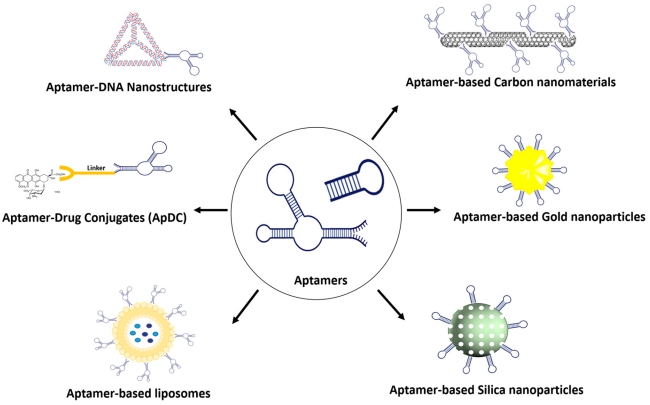 Fig.1 A variety of aptamer conjugates for targeted drug-delivery system.1