
Cell-Penetrating Peptides (CPPs) are primarily designed for cellular uptake/translocation. These peptides (e.g., Tat, Penetratin) have a high density of cationic or hydrophobic residues that allow them to traverse the cell membrane independently, acting as molecular transporters to efficiently move linked cargos into the cytoplasm, regardless of target specificity.
Peptide based Targeted Drug Delivery Solutions
The most critical hurdle in developing next-generation therapeutics is achieving precise, localized delivery to minimize systemic toxicity and maximize efficacy. Our Peptides based Targeting Delivery Solution at Creative Biolabs helps you accelerate therapeutic development and enhance drug bioavailability through innovative peptide engineering and conjugation techniques. We utilize the inherent specificity and small size of peptides to create highly effective drug, gene, and diagnostic conjugates capable of traversing challenging biological barriers.
Click Here to View more about our Services
Introduction of Peptide-Based Targeting Delivery Solution
Peptide-based drug delivery systems (DDSs) utilize short chains of amino acids (peptides) as specific targeting ligands or carriers. These systems have emerged as powerful alternatives to conventional delivery vehicles due to their unique properties: small size (typically < 10 kDa), simple structural composition, versatility, and high affinity for specific molecular targets.
Peptides can be rapidly synthesized via automated solid-phase peptide synthesis (SPPS), allowing for facile modification, cyclization, and the incorporation of non-natural amino acids to enhance metabolic stability and receptor affinity. Unlike large monoclonal antibodies (mAbs, ~150 kDa) that may struggle to infiltrate dense tumors, the small size of targeting peptides allows for deeper tissue penetration. Furthermore, their generally lower immunogenicity compared to large protein-based therapeutics makes them safer for repeated administration.
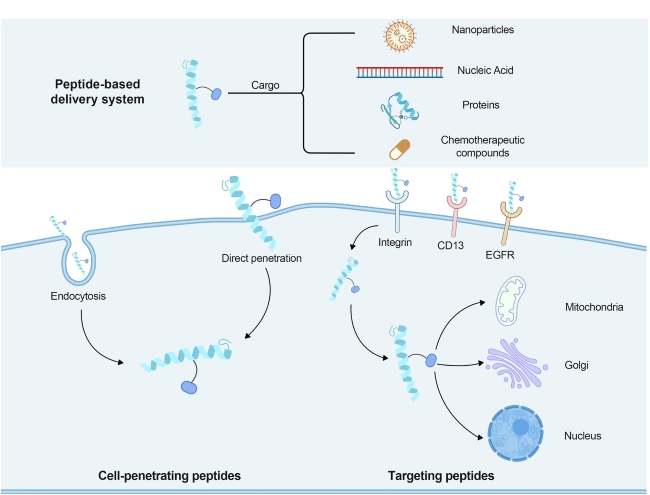 Fig.1 Overview of Targeting and Delivery Strategies for Peptide-based Delivery Systems.1
The key mechanism is receptor-mediated endocytosis. A targeting peptide is engineered to bind a receptor that is significantly overexpressed on the target cell surface (e.g., cancer cells or vascular endothelium). Upon binding, the entire peptide-cargo complex is internalized, leading to highly specific accumulation and intracellular release of the therapeutic agent, overcoming issues of passive diffusion and multi-drug resistance (MDR). This technology is essential for delivering sensitive payloads, such as nucleic acids (siRNA, mRNA) or poorly soluble small molecule drugs, ensuring they are protected until they reach the target organ.
Click the buttons below to explore different types of peptides in drug delivery.
Tumor-Homing Peptides (HPs)
Homing Peptides (HPs) are designed for specificity. They are ligands that recognize and bind to molecular markers selectively overexpressed on the surface of target cells (e.g., tumor cells or diseased vasculature). HPs facilitate the initial, targeted accumulation of the therapeutic conjugate at the disease site.
Cell-Penetrating Homing Peptides (CPHPs)
Cell-Penetrating Homing Peptides (CPHPs) are chimeric, bimodal constructs that fuse an HP sequence with a CPP sequence. This design provides the synergistic benefit of both: high specificity (from the HP) to localize at the disease site, and high cellular entry (from the CPP) to ensure robust intracellular delivery of the therapeutic payload, offering a superior solution for complex barriers like solid tumors.
Key Peptide Ligands for Targeted Delivery
Creative Biolabs utilizes a wide range of peptide ligands for active targeting, including homing peptides and cell-penetrating peptides (CPPs). The choice of ligand is crucial for dictating the tissue and cellular tropism of the final conjugate.
| Peptide Motif/Class | Target/Receptor | Therapeutic Application Focus | Mechanism of Action |
|---|---|---|---|
| RGD Tripeptide (cRGDfK, iRGD) | αvβ3 and αvβ5 Integrins | Oncology (Tumor Vasculature, Melanoma, Glioblastoma) | Binds overexpressed integrins on angiogenic blood vessels and some tumor cells, facilitating cell adhesion and internalization. |
| Angiopep-2 (ANG1005 component) | Low-density lipoprotein receptor-related protein 1 (LRP-1) | CNS Disorders, Brain Tumors (e.g., Leptomeningeal Metastasis) | Functions as a "shuttle" to cross the Blood-Brain Barrier (BBB) via receptor-mediated transcytosis. |
| Lyp-1 (CGNKRTRGC) | p32/gC1qR protein | Lymphatic Metastasis, Tumor Hypoxia | Binds to p32 protein expressed in tumor lymphatic endothelial cells and mitochondria, promoting internalization. |
| SP5-52 (SVSVGMKPSPRP) | Specific Tumor Neo-vasculature markers | Solid Tumor Targeting | Identified via phage display to target unique markers on new tumor blood vessels. |
| T7 Peptide (HAIYPRH) | Transferrin Receptor (TfR) | Brain, Liver, and Tumor Targeting | Binds to TfR, often highly expressed on rapidly dividing cells and utilized for BBB crossing. |
Applications of Peptide Targeting Delivery Solutions
The versatility of peptide-based delivery platforms allows for their broad application across several critical areas of modern medicine, significantly improving therapeutic reach and specificity.
Oncology and Tumor Targeting
Peptide-drug conjugates (PDCs) and peptide-modified nanocarriers represent one of the most promising avenues in cancer therapy. Peptides actively target the unique characteristics of the tumor microenvironment, such as overexpressed receptors (e.g., HER2, folate receptor, integrins) or specific proteases (MMPs, uPA) that are elevated in cancerous tissues. By leveraging enzyme-cleavable linkers, the active drug payload can be released selectively within the tumor site, maximizing cytotoxic effect while greatly mitigating off-target toxicity to healthy organs (Source 4.3). This strategy is vital for improving the therapeutic window of highly potent small-molecule chemotherapy agents.
Crossing the Blood-Brain Barrier (BBB)
The BBB remains the most formidable challenge in developing treatments for CNS diseases, including brain tumors, Alzheimer's, and Parkinson's. Peptides, often referred to as "BBB-shuttles," can be engineered to specifically target endogenous receptors and transporters (like LRP-1 or Transferrin Receptor) on the BBB endothelial cells. This induces receptor-mediated transcytosis, effectively carrying therapeutics into the brain parenchyma. Creative Biolabs focuses on optimizing these peptide shuttles for high stability and loading capacity when conjugated to various cargos, offering a clear path for CNS drug development (Source 3.3).
Delivery of Macromolecular and Nucleic Acid Therapeutics
Peptide-based delivery is not limited to small molecules. Cell-Penetrating Peptides (CPPs), such as Penetratin or Tat, can facilitate the intracellular uptake of macromolecules, including therapeutic proteins, antibodies, and genetic material (siRNA, plasmid DNA). By forming electrostatic complexes or covalent bonds, these peptides protect the delicate cargo from enzymatic degradation and mediate efficient passage across the cell membrane, which is otherwise impermeable to these large, charged molecules.
What We Can Offer: Comprehensive Targeted Delivery Services
Peptide-based targeting offers a transformative solution for challenges that conventional small molecules and large antibodies often face, particularly in oncology and central nervous system (CNS) disorders. At Creative Biolabs, we specialize in overcoming issues like poor tissue penetration, rapid systemic clearance, and low target specificity.
We design and synthesize highly optimized homing peptides that specifically recognize overexpressed receptors (like integrins or specific growth factor receptors) on diseased cells or within the tumor microenvironment. This active targeting strategy drastically increases the therapeutic index of your payload, whether it is a cytotoxic drug, a nucleic acid, or a diagnostic agent. By covalently linking your cargo to a custom-engineered peptide, we create a Peptide-Drug Conjugate (PDC) that acts as a precision guided missile, ensuring maximum impact at the site of action while preserving healthy tissues. Our primary deliverables are stable, high-affinity peptide ligands and complete, characterized conjugate systems ready for in vivo studies.
FAQs
How do I ensure my peptide-based delivery system won't be rapidly broken down in the bloodstream?
Metabolic instability is a common concern for natural peptides. We mitigate this through several chemical modifications, including introducing D-amino acids, cyclizing the peptide backbone, or performing PEGylation. These modifications significantly enhance resistance to circulating proteases, ensuring the targeting system remains stable and functional long enough to reach its intended biological target.
My therapeutic cargo is a large protein. Can peptide targeting still facilitate its cell entry?
Absolutely. While large cargos normally struggle to cross the cell membrane, this is precisely where Cell-Penetrating Peptides (CPPs) come into play. We can conjugate CPPs to your cargo or nanocarrier, utilizing their unique sequences (like poly-arginine motifs) to physically facilitate transport across the cell membrane, enabling effective intracellular delivery of macromolecules.
When should I choose a peptide ligand over a monoclonal antibody for targeted delivery?
Peptides offer distinct advantages in scenarios requiring deep tissue penetration, such as solid tumors, due to their smaller size. They are also generally simpler and more cost-effective to synthesize and exhibit lower immunogenicity compared to large antibodies, making them an excellent choice for targeted delivery where rapid penetration and scalable manufacturing are crucial.
Is it possible to design a system that releases the drug payload only at the disease site and not prematurely?
Yes, this is achieved through the use of stimuli-responsive linkers. We can design linkers that are only cleaved under specific conditions prevalent at the disease site—such as the acidic environment of tumors (pH-sensitive), or in the presence of highly expressed enzymes like MMPs (enzyme-cleavable), or the reductive environment inside many cancer cells (disulfide-cleavable).
How can I confirm that my peptide-cargo conjugate is truly reaching the target cells in vivo with high specificity?
Verification is essential. We recommend incorporating a traceable moiety, such as a fluorescent dye or a radionuclide, into the conjugate. This allows for rigorous in vivo biodistribution and imaging studies to quantitatively confirm high accumulation at the target site and minimal off-target exposure, validating the targeting efficiency of the peptide ligand.
Creative Biolabs is your trusted partner for developing sophisticated Peptides based Targeting Delivery Solutions. We offer end-to-end expertise in custom peptide synthesis, conjugation chemistry, stability enhancement, and comprehensive in vitro and in vivo characterization. Our solutions are designed to resolve the fundamental challenges of bioavailability and specificity, moving your high-potential candidates closer to clinical success.
Reference
- Xiao, Wenjing et al. "Advance in peptide-based drug development: delivery platforms, therapeutics and vaccines." Signal transduction and targeted therapy vol. 10,1 74. 5 Mar. 2025, Distributed under Open Access license CC BY 4.0, without modification. https://doi.org/10.1038/s41392-024-02107-5.
Our services are For Research Use Only. We do not provide services to individuals.
Online Inquiry