
Utilizing polymer cores to achieve high-efficiency loading of challenging cargos, including hydrophobic drugs and complex gene therapy vectors.
Exosome-Polymer Hybrid Nanoparticle for Targeted Drug Delivery
Are you currently facing challenges in achieving efficient cargo loading, high stability, and immune evasion for your cutting-edge nanocarriers? Exosomes-Polymer Hybrid Nanoparticles helps you overcome the inherent limitations of pure delivery systems by accelerating your therapeutic pipeline through the precise biomimetic engineering of exosome membranes onto highly tunable synthetic polymer cores.
Click Here to View more about our Services
Overview of Exosomes-Polymer Hybrid Nanoparticles
Exosome-Polymer Hybrid Nanoparticles represent a revolutionary class of biomimetic delivery vehicles designed to harness the natural advantages of cell-derived vesicles while benefiting from the superior loading capacity and stability of synthetic materials.
What Are Exosomes-Polymer Hybrid Nanoparticles?
Exosome-polymer hybrids are composite nanocarriers formed by combining naturally derived exosomes (or functional exosome-membrane fragments) with engineered synthetic polymeric materials, such as polymer nanoparticles or polymer core/shells. This hybridization strategy aims to create a "best-of-both-worlds" system: the exterior provides the biocompatibility, natural targeting ligands, and immune-evasive properties of the exosome membrane, while the polymer interior offers tunable volume and robust physicochemical protection for the cargo.
Application Scenarios
Custom Payload Encapsulation
Targeted Nanocarrier Design
Engineering cell-specific targeting by leveraging the native tropism of membrane source material.
Scalable Formulation
Developing reproducible, large-scale production protocols to bridge the gap between benchtop research and clinical translation.
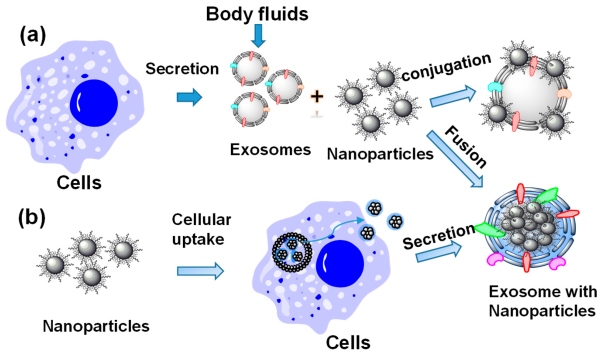 Fig.1 Diagram of methods for preparing exosomes loaded with inorganic nanoparticles.1
Why Choose Us?
Exosome-Polymer Hybrid Nanoparticles offer irreplaceable advantages over traditional delivery methods in the biopharmaceutical field:
Superior Biocompatibility
The natural cell-derived membrane significantly reduces immunogenicity and toxicity compared to purely synthetic materials.
Enhanced Immune Evasion
Membrane surface proteins confer "self" recognition, enabling the hybrid particles to avoid rapid clearance by the reticuloendothelial system (RES), thereby prolonging circulation time.
Increased Versatility for Cargos
Polymers overcome the hydrophilic core limitation of natural exosomes, allowing for high-capacity, stable encapsulation of diverse therapeutic agents, from small molecules to large nucleic acids.
Active/Passive Targeting Potential
They combine the passive enhanced permeability and retention (EPR) effect typical of nanoparticles with the natural, active tissue homing properties of the exosome membrane.
Key Technologies
Success in hybrid nanocarrier development relies on the precise control of engineering parameters and sophisticated use of biomimetic strategies.
Engineering Key Points: Precise Control Over Critical Factors

The source material dictates the surface protein profile, which controls targeting and immune properties. We employ state-of-the-art methods like Size Exclusion Chromatography (SEC) and Tangential Flow Filtration (TFF) to ensure maximum purity and homogeneity of the starting exosome material.
Synthesize polymers that allow precise control over core size, charge, degradation rate, and hydrophobicity, tailoring the internal matrix for optimal payload stability and controlled release kinetics.
Membrane coating/extrusion and fusion protocols (e.g., sonication-assisted, electroporation)—to ensure the polymer core is uniformly and functionally coated with the exosomal membrane while preserving the structural integrity and functionality of the surface proteins.
Key Engineering Insights: Mastering Precise Delivery Control
Cutting-Edge Technology
The strategic selection of the exosome membrane source is crucial for achieving superior targeting and overcoming biological barriers.
| Cell Membrane Source | Targeting Advantages & Properties | Application Examples |
|---|---|---|
| Immune Cells | High affinity for inflamed tissues and tumor microenvironments; natural immune modulation properties; capable of crossing the blood-brain barrier. | Delivering anti-inflammatory drugs to chronic disease sites; enhanced immunotherapy delivery; CNS therapeutics. |
| Platelets | Natural capacity to target damaged vascular endothelium and sites of injury or thrombosis; excellent adhesion properties. | Treating vascular diseases, wound healing, targeted delivery to tumors with leaky vasculature. |
| Cancer Cells | Display specific homotypic adhesion molecules, allowing the hybrid to specifically "home" to the parent tumor type; enhanced cell-to-cell communication. | Highly selective delivery of chemotherapeutics to resistant tumor cells; personalized oncology nanomedicine. |
QC Methods: Building Trust and Reliability
Building trust in complex nanocarriers requires rigorous, validated Quality Control protocols.
Physical Characterization
Nanoparticle Tracking Analysis (NTA) for high-resolution measurement of size distribution and concentration; Dynamic Light Scattering (DLS) for confirming particle size and polydispersity index (PDI); and Transmission Electron Microscopy (TEM/SEM) for visual confirmation of morphology and successful core-shell structure.
Exosomal Marker Validation
Western Blotting, ELISA, or flow cytometry is used to confirm the presence of key exosome-specific surface markers on the final hybrid product, guaranteeing functional membrane retention.
Cargo Integrity and Stability Assays
High-Performance Liquid Chromatography (HPLC) and Gel Electrophoresis are employed to quantify cargo encapsulation efficiency, release kinetics, and long-term storage stability, ensuring the payload remains protected until delivery.
Key Benefits
Exosomes-Polymer Hybrid Nanoparticles offers unique features that translate directly into clinical and commercial success for our clients.
Market-Leading Encapsulation Rates
The advanced polymer core technology ensures superior loading capacity, especially for traditionally challenging hydrophobic drugs and complex genetic material. This leads to higher drug concentration per particle and a more effective therapeutic dose.
Scalable & Reproducible Manufacturing
The critical industry bottleneck of batch-to-batch variability and scale-up complexity. Standardized, modular synthesis and hybridization protocols are designed for transition to manufacturing, ensuring consistency from discovery to clinic.
Enhanced Biological Half-Life
By leveraging the natural immune-evasive properties of the exosomal membrane, hybrid carriers demonstrate significantly prolonged circulation times in vivo compared to bare synthetic nanoparticles.
Discover the Advantages of Creative Biolabs - Request a Quote Today!
Products
| Products | Description | Inquiry |
|---|---|---|
| Functionalized Lipid Products | Functional lipids like DSPE-PEG-TAT and DSPE-PEG-RGD for precision in therapeutic and imaging applications. | |
| Lipid Nanoparticle Products | LNPs, as a leading non-viral vector platform for nucleic acid delivery, are precisely engineered self-assembling systems designed to protect and deliver therapeutic payloads |
Frequently Asked Questions
How do Exosomes-Polymer Hybrids perform against traditional liposomes in terms of safety?
Hybrid nanocarriers often demonstrate superior safety profiles. By utilizing the natural exosome membrane coating, our systems exhibit reduced immunogenicity and toxicity compared to many synthetic liposomes, translating into improved biological acceptance and less off-target effects.
Is it possible to customize the targeting capability of the hybrid nanoparticle?
Absolutely. Customization is one of our core strengths. By sourcing the exosome membrane from specific progenitor cells (e.g., cancer, stem, or immune cells), we can intrinsically engineer the hybrid to display targeted surface proteins, directing the delivery to your specific tissue or cell type.
Can your hybrid system be used to deliver both a diagnostic agent and a therapeutic drug simultaneously?
Yes. The hybrid platform is ideally suited for theranostics. The polymer core can be engineered to co-encapsulate a therapeutic drug alongside an imaging agent (e.g., a fluorescent dye or contrast material), allowing you to monitor the delivery process in real-time while administering treatment.
Creative Biolabs is committed to advancing the frontier of drug delivery by providing robust, reproducible, and highly functional Exosomes-Polymer Hybrid Nanoparticles. We combine expert polymer chemistry with precise exosome biology to turn complex scientific challenges into reliable therapeutic solutions. To learn more about how our Hybrid Nanocarrier Platform can accelerate your research, enhance your therapeutic efficacy, and solve your toughest drug delivery challenges, please contact us directly.
Reference
- Barjesteh, Taraneh, Shomit Mansur, and Yuping Bao. "Inorganic nanoparticle-loaded exosomes for biomedical applications." Molecules 26.4 (2021): 1135. Distributed under Open Access license CC BY 4.0, without modification. DOI: https://doi.org/10.3390/molecules26041135.
Our services are For Research Use Only. We do not provide services to individuals.
Online Inquiry