
Delivering small molecule chemotherapeutics or nucleic acids (siRNA/miRNA) specifically to tumor sites, utilizing the natural tropism of certain source-cell exosomes to reduce systemic toxicity.
Exosome-Graphene Hybrid Nanoparticle for Targeted Drug Delivery
Are you currently facing low drug loading capacity, poor in vivo stability, and insufficient targeted delivery in your therapeutic pipeline? Exosomes-Graphene Hybrid Nanoplatforms help you achieve superior drug bioavailability and enhanced therapeutic efficacy through advanced bioconjugation of functionalized Graphene Oxide nanosheets with naturally targeted exosomal membranes.
Click Here to View more about our Services
Introduction of Exosomes-Graphene Hybrid
What Are Exosomes-Graphene Hybrid Nanoplatforms?
Exosomes-Graphene Hybrid nanoplatforms represent a sophisticated fusion of synthetic and natural drug delivery systems. They are typically engineered by cloaking a functionalized Graphene Oxide (GO) or reduced Graphene Oxide (rGO) core with a phospholipid bilayer derived from natural exosomes (extracellular vesicles). This biomimetic strategy harnesses the high surface area and structural robustness of graphene derivatives for efficient drug/gene loading, while leveraging the inherent biocompatibility and low immunogenicity of the exosome membrane for targeted delivery.
Application Scenarios
Targeted Oncology
Neurodegenerative Disorders
Utilizing the hybrid system's proven ability to traverse the challenging Blood–Brain Barrier (BBB) for the delivery of therapeutic agents to the Central Nervous System (CNS).
Regenerative Medicine
Encapsulating growth factors and regulatory molecules onto the graphene core for sustained and localized release at sites of tissue damage or inflammation.
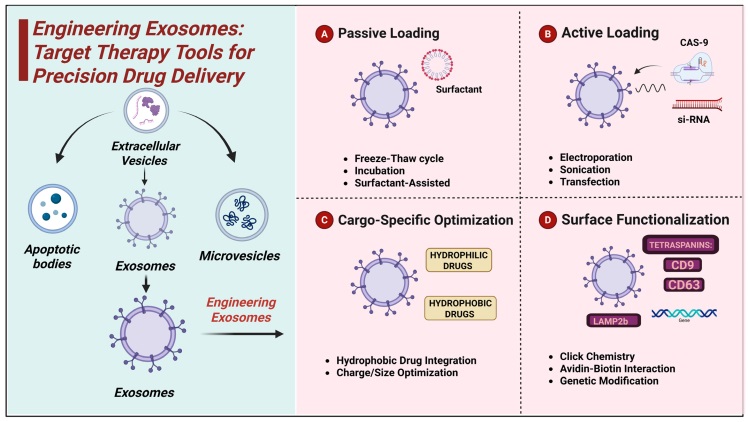 Fig.1 Diagrammatic overview of exosome engineering techniques for targeted drug delivery.1
Why Choose Us?
Exosomes-Graphene Hybrid technology offers several key advantages that resolve the critical limitations of both simple liposomes and native exosomes:
Enhanced Drug Loading
Graphene Oxide's large surface area and rich oxygen-containing functional groups permit high-capacity loading of various cargos, significantly surpassing the natural encapsulation efficiency limits of native exosomes.
Superior Stability in vivo
The rigid GO core provides structural integrity, protecting the cargo and the exosomal membrane from rapid enzymatic degradation and ensuring a longer half-life in circulation.
Innate and Engineered Targeting
The preserved exosomal membrane retains native targeting proteins (e.g., tetraspanins, integrins), allowing passive or active homing.
Low Immunogenicity
By utilizing exosome membranes, hybrids benefit from the body's natural intercellular communication machinery, minimizing clearance by the Mononuclear Phagocyte System (MPS) and reducing immune responses.
Key Technologies
Engineering Key Points: Precision Control for Optimized Function
Achieving a stable, functional Exosomes-Graphene Hybrid requires precise control over several critical influencing factors:

Tune the surface chemistry of the Graphene Oxide core (e.g., degree of oxidation, presence of carboxyl and hydroxyl groups) to control drug loading capacity and the stability of its binding to the exosome membrane. This dictates the pH-responsiveness for controlled release at acidic disease sites.
Employ optimized membrane fusion techniques (such as freeze-thaw cycles or extrusion) alongside specific stabilizers, ensuring the exosome membrane remains intact and functional upon cladding the GO surface. This process is validated to maintain crucial membrane proteins essential for targeting.
During synthesis, employ specialized mild loading protocols to ensure the therapeutic payload (drug, protein, or gene) is not degraded and is optimally oriented for release upon reaching the target cell.
Eager to Advance Your Research? - Explore Your Project Specifications.
Cutting-Edge Technology
The targeting capability of our hybrid nanoplatforms is intrinsically linked to the parent cell source of the exosome membrane. Creative Biolabs offers customized membrane sources to confer specific tropism, ensuring maximum therapeutic efficacy.
| Exosome Membrane Source | Targeting Advantages (Innate Tropism) | Application Examples |
|---|---|---|
| Cancer Cells | Natural homing and fusion specificity to primary or metastatic tumor cells via homologous adhesion molecules. | Targeted delivery of chemotherapeutics to treat recurrent or drug-resistant tumors. |
| Macrophages/Dendritic Cells | Immune evasion properties, prolonged circulation, and natural accumulation at sites of inflammation or in lymph nodes. | Delivery of anti-inflammatory drugs or antigens for immunotherapy and vaccine development. |
| Platelets (PLTM) | Inherent targeting of damaged endothelium or sites of vascular injury/thrombosis. | Delivery of anti-thrombotic agents or regenerative factors for cardiovascular disease or wound healing. |
| Mesenchymal Stem Cells (MSCs) | Tropism toward injured tissue (e.g., brain, heart, kidney) and potent immunomodulatory effects. | Carrying therapeutic genes or miRNAs for tissue regeneration and autoimmune disease treatment. |
QC Methods: Building Trust and Reliability
The validation of Exosomes-Graphene Hybrid Nanoplatforms is underpinned by a rigorous quality control (QC) protocol designed to confirm structural integrity, purity, and functional activity. Core analytical methods for validating these complex vectors include:
Transmission Electron Microscopy (TEM) and Cryo-EM
To visually confirm the successful formation of the hybrid structure, verifying the presence of the Graphene Oxide core encapsulated within the intact exosomal lipid bilayer and confirming the correct particle morphology and size distribution (typically 100–300 nm).
Dynamic Light Scattering (DLS) and Zeta Potential Analysis
To precisely measure hydrodynamic diameter and surface charge. A stable negative Zeta Potential confirms adequate colloidal stability and predicts reduced aggregation and immune clearance in vivo.
Nanoparticle Tracking Analysis (NTA)
Provides high-resolution quantification of particle concentration and size distribution profile, ensuring batch-to-batch consistency and high production yield.
Western Blotting/ELISA for Membrane Markers
Confirms the retention of key exosomal membrane proteins essential for biocompatibility and targeted cell recognition, while simultaneously checking for common cellular contaminants.
Loading Efficiency Assay
Utilizes high-performance liquid chromatography (HPLC) or nucleic acid quantification (qPCR/ddPCR) to determine the precise drug or gene encapsulation efficiency, ensuring maximum therapeutic dose per particle.
Key Benefits
The combination of graphene's high payload capacity and the exosome's natural delivery pathway results in unprecedented therapeutic performance.
Exceptional Stability
Proven resistance to degradation in serum for extended circulation time.
Unmatched Payload Versatility
Capable of co-loading both hydrophilic and hydrophobic small molecules, proteins, and nucleic acids simultaneously.
Enhanced Tissue Penetration
Exosome-derived surface proteins facilitate superior uptake and endosomal escape compared to conventional synthetic nanoparticles.
High Therapeutic Index
Demonstrated ability to concentrate cargo at the target site, minimizing off-target toxicity.
Explore the Advantages with Creative Biolabs – Get Your Quote Now!
Products
Creative Biolabs offers a range of integrated products to empower researchers leveraging the power of Hybrid Nanoparticles technology.
| Products | Description | Inquiry |
|---|---|---|
| Functionalized Lipid Products | Functional lipids like DSPE-PEG-TAT and DSPE-PEG-RGD for precision in therapeutic and imaging applications. | |
| Lipid Nanoparticle Products | LNPs, as a leading non-viral vector platform for nucleic acid delivery, are precisely engineered self-assembling systems designed to protect and deliver therapeutic payloads |
Frequently Asked Questions
How does the Graphene Oxide core affect the biocompatibility and low immunogenicity usually associated with natural exosomes?
That's a great question regarding system integration. The Graphene Oxide core is not directly exposed to the biological environment; it is fully encapsulated by the natural exosomal lipid bilayer. This "cloaking" is key, allowing the system to retain the low immunogenicity and high biocompatibility characteristics of the native exosome, while the functionalized GO provides the required stability and high drug loading.
We are delivering a sensitive RNA payload. Will the conjugation process with Graphene Oxide degrade our cargo?
We understand the delicacy of nucleic acid therapeutics. Utilizes specific, mild bioconjugation methods and low-shear processing that minimize stress on the cargo. Furthermore, the Graphene Oxide surface is often protective, acting as a scaffold that shields RNA from enzymatic degradation once encapsulated.
Is it possible to modify the targeting ability of the hybrid platform beyond the natural tropism of the source cell?
Absolutely. While the natural targeting provided by the exosome membrane is a huge advantage, it can still be enhanced. Post-insertion of targeting ligands (e.g., peptides, aptamers, or antibodies) onto the hybrid surface, achieving dual-targeted specificity.
Creative Biolabs is dedicated to advancing next-generation therapeutics through superior drug delivery solutions. Exosomes-Graphene Hybrid nanoplatforms seamlessly merge the best characteristics of natural extracellular vesicles with the structural and loading efficiency of Graphene Oxide, providing an unparalleled tool for targeted drug and gene delivery. Our team of nanomedicine specialists is standing by to provide detailed information, project consultation, and customized quotes.
Reference
- Premchandani, Tanvi, et al. "Engineered exosomes as smart drug carriers: overcoming biological barriers in CNS and cancer therapy." Drugs and Drug Candidates 4.2 (2025): 19. Distributed under Open Access license CC BY 4.0, without modification. DOI: https://doi.org/10.3390/ddc4020019.
Our services are For Research Use Only. We do not provide services to individuals.
Online Inquiry