The challenge of targeted drug delivery—getting a therapeutic agent precisely where it needs to go—is a persistent barrier in developing effective therapies. Our Vitamins based Targeting Delivery Solution helps you accelerate therapeutic development and increase drug efficacy through harnessing high-affinity, receptor-mediated cellular uptake pathways. By decorating drug carriers with essential vitamins, we transform non-specific compounds into highly selective, tissue-specific agents, unlocking the full potential of your therapeutic candidates.
Click Here to View more about our Services and Products
Active drug targeting is the cornerstone of precision medicine, and the use of vitamins as targeting moieties is a highly effective approach rooted in fundamental cell biology. Cells, especially those undergoing rapid proliferation like cancer cells, exhibit an increased demand for growth factors and essential nutrients, including specific vitamins. To meet this heightened metabolic need, these cells often dramatically upregulate the expression of the corresponding vitamin receptors on their surface.
For instance, the Folate Receptor (FR), which binds Folic Acid (Vitamin B9), is frequently overexpressed in many ovarian, breast, and lung carcinomas, while its expression is low or undetectable in most normal tissues (with exceptions like the kidneys and placenta). Similarly, the receptors for Biotin (Vitamin B7) and Cobalamin (Vitamin B12) are also highly expressed in various aggressive tumor types, making them powerful biomarkers for selective delivery. This differential expression pattern provides a highly advantageous "window" for targeted drug delivery.
Fig.1 The medicinal applications of TPGS synthesized from vitamin E.1
When a therapeutic payload is linked to a vitamin ligand, it mimics the natural nutrient, allowing it to exploit the cell's own transport machinery. The binding of the vitamin-drug conjugate to the overexpressed receptor triggers receptor-mediated endocytosis (RME), a process that efficiently internalizes the entire complex. Once inside the cell, the acidic environment of the endosome or the high concentration of specific intracellular components (like glutathione) can be used to cleave a responsive linker, ensuring the precise release of the active drug. This mechanism transforms a generalized toxic agent into a highly cell-specific therapeutic tool.
Summary of Key Vitamin Ligands and Their Therapeutic Target Areas:
Vitamin Ligand
Relevant Receptor / Pathway
Key Therapeutic Target Areas
Folic Acid (Vitamin B9)
Folate Receptor-α (FR-α)
Ovarian, Breast, Lung, Colorectal Cancers; Activated Macrophages in Inflammation/RA
Biotin (Vitamin B7)
Biotin Receptors (SMVT)
Leukemia, Ovarian, Colon, Breast Cancers; Highly proliferative cells
Cobalamin (Vitamin B12)
Transcobalamin II Receptor (CD320), Intrinsic Factor/Cubam
Malignant Tumors (high B12 demand); Enhancement of Oral Bioavailability for Peptides
Thiamine (Vitamin B1)
Thiamine Transporters (THTRs)
Various Cancers
Applications in Targeted Therapeutics
The strategic use of vitamins as targeting ligands offers broad application potential across numerous therapeutic and diagnostic fields. By customizing the delivery system to exploit the unique metabolic profile of the disease state, this technology can significantly improve patient outcomes.
Cancer Therapy
The most prominent application lies in oncology. The high overexpression of receptors for Folate (FR-α), Biotin, and Cobalamin (via the CD320 receptor) on numerous tumor cells makes them ideal targets. Vitamins can be conjugated to:
Cytotoxic Agents: Delivering highly potent chemotherapy agents (e.g., taxoids, platinum compounds) directly into cancer cells, which minimizes systemic side effects and may help overcome multidrug resistance (MDR).
Nucleic Acids: Encapsulating fragile payloads like siRNA, mRNA, or plasmids within vitamin-functionalized nanoparticles to ensure targeted delivery for gene silencing or gene therapy.
Imaging Agents: Attaching fluorescent dyes or radiopharmaceuticals for highly selective tumor imaging and diagnostic purposes, enabling better surgical planning and monitoring.
Inflammatory & Autoimmune Diseases
Beyond cancer, Folate Receptors are also known to be overexpressed on activated macrophages, which are central players in chronic inflammatory conditions like rheumatoid arthritis (RA) and inflammatory bowel disease (IBD). Targeting these activated immune cells with folate-conjugated carriers allows for the selective delivery of anti-inflammatory drugs (e.g., methotrexate, steroids), concentrating the therapeutic effect at the site of inflammation while sparing healthy organs.
Enhanced Oral Bioavailability
Vitamin B12's unique and highly efficient gastrointestinal absorption pathway, mediated by the Intrinsic Factor (IF) and the Cubam receptor, can be leveraged to enhance the oral bioavailability of large, poorly absorbed molecules like peptides, proteins, and even some small-molecule drugs. By conjugating the drug to Vitamin B12, the therapeutic agent can 'hitch a ride' on this natural transport system, significantly increasing its uptake and reducing degradation in the GI tract.
What We Can Offer
Creative Biolabs specializes in synthesizing and formulating drug delivery systems that leverage the body's natural, high-efficiency transport mechanisms. Vitamins, such as Folic Acid (Vitamin B9) and Biotin (Vitamin B7), are essential for cellular proliferation, and their corresponding receptors are frequently overexpressed on the surface of rapidly dividing cells, particularly in tumors, or are uniquely expressed in specific tissues.
We assist your project by chemically conjugating these vitamin ligands onto nanoparticles, liposomes, polymeric micelles, or small molecule-drug conjugates (SMDCs). This modification serves as a molecular "zip code," enabling the drug carrier to bind selectively to the overexpressed vitamin receptors. Upon binding, the entire complex is internalized via receptor-mediated endocytosis, effectively delivering the therapeutic payload inside the target cell while minimizing exposure to healthy tissues. This active targeting strategy translates directly into improved therapeutic indices, lower required dosages, and significantly reduced systemic toxicity.
The specific deliverables and solutions you can expect include:
Enhanced Specificity
Converting passively distributed drugs into actively targeted therapeutics, substantially increasing the drug concentration ratio between target and non-target cells.
Improved Cellular Uptake
Facilitating efficient internalization of the drug or carrier into cells via high-capacity endocytic pathways, overcoming the challenges of passive diffusion or poor permeability.
Overcoming Biological Barriers
Designing carriers that leverage vitamin transporters to cross difficult barriers, such as the intestinal lining for improved oral bioavailability (e.g., Vitamin B12 pathway).
Optimized Formulation
Providing stable, biocompatible formulations (nanoparticles or conjugates) ready for in vitro validation and progression to in vivo studies.
FAQs
How do I select the best vitamin for targeting my specific cell type?
The choice depends on the receptor expression profile of your target cells. We recommend starting with established ligands like Folic Acid or Biotin for common cancer types, as their receptor overexpression is well-documented. For novel targets or specific tissues (like the gastrointestinal tract), detailed literature review and preliminary expression studies are crucial. The goal is to maximize the differential uptake ratio between the target and non-target cells.
What kind of therapeutic payloads can be successfully delivered using this approach?
This targeting method is highly versatile. It can successfully deliver small molecule chemotherapy drugs (which can be directly conjugated or encapsulated), large biologics such as proteins and peptides, and nucleic acid-based therapeutics (siRNA, mRNA) encapsulated within nanoparticle carriers. The key is designing a stable carrier that releases the payload effectively once internalized via the vitamin receptor pathway.
Are there any concerns about off-target toxicity in normal tissues that also express vitamin receptors, such as the kidney or liver?
This is a critical consideration. While some normal tissues (like the kidney proximal tubules for Folate and B12 reabsorption) express these receptors, the goal is to leverage the degree of overexpression found in pathological cells. Furthermore, sophisticated formulation design, such as using ultra-stable carriers that only release the drug in the specific intracellular environment of the target cell, minimizes non-specific activity, even if the carrier accumulates transiently in healthy organs.
How do vitamin-targeted carriers compare to antibody-drug conjugates (ADCs) in terms of efficacy and development cost?
Vitamin-targeted systems offer a powerful and often more cost-effective alternative to ADCs. Vitamins are small molecules, resulting in conjugates with lower molecular weight, potentially better tissue penetration, and simpler, less expensive chemical synthesis compared to generating large, complex monoclonal antibodies. While ADCs offer high specificity, the high-affinity binding of vitamins to their overexpressed receptors provides a similarly effective active targeting mechanism at a fraction of the cost and complexity.
What initial data is required before proceeding with custom synthesis of a vitamin-drug conjugate or targeted nanoparticle?
To ensure an efficient start, we ideally need to know the identity of your therapeutic payload and in vitro evidence (e.g., flow cytometry or Western blot data) confirming the overexpression of the chosen vitamin receptor on your target cell line relative to a healthy control line. If this data is unavailable, we can provide cell line screening services to establish the best targeting ligand for your project.
The use of Vitamins based Targeting Delivery Solutions represents a sophisticated, clinically relevant strategy for active drug targeting. By exploiting the metabolic demands of diseased cells—particularly the overexpression of receptors for essential nutrients like Folic Acid and Biotin—Creative Biolabs enables the creation of highly selective and efficient delivery systems. Our comprehensive services, from custom conjugation chemistry to advanced nanocarrier formulation, are designed to translate this powerful biological insight into successful therapeutic candidates, dramatically improving drug efficacy and safety profiles.
Reference
Mehata, Abhishesh Kumar et al. "Vitamin E TPGS-Based Nanomedicine, Nanotheranostics, and Targeted Drug Delivery: Past, Present, and Future." Pharmaceutics vol. 15,3 722. 21 Feb. 2023, Distributed under Open Access license CC BY 4.0, without modification. https://doi.org/10.3390/pharmaceutics15030722.
Our services are For Research Use Only. We do not provide services to individuals.
Creatibe Biolabs' custom LNP was the only solution that
successfully delivered our CRISPR-Cas9 payload across the blood-brain barrier with high
efficiency and low toxicity.”
Dr. Evelyn Reed
Postdoctoral Researcher, Leading
University
Our siRNA candidate was failing due to off-target toxicity, but
Creatibe Biolabs' team rapidly redesigned our LNP using their modular platform, rescuing our
preclinical program.”
Ben Carter
Project Manager
Achieving cytosolic delivery of our protein degrader with Creatibe Biolabs' exosome platform
was the key to unlocking our candidate's full therapeutic potential.”
Dr. Kenji Tanaka
Principal Scientist, Large
Pharma Corp
Our oncology drug's efficacy was limited by poor tumor
accumulation. Creatibe Biolabs' peptide-conjugated liposomes provided the precise targeting
we needed, dramatically increasing the drug's therapeutic index.”
Dr. Clara Schmidt
Senior Scientist, Oncology
Innovations Inc.
We required a delivery system that would only release its payload
in the tumor's acidic microenvironment. Creatibe Biolabs' pH-responsive liposomes performed
flawlessly, minimizing systemic exposure.”
David Chen
Formulation Scientist
Outstanding expertise in antibody engineering.The team's attention
to detail and innovative approaches have sianificantly accelerated our development timeline.


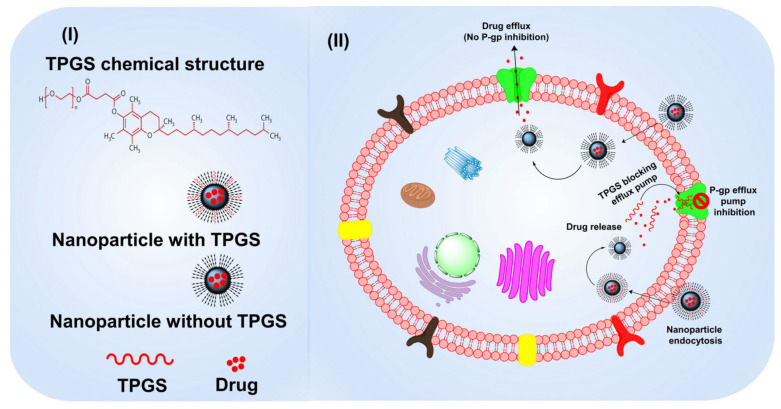 Fig.1 The medicinal applications of TPGS synthesized from vitamin E.1