

Manufacturing customized Hybrid NPs for the stable and efficient delivery of sensitive payloads like siRNA, antisense oligonucleotides, and plasmids, particularly for cancer targets.
Exosome-Dendrimer Hybrid Nanoparticle for Targeted Drug Delivery
Are you currently facing challenges in translating gene therapies due to systemic toxicity, low cellular uptake, or insufficient target-specific delivery in complex disease models? Exosome-Dendrimer Hybrid Nanoparticle helps you achieve superior therapeutic indices and streamline preclinical development through innovative biomimetic engineering that combines the safety of natural exosomes with the high payload capacity of synthetic polymers.
Click Here to View more about our Services
Introduction of Exosome-Dendrimer Hybrid Nanoparticles
What Is Exosome-Dendrimer Hybrid Nanoparticles?
Exosome-Dendrimer Hybrid Nanoparticles represent a breakthrough in nanomedicine, merging the best characteristics of biological carriers and synthetic polymer systems. They consist of a high-capacity, biocompatible dendrimer core encapsulated within the natural membrane of a cell-derived exosome. This strategic combination overcomes the primary limitations of each component: the inherent toxicity of cationic dendrimers is masked, while the low payload capacity of native exosomes is dramatically amplified.
Application Scenarios
Gene and RNA Therapy Delivery
Targeted Immuno-Oncology
Developing cell-specific Hybrid NPs using tumor-derived or immune cell-derived exosome membranes to enhance targeting and facilitate immune-modulating drug or gene delivery directly to tumor microenvironments.
Complex Disease Modulation
Creating advanced stimulus-responsive systems for treating multifactorial diseases that require combined antioxidant, anti-inflammatory, and highly specific cellular targeting.
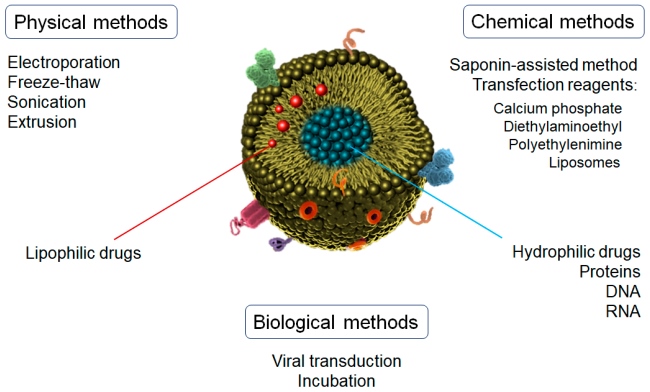 Fig.1 Strategies for incorporating drugs into exosome nanoparticles.1
Why Choose Us?
The Hybrid NP platform offers a decisive scientific and clinical edge over traditional synthetic or viral vectors:
Eliminated Cationic Toxicity
The natural exosome membrane shields the highly charged dendrimer core, drastically reducing systemic cytotoxicity and immunogenicity.
Biomimetic Targeting and Stealth
Retains native exosomal surface proteins, enabling immune evasion and leveraging natural tropism for specific cell types or tissues.
Enhanced Tissue Penetration
Optimized size (~150 nm) for taking advantage of the Enhanced Permeability and Retention (EPR) effect in solid tumors.
Superior Therapeutic Payload
Allows for significantly higher loading density of therapeutic cargo compared to native exosomes.
Tuned Cellular Uptake
Switches the uptake mechanism from non-specific toxic electrostatic interaction to highly efficient, receptor-mediated endocytosis, mimicking natural cellular communication.
Key Technologies
Engineering Key Points: Achieving Precise Control Over Delivery
Utilizes proprietary methods to ensure precise control over the complex self-assembly of our Hybrid NPs, guaranteeing stability and reproducible therapeutic function:

We precisely select the dendrimer generation and functionalization, which dictates the payload capacity and electrostatic interaction strength with the exosome membrane.
We rigorously source and isolate exosomes from specific cell lines to confer the desired intrinsic targeting characteristics.
We control the critical electrostatic interaction between the positively charged dendrimer and the negatively charged exosome membrane, ensuring high-efficiency loading into exosomes without compromising membrane integrity.
For advanced applications, we can integrate stimuli-responsive components into the dendrimer core to facilitate on-demand drug release at the disease site.
Engineering Essentials: Attaining Exact Control Over Delivery
Cutting-Edge Technology
The power of the Hybrid NP platform is its customizable exterior, driven by the biological source of the exosome membrane. This allows us to tailor the targeting mechanism precisely to the disease context.
| Exosome Membrane Source | Targeting Advantages & Mechanism | Application Examples |
|---|---|---|
| Tumor Cells | Homotypic Targeting: Expresses specific adhesion molecules that favor re-entry into the parent tumor tissue, maximizing local drug concentration. | Delivery of cytotoxic agents or siRNA to inhibit cancer growth; Targeted gene silencing of oncogenes. |
| Mesenchymal Stem Cells (MSCs) | Immunomodulatory Targeting: Highly tropism toward inflamed tissues and macrophages. Facilitates the polarization of macrophages to the anti-inflammatory M2 phenotype. | Treatment of inflammatory and autoimmune disorders; Delivery of anti-fibrotic or antioxidant cargo. |
| Platelets/Red Blood Cells (RBCs) | Long Circulation & Vascular Targeting: Platelets target injured endothelium; RBC membranes provide exceptional immune camouflage and prolonged systemic circulation. | Treatment of vascular injury, thrombosis, or sepsis; Enhanced systemic circulation for chronic disease therapies. |
QC Methods: Building Trust and Reliability
Building client trust requires absolute validation of the delivery vector.
Physicochemical Characterization
We use Dynamic Light Scattering (DLS) to confirm the optimal size (~100–150 nm) and monitor stability. Zeta Potential analysis verifies the desired negative surface charge, which is crucial for safety and immune evasion.
Exosomal Identity Validation
Western Blotting is utilized to confirm the retention of key exosomal surface markers, ensuring the biomimetic properties are intact.
Payload Quantification
High-performance liquid chromatography (HPLC) or UV-Vis spectroscopy is employed to precisely quantify the therapeutic cargo loading efficiency within the dendrimer core.
Biological Function Assay
We conduct in vitro assays to measure cell viability (cytotoxicity testing) and target-specific gene silencing efficacy, confirming that the Hybrid NP is functionally superior to free carriers.
Key Benefits
Hybrid Nanoparticle platform provides unparalleled advantages that directly accelerate your drug development pipeline:
Toxicity Elimination
Allows for higher systemic dosing with minimal risk of organ damage or adverse immune reactions.
Enhanced Gene Silencing
Maximizes the therapeutic effect of sensitive payloads like siRNA and ASOs.
Multi-Functional Design
Advantage: Platform enables the concurrent delivery of different cargo and integrates advanced features for localized activation.
Reveal the Benefits of Creative Biolabs - Get a Quote Today!
Products
| Products | Description | Inquiry |
|---|---|---|
| Functionalized Lipid Products | Functional lipids like DSPE-PEG-TAT and DSPE-PEG-RGD for precision in therapeutic and imaging applications. | |
| Lipid Nanoparticle Products | LNPs, as a leading non-viral vector platform for nucleic acid delivery, are precisely engineered self-assembling systems designed to protect and deliver therapeutic payloads |
Frequently Asked Questions
Can Hybrid NPs be used for both small molecule drugs and nucleic acids?
Absolutely. Hybrid NPs is highly versatile. The dendrimer core is excellent for complexing negatively charged nucleic acids (like siRNA) due to its cationic nature, but it can also be functionalized to encapsulate small molecule drugs.
How do Hybrid NPs avoid being immediately cleared by the immune system compared to generic liposomes?
That's the biomimetic advantage! By coating the nanocarrier with natural exosome membranes, NPs inherit the exosomes' 'self' markers and negative surface charge. This provides an immune camouflage, significantly prolonging their circulation time and enhancing passive targeting.
Is there any risk of residual cytotoxicity from the dendrimer core, even when encapsulated?
The complete encapsulation and masking of the dendrimer's primary amines by the exosome membrane substantially eliminate the membrane-disrupting toxicity typically associated with free cationic polymers. Dramatically reduced cytotoxicity, confirming a wide therapeutic window for clinical relevance.
Creative Biolabs is leading the way in next-generation nanomedicine with the products of Exosome-Dendrimer Hybrid Nanoparticle. By seamlessly integrating the stability and payload capacity of synthetic dendrimers with the safety and targeting inherent to biological exosomes, Exosome-Dendrimer Hybrid Nanoparticles provide pharmaceutical and biotech clients with a vector that promises unparalleled efficacy and minimal toxicity. Contact our expert team, who is prepared to tailor the system to your specific therapeutic cargo and targeting requirements.
Reference
- Cano, Amanda, et al. "Exosomes-based nanomedicine for neurodegenerative diseases: current insights and future challenges." Pharmaceutics 15.1 (2023): 298. Distributed under Open Access license CC BY 4.0, without modification. DOI: https://doi.org/10.3390/pharmaceutics15010298.
Our services are For Research Use Only. We do not provide services to individuals.
Online Inquiry