
Efficient packaging and cell-specific delivery of large plasmids or gene manipulation tools into hard-to-transfect cell types.
Liposome-Exosome Hybrid Nanoparticle for Targeted Drug Delivery
Are you currently facing challenges in achieving high payload delivery into specific cell types, dealing with systemic toxicity from synthetic carriers, or struggling with the low efficiency of non-viral vectors for gene manipulation tools? Liposome-Exosome Hybrid Nanoparticles accelerate your translational medicine projects and obtain superior cell-specific delivery that fuses high-capacity lipid vesicles with naturally-derived, biocompatible exosomes.
Click Here to View more about our Services
Overview of Liposome-Exosome Hybrid Nanoparticles
What are Liposome-Exosome Hybrid Nanoparticles?
Liposome-Exosome Hybrid Nanoparticles (LEHNs) represent the next generation of biogenic nanocarriers, ingeniously combining the strengths of two distinct delivery modalities: synthetic liposomes and naturally-secreted exosomes. Liposomes offer superior stability and high payload encapsulation capacity for large therapeutic nucleic acids, while exosomes provide intrinsic biocompatibility, low immunogenicity, and natural targeting capabilities dueowed to their specific membrane proteins.
Application Scenarios
Large Therapeutic Nucleic Acid Delivery
Targeted Oncology Delivery
Engineering hybrid systems that leverage exosome membrane proteins derived from tumor-targeting cells to enhance localized drug accumulation in the tumor microenvironment.
Regenerative Medicine & Cell Therapy
Delivering therapeutic agents to specific progenitor or immune cells in vivo to facilitate tissue repair and immune modulation with minimal systemic off-target effects.
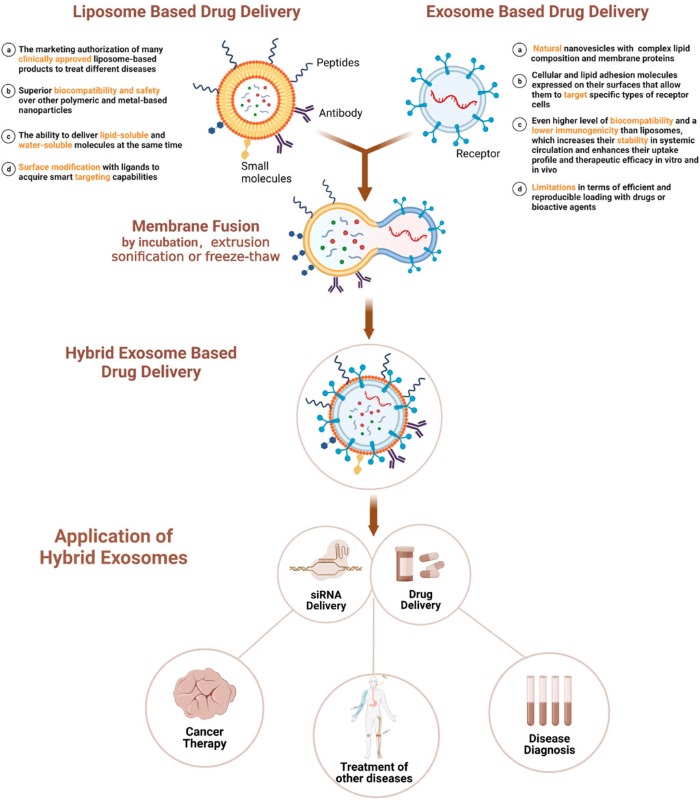 Fig.1 Preparation and applications of hybrid exosomes via membrane fusion.1
Why Choose Us?
LEHNs offering key advantages over conventional systems:
Biomimetic Specificity
The retained exosomal membrane components confer natural cell-homing specificity that synthetic systems cannot replicate.
Enhanced Payload Capacity
Successfully overcomes the inherent size limitation of natural exosomes, allowing efficient loading of large nucleic acids.
Reduced Immunogenicity
Inherits the excellent biocompatibility and low systemic toxicity profile of natural exosomes.
Superior Stability
The hybrid lipid bilayer provides robust stability for cargo protection both in vitro and in vivo.
Key Technologies
Engineering Key Points: Precision Control in Nanocarrier Design
Successful fabrication of LEHNs requires precise control over the membrane fusion process to ensure the optimal combination of functional properties.

Selecting and adjusting the composition of the synthetic liposome to maximize large cargo loading efficiency while mitigating liposome-derived cytotoxicity.
Utilizing optimized physical and chemical protocols to ensure a high fusion rate and uniform vesicle size, minimizing damage to the critical exosomal surface proteins.
Verifying that the native proteins on the exosome surface remain functionally intact after the fusion process.
Explore How We Can Support - Schedule a Consultation!
Cutting-Edge Technology
The therapeutic benefit of LEHNs is fundamentally driven by the source of the exosome membrane. By utilizing exosomes derived from different cell types can custom-engineer the targeting specificity of the final hybrid product.
| Exosome Membrane Source | Primary Targeting Advantage | Application Examples |
|---|---|---|
| Macrophages/Immune Cells | Intrinsic migration to inflammation sites and tumors; ability to cross biological barriers. | Targeted delivery of anti-inflammatory drugs to inflamed tissues; enhancing tumor-associated immune response. |
| Platelets | Homing to sites of vascular injury or clots; natural binding to damaged endothelium. | Delivery of pro-healing or anti-thrombotic agents for cardiovascular diseases. |
| Cancer Cells | Homotypic targeting (targeting tumor cells of the same type); inherent properties for crossing tumor barriers. | Delivery of cytotoxic drugs directly to residual cancer cells post-resection. |
| Mesenchymal Stem Cells (MSCs) | Homing to sites of injury and regeneration; natural tropism for specific tissues. | Targeted delivery of therapeutic plasmids for tissue repair and regenerative medicine applications. |
QC method: Building Trust and Reliability in Delivery Systems
To ensure the functional integrity and safety of our Liposome-Exosome Hybrid Nanoparticles, Creative Biolabs employs a rigorous QC methodology. This multi-step analytical process is essential for validating the successful fusion, encapsulation, and stability of every batch.
Morphological and Size Verification
Use TEM to confirm the spherical morphology and DLS to precisely measure the size distribution (30-200 nm range) and Polydispersity Index (PDI) of the final hybrid nanoparticles.
Encapsulation Efficiency (EE)
Fluorescent dye or radioactive labeling assays are used to accurately quantify the percentage of therapeutic cargo successfully encapsulated within the LEHNs.
Cargo Integrity Assessment
For nucleic acid payloads, conduct DNase protection assays to confirm that the large therapeutic molecule is fully protected within the hybrid particle and not merely associated with the surface.
Surface Protein Confirmation
Western Blotting or flow cytometry is performed using specific markers to verify the retention and orientation of the functional exosomal surface proteins post-fusion.
Zeta Potential Measurement
Used to monitor the surface charge, which is crucial for assessing stability and predicting in vivo interaction profiles.
Key Benefits
LEHNs provide unique features that translate directly into accelerated therapeutic development:
Superior Cell-Specific Uptake
The hybrid system retains the membrane proteins necessary for internalization by difficult-to-transfect cells. This enhanced mechanism drives robust cellular entry where liposomes alone fail.
High Therapeutic Load
Successfully integrates the payload capacity of synthetic lipids, enabling the delivery of large therapeutic nucleic acid constructs previously limited by exosome size.
Maximized In Vivo Half-Life
The biogenic nature of the exosomal membrane confers exceptional stability in circulation, decreasing rapid clearance by the immune system and prolonging systemic delivery.
Reduced Off-Target Effects
By combining intrinsic exosomal targeting with a non-viral structure, the system delivers the therapeutic payload with high precision, minimizing undesirable side effects.
Discover the Creative Biolabs Edge - Request a Quote Now!
Products
| Products | Description | Inquiry |
|---|---|---|
| Functionalized Lipid Products | Functional lipids like DSPE-PEG-TAT and DSPE-PEG-RGD for precision in therapeutic and imaging applications. | |
| Lipid Nanoparticle Products | LNPs, as a leading non-viral vector platform for nucleic acid delivery, are precisely engineered self-assembling systems designed to protect and deliver therapeutic payloads |
Frequently Asked Questions
How does the stability of your LEHNs compare to standard liposomes or naked exosomes?
Our Liposome-Exosome Hybrid Nanoparticles offer enhanced stability. They combine the robustness of the synthetic liposome shell with the natural, stable membrane architecture of exosomes, resulting in a system that provides superior cargo protection in physiological conditions.
Are LEHNs applicable for hard-to-transfect cells, such as certain primary cells or stem cells?
Absolutely. The LEHNs have been proven to successfully enter cell types that are resistant to standard liposomal transfection, such as MSCs, by retaining the natural cellular uptake mechanisms of the exosome membrane.
Can I use LEHNs to deliver large therapeutic nucleic acid plasmids?
Yes, LEHN is specifically designed to overcome the size limitations of natural exosomes. By fusing them with high-capacity liposomes, the hybrid system efficiently packages and protects large gene manipulation tools, enabling successful in vivo gene expression and regulation.
Creative Biolabs is dedicated to providing cutting-edge solutions at the forefront of nanobiotechnology. Liposome-Exosome Hybrid Nanoparticles offer an unparalleled blend of high payload capacity, superior biocompatibility, and targeted cellular specificity, making them the ideal platform for your most challenging therapeutic delivery programs. Contact our expert scientific team today for a detailed consultation, customized product recommendations, and a quote.
Reference
- Liu, Anqi, et al. "Research progress in membrane fusion-based hybrid exosomes for drug delivery systems." Frontiers in bioengineering and biotechnology 10 (2022): 939441. Distributed under Open Access license CC BY 4.0, without modification. https://doi.org/10.3389/fbioe.2022.939441.
Our services are For Research Use Only. We do not provide services to individuals.
Online Inquiry