Protect the duplex
Preserve RNA integrity during formulation, administration, circulation, and tissue distribution without creating a carrier that prevents later release.

Compare conjugates, lipid nanoparticles, polymers, antibodies, peptides, aptamers, nucleic acid nanostructures, exosomes, and viral expression systems according to tissue access, cell specificity, intracellular release, durability, and safety.
siRNA delivery strategies aim to protect RNA and deliver it to the correct tissue, cell population, and cytosolic compartment for effective gene silencing. Creative Biolabs explains how different delivery platforms should be selected and validated according to target biology, administration route, functional performance, and safety. Creative Biolabs also supports customized RNAi delivery method development, including carrier selection, targeting optimization, intracellular release, and functional evaluation.
Preserve RNA integrity during formulation, administration, circulation, and tissue distribution without creating a carrier that prevents later release.
Match route, size, ligand, charge, surface properties, and pharmacokinetics to the anatomical compartment that must receive active material.
Use receptor biology, tissue physiology, or local exposure to favor uptake by disease-relevant cells rather than surrounding bystander populations.
Overcome vesicular sequestration so an intact guide strand can engage the RNAi machinery and produce measurable target suppression.
A delivery system may achieve high RNA exposure without delivering enough active guide strands to the cytosol of target cells. Therefore, bulk biodistribution or total uptake alone cannot confirm effective delivery, as RNA may remain extracellular, enter non-target cells, degrade, or become trapped in endosomal compartments. Productive delivery requires RNA to reach the correct cells, escape into the cytosol, engage the RNAi machinery, and produce measurable target mRNA and protein suppression consistent with the expected biological effect.
This distinction is especially important when comparing gene delivery strategies. Two systems may show similar tissue accumulation but very different functional efficiency because one enters the relevant cells more selectively or releases RNA more effectively. Conversely, a formulation with lower total tissue signal may still be superior if a larger fraction of the delivered dose reaches the pharmacologically productive intracellular compartment.
For development decisions, each checkpoint should be measured with an assay that answers a different question. Biodistribution asks where the material goes; cell-specific uptake asks who receives it; intracellular localization asks where it resides; target knockdown asks whether the RNA is functionally available; and phenotype asks whether the level of silencing is biologically meaningful. A convincing delivery package connects these readouts rather than substituting one for another.
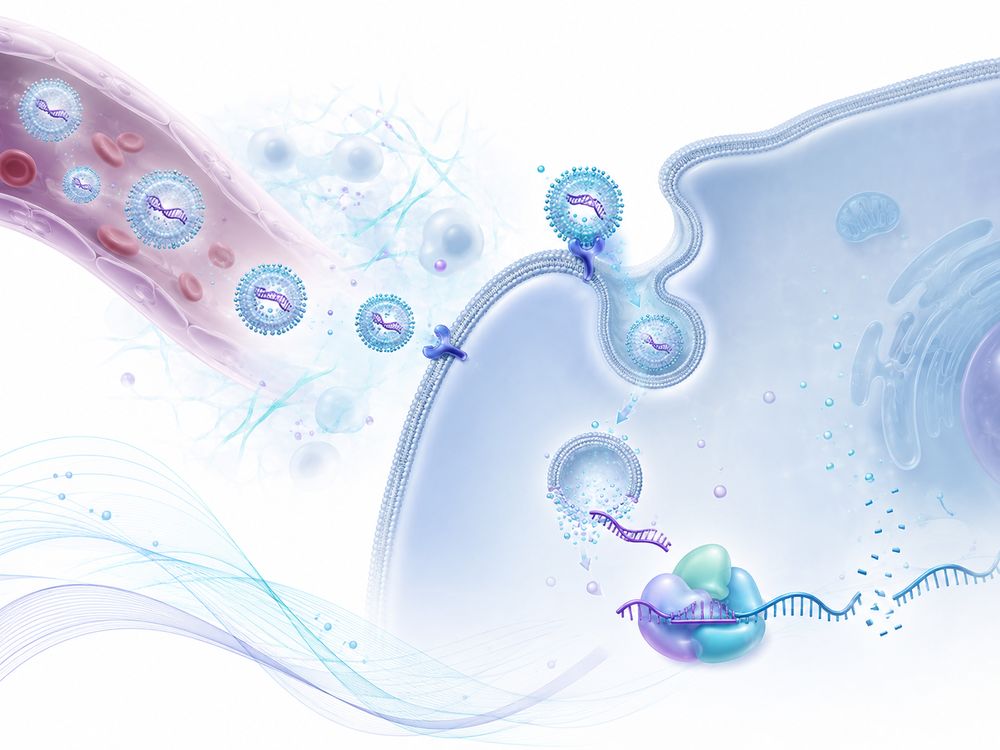
Each platform addresses a different part of the delivery problem. The best option depends on target-cell biology, administration route, required duration, siRNA chemistry, dose, and translational requirements.
GalNAc-based RNAi delivery provides a defined ligand–oligonucleotide architecture for hepatocyte-directed uptake. Targeting is incorporated into a relatively compact molecular format rather than a multicomponent carrier.
Lipid nanoparticles can encapsulate siRNA, protect the duplex from extracellular degradation, and promote intracellular delivery. Their performance depends on lipid composition, particle properties, dose, administration route, and the biological environment.
Antibody–siRNA conjugates can exploit cell-surface receptors to improve cellular selectivity. High antibody affinity alone is not sufficient because the receptor must also be accessible and support productive internalization.
Peptides and aptamers can provide receptor targeting, membrane interaction, tissue penetration, or intracellular-delivery functions in relatively compact formats. Their performance is highly sequence dependent.
Polymeric carriers and nucleic acid nanostructures can be engineered for RNA association, condensation, surface presentation, environmental responsiveness, and intracellular release.
Exosomes can exploit biological vesicle uptake pathways, whereas viral systems can deliver an RNAi expression cassette that generates silencing molecules inside the target cell. These approaches differ fundamentally from administering synthetic siRNA.
A platform should be selected from the required biological profile rather than platform availability alone. The same carrier can be appropriate for one tissue and poorly matched to another.
Define the disease-relevant cell population before choosing the carrier. Tissue-level expression is not enough: the uptake receptor, membrane accessibility, disease-state expression, cell turnover, and abundance in off-target tissues can all change whether receptor-directed delivery is feasible.
Systemic, local, ocular, pulmonary, CNS, and ex vivo routes create different exposure constraints. Local delivery can reduce some systemic barriers but introduces its own limits in tissue penetration, retention, injection volume, local tolerability, and distribution within the treated compartment.
Transient siRNA exposure, repeat dosing, long tissue retention, and vector-mediated RNAi expression produce very different pharmacological windows. The preferred duration should be matched to target-protein turnover, disease kinetics, reversibility needs, and the consequences of excessive suppression.
Duplex length, modification pattern, net charge, hydrophobicity, conjugation site, and terminal architecture can alter formulation behavior and intracellular performance. A delivery system optimized using one siRNA chemistry should therefore be rechecked when the payload changes materially.
The carrier, targeting ligand, organ distribution, innate immune profile, complement or infusion responses where relevant, cellular toxicity, and repeat-dose behavior should fit the indication. Safety evaluation should distinguish effects caused by the RNA from those caused by the delivery system.
Complexity, reproducibility, scale, purification, release testing, stability, storage, and control of critical material attributes should be considered before a delivery system becomes deeply embedded in the program. A sophisticated architecture is valuable only if its performance can be reproduced.
Most delivery failures can be traced to one or more checkpoints between administration and cytosolic guide availability. Identifying the limiting checkpoint is more useful than increasing dose without knowing where material is being lost.
The siRNA must remain sufficiently intact during formulation, storage, administration, and exposure to biological fluids. Chemical stabilization and carrier protection can reduce degradation, but excessive binding to the carrier may later slow release.
Vascular permeability, extracellular matrix, tissue architecture, local flow, clearance pathways, and particle size can restrict access even when plasma exposure is high. Whole-organ accumulation should therefore be separated from delivery to the intended microanatomical compartment.
Targeting ligands help only when the receptor is accessible and supports productive internalization. Receptor abundance, recycling, internalization rate, ligand affinity, and competing expression in non-target tissues can all influence selectivity.
Internalized siRNA commonly enters vesicular pathways, and only a fraction may reach the cytosol. This makes endosomal escape a major efficiency determinant. Uptake-enhancing strategies should therefore be compared with functional knockdown, not interpreted as evidence of productive release by themselves.
Released RNA must remain intact and structurally compatible with RISC loading. Carrier dissociation, chemical modification, linker cleavage, strand selection, and intracellular degradation can determine whether cytosolic exposure becomes pharmacologically active guide.
Even efficient delivery may appear weak when the target transcript or protein turns over slowly or when only a small fraction of the relevant cells receives the RNA. Time-course sampling should therefore match both delivery kinetics and target biology.
A useful comparison should evaluate each delivery format against the biological question it is intended to solve rather than ranking technologies by one universal metric.
| Delivery format | Primary strength | Key limitation | Important evidence |
|---|---|---|---|
| GalNAc conjugate | Defined receptor-mediated hepatocyte uptake in a compact conjugate format | Best suited to biological settings where the relevant uptake receptor and target cell match | Conjugate identity, receptor dependence, hepatocyte uptake, tissue exposure, target knockdown, dose response, and duration |
| Lipid nanoparticle | RNA encapsulation, protection, and broad formulation flexibility | Distribution, intracellular release, and tolerability depend strongly on composition and route | Particle size, loading, RNA integrity, stability, release, biodistribution, cell-specific uptake, knockdown, and safety |
| Antibody conjugate | Potential receptor-directed cell selectivity | Requires coordinated binding, internalization, linker behavior, trafficking, and RNA release | Binding affinity, receptor specificity, internalization, conjugate integrity, stoichiometry, intracellular processing, and target engagement |
| Peptide or aptamer | Compact targeting or uptake functionality with sequence-based optimization | Serum stability, tissue selectivity, and endosomal escape can vary substantially by sequence | Affinity, specificity, stability, uptake, trafficking, cytosolic delivery, target knockdown, and tolerability |
| Polymer or nanostructure | High flexibility in charge, architecture, RNA association, and release | Material heterogeneity, toxicity, formulation complexity, and scale-up may become limiting | Composition, size, surface properties, RNA association, release, uptake, activity, impurity profile, and safety |
| Exosome-based delivery | Use of biological vesicle uptake and membrane properties | Cargo loading, heterogeneity, purification, source-cell effects, and batch consistency require control | Vesicle identity, cargo loading, purity, uptake, intracellular delivery, target silencing, biodistribution, and safety |
| Viral RNAi expression | Potential for sustained intracellular production of RNAi effectors | Persistence and vector-specific risks reduce direct control after administration | Vector identity, transduction, expression level, guide processing, persistence, target knockdown, biodistribution, and vector safety |
Validation should reveal where a delivery system succeeds or fails. A staged evidence chain prevents high uptake or high tissue accumulation from being mistaken for productive cytosolic delivery.
| Validation layer | Core question | Recommended evidence |
|---|---|---|
| Product quality | Is the intended RNA and delivery system prepared reproducibly? | RNA identity, purity, concentration, carrier composition, particle or conjugate attributes, RNA loading, and stability |
| Extracellular stability | Does the RNA remain intact long enough to reach the target tissue? | Incubation in relevant biological matrices, intact-RNA recovery, carrier integrity, release profile, and time-dependent degradation |
| Biodistribution | Where does the administered material accumulate? | Tissue exposure, blood clearance, major off-target organs, time course, route dependence, and where possible distinction between intact and degraded RNA |
| Target-cell uptake | Does the disease-relevant cell population receive the siRNA? | Cell-specific uptake, receptor dependence, competition or blocking controls, flow cytometry, microscopy, or tissue-cell isolation as appropriate |
| Intracellular trafficking | Does internalized RNA progress beyond surface binding and vesicular sequestration? | Co-localization with endosomal or lysosomal markers, trafficking time course, release-sensitive assays, and comparison of uptake with functional activity |
| Functional delivery | Is enough active guide available to produce RNAi? | Potency testing, target mRNA reduction, protein suppression, concentration-response behavior, onset, maximum effect, and duration |
| Phenotypic relevance | Does target suppression change the intended biological endpoint? | Disease- or pathway-relevant functional assays, orthogonal target confirmation, time-resolved phenotype, and rescue controls where feasible |
| Safety and translation | Is the effective exposure compatible with the intended dosing strategy? | Nucleic-acid safety assessment, carrier-associated tolerability, repeat-dose evaluation, organ exposure, immune readouts, and where needed oligonucleotide DMPK |
Creative Biolabs provides multiple RNAi delivery capabilities that can be selected according to target tissue, receptor biology, route, required duration, and product complexity. Programs can begin with a focused comparison of two delivery concepts or expand into integrated formulation, conjugation, uptake, target-engagement, safety, and oligonucleotide toxicity assessment as the candidate advances.
| Delivery need | Related Creative Biolabs service | Potential project support |
|---|---|---|
| Develop an encapsulated RNA formulation | Lipid Nanoparticle Development | RNA encapsulation, lipid screening, particle characterization, formulation stability, uptake, intracellular release, functional knockdown, and safety evaluation. |
| Direct RNAi toward hepatocytes | Custom GalNAc Service for RNAi | Ligand design, conjugation, receptor-mediated uptake, liver-directed activity, dose-response studies, and optimization of the final conjugate architecture. |
| Target a receptor-positive cell type | Antibody-siRNA Conjugates | Antibody selection, conjugation, binding, receptor-dependent uptake, linker evaluation, intracellular processing, and functional knockdown. |
| Explore non-antibody ligands | Custom Peptide Design for RNAi | Peptide design for targeting, receptor binding, uptake, tissue penetration, intracellular release, and candidate comparison. |
| Screen aptamer-based targeting | Custom Aptamer Screening | Aptamer discovery and optimization for binding, specificity, cellular uptake, conjugation compatibility, and RNAi delivery applications. |
| Develop a material-based carrier | Custom Nanoparticles Service for RNAi | Carrier design, RNA association, size and surface characterization, stability, release, cellular uptake, intracellular delivery, and activity studies. |
| Evaluate polymeric delivery | Custom Polymers Service for RNAi | Polymer selection and optimization for RNA complexation, particle formation, release behavior, cytotoxicity, and functional gene silencing. |
| Explore biological vesicles | Custom Exosomes Service for RNAi | Exosome preparation, loading, characterization, uptake assessment, cargo delivery, target knockdown, and comparative evaluation. |
Creative Biolabs can help compare conjugate, nanoparticle, material-based, biological, and vector-mediated RNAi delivery strategies according to target-cell access, cytosolic release, pharmacology, and safety.
Tell us about your project, and our experts will get back to you with a customized quote and proposal.
