
CRISPR mediated Ubiquitination Knockout Screening Service
Introduction
Creative Biolabs' Custom CRISPR mediated Ubiquitination Knockout Screening Service uses advanced CRISPR/Cas9 and high-throughput platforms to isolate key DUB targets in the UPS, an 80% cellular protein stability regulator dysregulated in diseases like cancer. Backed by validated literature, it delivers high-confidence, clinically relevant targets that conventional methods overlook. As a leader in the field, we decode UPS functional significance across contexts, solving "undruggable" DUB targeting pain points to accelerate therapeutic discovery.
Discover How We Can Help - Request a Consultation
CRISPR mediated Ubiquitination Knockout Screening Service
Background of Ubiquitination
Ubiquitination is a key post-translational modification: ubiquitin is covalently attached to substrate proteins, regulating their stability, localization, and function. E3 ligases mediate ubiquitin attachment, while deubiquitinases (DUBs) act as counterparts—cleaving the ubiquitin tag to protect proteins.
The DUB family has nearly 100 enzymes, often dysregulated in diseases. Though critical in disease pathways, most DUBs remain understudied, making them a vast, high-value but largely untapped reservoir of therapeutic targets.
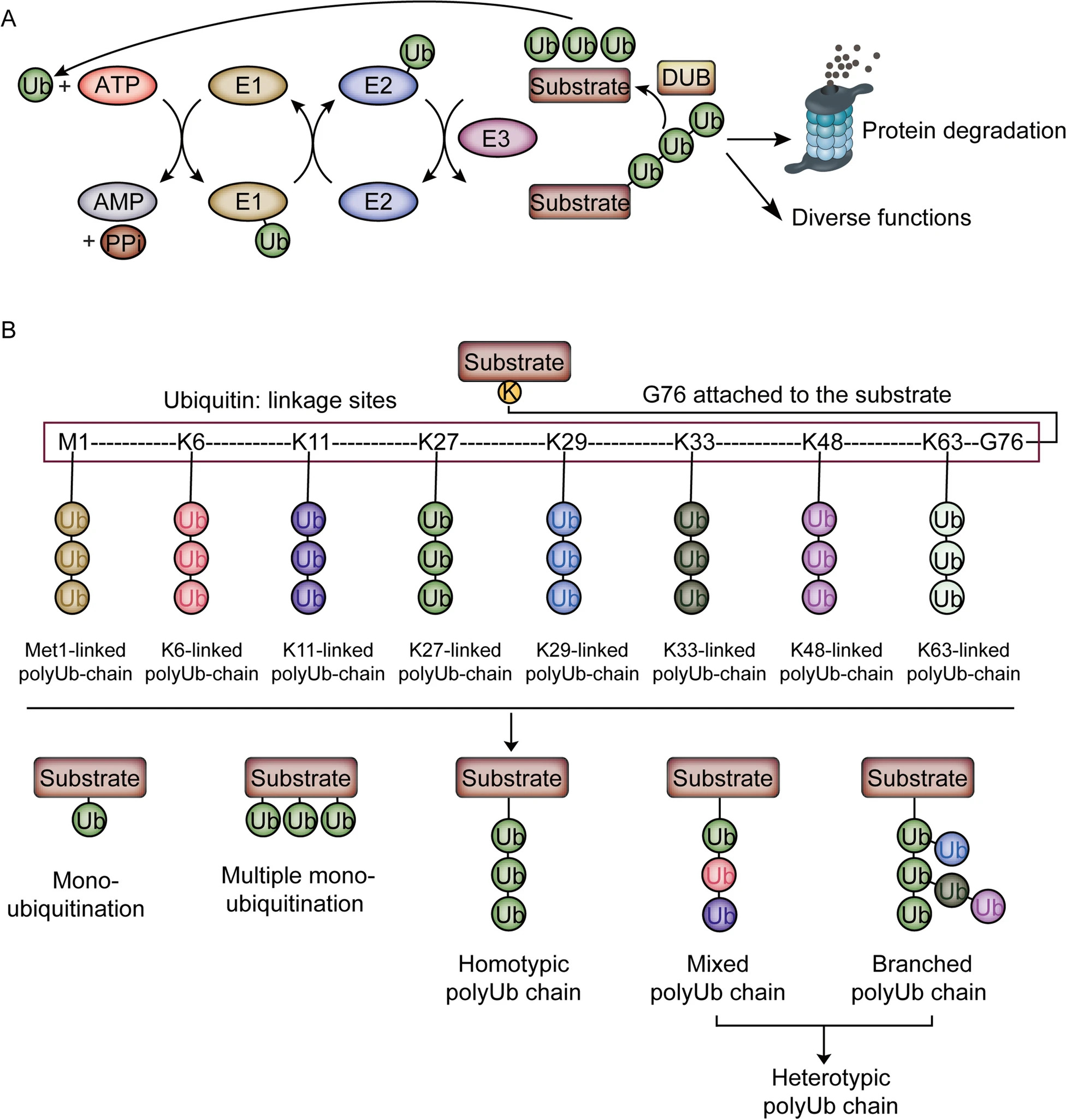 Fig.1 Schematic diagrams of the ubiquitin signal cycling process and various forms of ubiquitination.1,3
Screening Purpose: Precision Target Identification
The purpose of our CRISPR mediated Ubiquitination Knockout Screening Service is two-fold:
- Systematic Deconvolution: To systematically knock out the DUB enzyme subfamily in a cell model of interest (e.g., cancer cell line or stem cell population).
- Phenotypic Association: To link the loss of a specific DUB gene (via knockout) to a crucial biological phenotype (e.g., bone formation, tumor cell survival, immune response).
By using CRISPR/Cas9, we achieve precise, stable gene editing, resulting in a robust, high-confidence target list that directly addresses the role of protein stability in disease progression.
Subsequent Application: Driving Therapeutic Pipelines
Targets identified through this precise screening method are highly valuable for downstream applications:
- Small Molecule Inhibitor Development: Hits like USP3 and USP11 are immediately valuable for high-throughput screening campaigns to find small molecule inhibitors that mimic the effect of the genetic knockout.
- Differentiation Therapy: For oncology (e.g., Neuroblastoma/USP3), the identified DUB can be targeted to force malignant cells back into a differentiated, non-proliferative state.
- Regenerative Medicine: For conditions like osteoporosis (e.g., USP11), the DUB can be targeted to boost endogenous stem cell differentiation and tissue repair.
Workflow
| Workflow Stage | Description |
|---|---|
| Project Scoping & Design | Required Starting Materials: Client-provided cell line (e.g., primary hMSCs, specific neuroblastoma cell line), desired biological readout (e.g., specific differentiation marker, viability curve), and any preliminary target list or reference protein sequences. |
| Library Construction & Transduction | High-titer viral vector preparation containing our proprietary CRISPR single-guide RNA (sgRNA) library, specifically focused on the DUB subfamily. This is followed by stable transduction into the client's cell line. |
| High-Throughput Functional Screening | Cells are subjected to the relevant selective pressure or differentiation condition (e.g., osteogenic media, therapeutic compound challenge). High-throughput sequencing (HTS) is used to track sgRNA depletion or enrichment over time. |
| Secondary Validation & Deconvolution | Individual sgRNAs corresponding to primary hits are synthesized and tested in single-well assays to confirm the phenotype. This is followed by immunoprecipitation (IP) and Western blot analysis to confirm substrate stabilization. |
| Data Analysis & Final Reporting | Comprehensive bioinformatics and statistical analysis, including functional pathway mapping and clinical relevance correlation (using public patient data sets). |
| Estimated Timeframe | The typical timeframe for this service ranges from 10 to 16 weeks, depending on the complexity of the client's provided cell model and the optimization required for the functional assay. |
Discover How We Can Help - Request a Consultation
What We Can Offer
Creative Biolabs' Custom CRISPR mediated Ubiquitination Knockout Screening Service is a premium, fully customizable platform designed for drug discovery teams seeking validated targets with unparalleled speed and confidence. As an excellent seller, Creative Biolabs emphasizes that we do not offer off-the-shelf screens; we provide bespoke solutions built around your unique therapeutic objectives.
Customized Phenotypic Readout
Full end-to-end service designed around your specific biological question (e.g., cell differentiation, protein degradation kinetics) using your unique cell model (hMSCs, primary tumor lines, etc.).
Proprietary Focused DUB Library
Access to our expertly curated single-guide RNA (sgRNA) library specifically targeting the ~100 human Deubiquitinases, delivering higher statistical power and a faster route to high-confidence hit identification than generic whole-genome screens.
Accelerated Target Validation Workflow
We provide rapid secondary validation, including substrate stabilization confirmation via Immunoprecipitation (IP) and Western Blot analysis, moving you swiftly from a genetic hit to a proven biochemical target.
Well-Established Quality System
Implementation of rigorous Quality-by-Design (QbD) principles throughout the library construction and screening phases to ensure data reliability and reproducibility suitable for preclinical submission.
Comprehensive Clinical Correlation
Our final reports integrate functional genomics data with in silico analysis of patient datasets, immediately establishing the clinical relevance and prognostic value of identified targets like USP3 and USP11.
Guaranteed Actionable Deliverables
Receive not just raw sequencing data, but a Final Validated Hit List and a stable, characterized Knockout Cell Line ready for immediate integration into your downstream lead optimization campaigns.
Experience the Creative Biolabs Advantage - Get a Quote Today
Case Study
Inhibitory element-1 (RE-1) silencing transcription factor (REST) is the main transcriptional inhibitory factor of neuronal genes involved in self-renewal, neurogenesis, and neural differentiation. To explore the post-translational regulation of REST proteins, the recently constructed CRISPR-Cas9-mediated DUB gene knockout library was used to screen DUBs that might regulate the turnover of REST proteins. The results showed that compared with the simulated control group, the deletion of USP3, USP7, and USP19 was all associated with the reduction of REST protein levels. DUB that alters REST protein levels may be a key factor in regulating the proliferation of neuroblastoma cells.
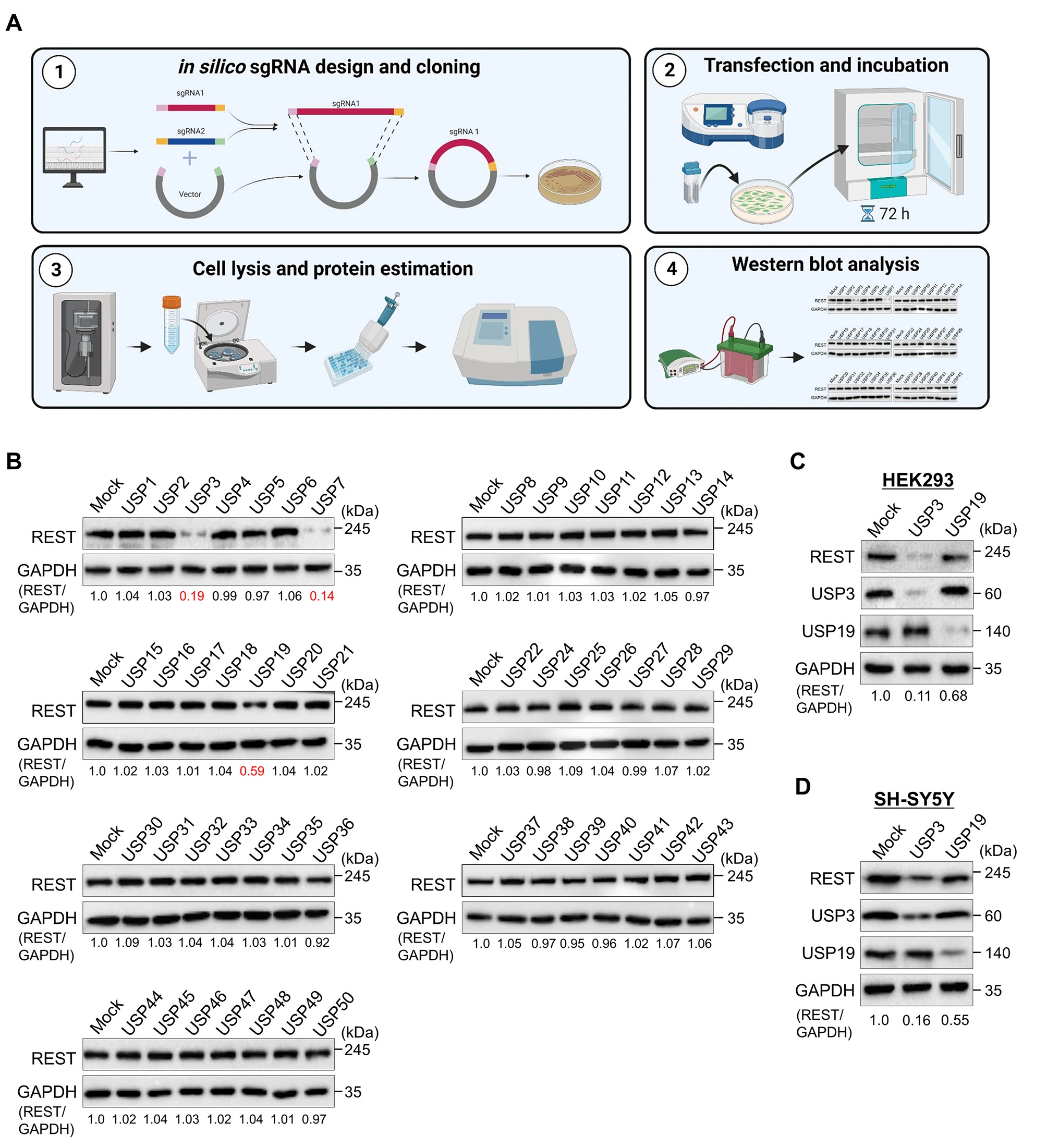 Fig.2 The DUBs that regulate the levels of REST proteins were screened by CRISPR/Cas and DUB knockout libraries, and subsequently detected by Western blot analysis.2,3
Customer Reviews

Experience the Creative Biolabs Advantage - Get a Quote Today
FAQs
How does your CRISPR-DUB screening compare to a traditional whole-genome screen?
Our focused DUB sub-library significantly reduces noise and cost compared to a non-specific whole-genome screen. We target approximately 100 high-potential DUB genes, offering higher statistical power and a faster turnaround time for highly relevant targets within the Ubiquitin-Proteasome System, maximizing your investment in this critical pathway.
Can I use this service for cell lines other than cancer and stem cells?
Absolutely. Our platform applies to virtually any cell model that can be genetically modified, including primary immune cells, neuronal cell cultures, and induced pluripotent stem cell (iPSC)-derived organoids. We simply require validation of your specific biological readout during the initial project scoping phase to ensure robust results.
What are the key technical precautions for this service?
The main precaution is ensuring the phenotype being screened is robust and measurable. We mitigate this by including rigorous positive and negative control sgRNAs and performing a preliminary dose-response and time-course optimization on your cell line to guarantee that the screening conditions yield a clear, quantifiable biological signal before the full screen is executed.
Will the targets you identify be immediately "druggable"?
DUBs, like all enzymes, require specific assay development. However, the genetic knockout confirms the target's functional necessity in the disease. This is a crucial first step. We follow up with biochemical validation to confirm the protein's activity and provide the initial data needed for your subsequent small molecule or biologic assay development, saving you months of initial validation work.
What if my target is already published? What unique value does Creative Biolabs add?
We provide value through orthogonal validation and deeper mechanistic insight. Even if a target is known, we use our platform to precisely define its role in your specific cell model and disease context, often uncovering novel substrates or pathways. This level of custom validation is critical for patent filing and advancing a therapeutic program with confidence.
Creative Biolabs is uniquely positioned to accelerate your therapeutic discovery program by leveraging the power of CRISPR/Cas9 to conquer the complexity of the Ubiquitin-Proteasome System. Our CRISPR mediated Ubiquitination Knockout Screening Service offers precision, speed, and validated targets ready for drug development across oncology, regenerative medicine, and beyond. Partner with us to transform challenging biological questions into actionable scientific achievements.
Contact Our Team for More Information and to Discuss Your Project
References
- Sun, Mingwei, and Xiaofei Zhang. "Current methodologies in protein ubiquitination characterization: from ubiquitinated protein to ubiquitin chain architecture." Cell & Bioscience 12.1 (2022): 126. https://doi.org/10.1186/s13578-022-00870-y.
- Karapurkar, Janardhan Keshav, et al. "CRISPR/Cas9-based genome-wide screening of the deubiquitinase subfamily identifies USP3 as a protein stabilizer of REST blocking neuronal differentiation and promotes neuroblastoma tumorigenesis." Journal of Experimental & Clinical Cancer Research 42.1 (2023): 121. https://doi.org/10.1186/s13046-023-02694-1.
- Distributed under Open Access license CC BY 4.0, without modification.
