
CRISPR mediated Metabolic Gene Knockout Screening Service
Introduction
Metabolic reprogramming is a key cancer hallmark, but the metabolic enzymes driving therapeutic resistance are unclear. Creative Biolabs' CRISPR mediated Metabolic Gene Knockout Screening Service uses advanced CRISPR/Cas9 and high-throughput screening to identify metabolic vulnerabilities like MPC1 and KEAP1/ATM, mapping adaptive pathways for combination therapies. It accelerates drug discovery, confirms novel targets, restores therapeutic sensitivity, and bridges genomic data with drug development.
CRISPR mediated Metabolic Gene Knockout Screening Service
Background of Metabolic Gene Knockout Screening
Metabolic gene knockout screening uses a specialized CRISPR library focused exclusively on the ~3,000 genes encoding enzymes, transporters, and regulators involved in cellular metabolism. By applying therapeutic pressure (e.g., a specific drug), we evaluate how the loss of each metabolic gene influences cell survival. Unlike broad genetic screens that dilute data across non-relevant genes, our focus on the metabolome isolates the most critical adaptive pathways.
Screening Purpose
- Identification of "functionally essential" metabolic genes: Screen for metabolic genes that are critical for cell survival and proliferation under disease conditions (e.g., tumors, metabolic disorders) to clarify whether they are disease drivers.
- Deciphering metabolic regulatory mechanisms: Reveal the causal relationship between metabolic genes and cellular phenotypes (e.g., drug resistance, invasion, ferroptosis) and elucidate the functional mode of key metabolic pathways.
- Mining exploitable metabolic vulnerabilities: Identify metabolic genes that are essential only in disease cells but not in normal cells, providing targets for precise interventions.
Subsequent Application
The functional validation data derived from this screening service directly translates into several high-value downstream applications for our clients:
- Novel Drug Target Development: Identifying previously undrugged targets in the metabolic network.
- Combination Therapy Rationale: Providing the mechanistic basis to combine existing clinical agents.
- Companion Diagnostic Development: Establishing clear predictive biomarkers to select the patient populations most likely to respond, significantly streamlining clinical trial design.
Workflow
The following comprehensive workflow is designed for clarity and is suitable for visualization as a flowchart, ensuring complete transparency for potential clients.
| Stage | Activity Description |
|---|---|
| Project Consultation & Design | Our expert team analyzes your preliminary data (e.g., RNA-seq, genomics) and defines the project scope, cell line models, and drug treatment parameters. We select the most relevant metabolic gRNA library subset. |
| CRISPR Library Transduction | Your designated cancer cell lines (e.g., NSCLC, TNBC lines) are infected with the metabolic gRNA library at a low Multiplicity of Infection (MOI) to ensure single-cell barcoding. |
| High-Throughput Drug Selection | Cells are subjected to therapeutic pressure (e.g., Olaparib treatment, as in the MPC1 study) over multiple generations. Genes whose knockout causes cell death will be depleted; genes whose knockout promotes resistance will be enriched. |
| Genomic Analysis & Hit Deconvolution | Genomic DNA is extracted, and the gRNA sequences are analyzed via Next-Generation Sequencing (NGS). Bioinformatic algorithms (e.g., MAGeCK) are used to rank metabolic genes based on their enrichment or depletion score. |
| Target Validation & Pathway Mapping | Top hits (like MPC1 or KEAP1) are validated using individual gene knockouts, rescue experiments, and metabolomics. We map the functional pathway (e.g., the SLC7A11/Cystine axis). |
Estimated Timeframe
The typical timeframe for this comprehensive service ranges from 8 to 14 weeks, depending on the complexity of the cancer model and the number of drug pressures required.


Final Deliverables
Upon project completion, clients receive:
- A Comprehensive Final Report detailing the complete methodology, raw data, and statistical analysis.
- A Ranked List of Metabolic Vulnerabilities (genes) validated for synthetic lethality or resistance-driving properties.
- A validated Mechanistic Pathway Map that identifies the functional role of the key metabolic enzyme (e.g., MPC1, SLC7A11) in drug response.
Discover How We Can Help - Request a Consultation
What We Can Offer
As the global leader in functional genomics, Creative Biolabs is proud to offer a screening service that delivers precision and predictability for your oncology pipeline. We don't just provide data; we deliver actionable targets and a validated strategy to overcome the most challenging drug resistance mechanisms.
Customized Target Library
High-resolution screening using our optimized, proprietary metabolic CRISPR library (targeting ~3,000 genes) tailored to your specific tumor type and drug compound.
Mechanistic Clarity
Identification and functional validation of novel targets that regulate cellular metabolism, providing a clear path to drug development beyond traditional genomic hits.
Actionable Deliverables
Generation of validated, predictive biomarkers that directly facilitate patient stratification and significantly de-risk subsequent clinical trials.
End-to-End Service
A comprehensive, seamless workflow from initial consultation and bespoke gRNA design through high-throughput selection, advanced bioinformatics, and final mechanistic pathway mapping.
Flexible Screening Modes
Capability to screen for both intrinsic resistance drivers and acquired resistance pathways, accelerating your ability to design effective combination therapies.
Accelerated Timelines
Highly efficient operational procedures resulting in definitive, publication-quality data and a complete mechanistic map in an accelerated timeframe of 8 to 14 weeks.
Case Study
In this study, a customized human lipid metabolism gene knockout library was utilized, and the CRISPR KO screening method was employed to identify lipid metabolism genes that are crucial for the survival of prostate cancer. The aim is to evaluate the dependence of specific regulatory enzymes in lipid metabolism reactions. The screening process was completed using a medium containing fatty acids and puromycin. Summarize the related genes encoding enzymes in the mevalonic acid pathway (HMGCS1, PMVK, MVD) and the polyterpene alcohol-N-glycan biosynthesis pathway (NUS1, DHDDS, DOLK, DPAGT1), and conduct further research.
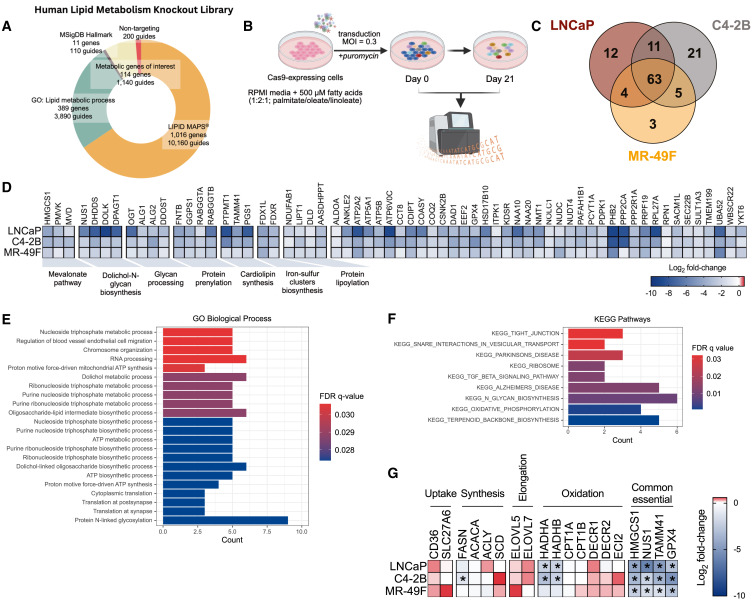 Fig.1 Lipid metabolism utilizes CRISPR KO technology to screen genes related to prostate cancer survival during the lipid metabolism process.1
Customer Reviews

Experience the Creative Biolabs Advantage - Get a Quote Today
FAQs
How do you ensure the metabolic gene library is comprehensive and relevant to my specific cancer model?
Our metabolic library targets nearly 3,000 genes across all major metabolic pathways. For enhanced relevance, we perform an initial consultation to customize the screen, potentially including additional gRNAs specific to your cell line's known genetic profile or disease type (e.g., lung vs. breast cancer), ensuring maximum data quality.
Can this service identify targets for both intrinsic and acquired drug resistance?
Yes. By screening both treatment-naïve and drug-resistant cell lines under active therapeutic pressure, our service is optimized to identify both intrinsic dependencies that predict poor response and acquired metabolic shifts responsible for resistance.
How does this CRISPR service compare to standard transcriptomics or proteomics profiling?
Transcriptomics provides correlation; our CRISPR screening provides causality. By physically deleting a gene, we definitively prove its functional necessity for cell survival under drug pressure, which is a much stronger foundation for drug development than correlative expression data.
What is the typical quantity of "hits" that clients receive after the final analysis and validation?
While the initial raw screening data yields hundreds of potential hits, our thorough bioinformatic and secondary validation process typically narrows the output to the Top 5-10 highly validated, actionable metabolic gene targets that show the greatest therapeutic window in your specific model.
The future of precision oncology demands functional insight into cancer's metabolic agility. At Creative Biolabs, we provide the rigorous, high-resolution CRISPR mediated Metabolic Gene Knockout Screening Service necessary to convert unknown resistance mechanisms into powerful therapeutic strategies. Don't let metabolic rewiring halt your progress—partner with the experts who specialize in functional genomics.
Contact Our Team for More Information and to Discuss Your Project
Reference
- Fidelito, Gio, et al. "Lipid-metabolism-focused CRISPR screens identify enzymes of the mevalonate pathway as essential for prostate cancer growth." Cell Reports 44.4 (2025). https://doi.org/10.1016/j.celrep.2025.115470. Distributed under Open Access license CC BY 4.0, without modification.
