
CRISPR mediated miRNA Knockout Screening Service
Introduction
Creative Biolabs' CRISPR mediated miRNA Knockout Screening Service uses advanced dgRNA-based CRISPR/Cas9 to enable precise permanent miRNA genomic deletions. It delivers high-specificity loss-of-function data, validates targets, and streamlines functional characterization. As a trusted partner, we provide stable cell lines, support high-throughput miRNA validation and cluster analysis, eliminate transient effects/off-target noise, and de-risk therapeutics by establishing miRNA-phenotype causal links.
Discover How We Can Help - Request a Consultation
CRISPR mediated miRNA Knockout Screening Service
The Mechanism of High-Specificity Deletion
Our service is centered on the utilization of dual guide RNAs (dgRNAs) to maximize deletion efficiency and specificity.
Unlike single gRNAs, which generate small, unpredictable insertions or deletions (indels) that may not fully abolish miRNA function, dgRNAs target the genomic sequence at two distinct sites. This results in two simultaneous double-strand breaks (DSBs), leading to the highly efficient and permanent excision of the entire miRNA gene sequence in the intervening region. This approach offers increased design flexibility and ensures the permanent functional disruption required for robust screening.
Screening Purpose and Subsequent Application
Screening Purpose: The primary goal is to uncover the causal roles of specific miRNAs in complex biological pathways or disease phenotypes. This is particularly valuable for:
- Identifying novel regulatory checkpoints in cell differentiation (e.g., hematopoiesis, neural fate).
- Pinpointing miRNAs responsible for drug resistance or sensitivity in oncology.
- Mapping functional relationships within large miRNA clusters.
Subsequent Application: The robust data and materials generated can be immediately applied to downstream development, including:
- Establishing stable, constitutive knockout cell lines for long-term mechanistic studies.
- Validating high-priority miRNA targets using animal models (in vivo).
- Accelerating the development of miRNA mimics or anti-miRs as therapeutic candidates.
Workflow
Creative Biolabs follows a meticulously structured, transparent workflow designed for maximum efficiency and robust results, suitable for visualization as a clear flowchart.
| Stage | Activity |
|---|---|
| Project Intake & Design | Required Starting Materials: Client provides Target miRNA list (20-50 miRNAs), Cell Line Information (e.g., iPSCs, specific cancer cell lines), and Functional Assay Requirements (e.g., viability, differentiation markers). |
| dgRNA Vector Construction | Based on proprietary algorithms, we design highly specific dual guide RNA (dgRNA) pairs to maximize the genomic deletion rate, followed by cloning into a single-copy lentiviral vector. |
| High-Efficiency Transduction | Stable cell line transduction using lentivirus, followed by optimized antibiotic selection to ensure single-copy integration and a highly homogeneous knockout population. |
| Functional Screening & Analysis | Execution of the client's specified phenotypic or cell-based assay (e.g., proliferation, drug response, differentiation tracing) on the knockout pool. |
| Validation & Reporting | Confirmatory qPCR and Sanger sequencing of hit miRNAs to validate deletion and functional studies. |
Estimated Timeframe: The typical timeframe for this service ranges from 6 to 10 weeks, depending primarily on the complexity of the functional assay and the inherent difficulty of culturing the specific cell line provided by the client.
What we can offer
The Creative Biolabs CRISPR mediated miRNA Knockout Screening Service is not just a platform—it's a customized functional genomics solution built for the rigor of expert biological research. Our commitment is to provide tools that deliver definitive, non-ambiguous data, accelerating your most complex studies.
Proprietary Dual Guide RNA (dgRNA) Design
Leverage our proprietary Dual Guide RNA (dgRNA) design for maximal genomic deletion and unparalleled target specificity, even among homologous miRNA family members.
Permanent Loss-of-Function Models
Guarantee permanent loss-of-function models that eliminate the ambiguity and transient effects associated with traditional inhibitors or sponges, ensuring stable, long-term phenotypes.
Fully Customizable Screening Pipelines
Offer fully customizable screening pipelines that scale to your exact needs, from single-target validation in patient-derived primary cells to high-throughput pooled screening across entire miRNA clusters.
Rapid Functional Resolution
Ensure rapid functional resolution, routinely achieving over 90% miRNA downregulation within one week of transduction, significantly accelerating your overall research timeline.
Advanced Genetic Control
Integrate advanced genetic control, including Dox-inducible Cas9 systems, allowing for temporal and stage-specific editing critical for modeling differentiation and development.
Turnkey Deliverables
Provide turnkey deliverables, including fully characterized, stable knockout cell lines and comprehensive deletion sequencing data, ready for immediate downstream in vivo validation and translational research.
Dedicated Expert Consultation
Support your project with a dedicated expert consultation at every stage, optimizing gRNA design, assay selection, and data interpretation, tailored to your unique research goals.
Experience the Creative Biolabs Advantage - Get a Quote Today
Case Study
Researchers have designed a CRISPR-Cas9 library (lentiG-miR) targeting the stem and loop sequences of miRNAs, aiming to maximize the total coverage and targeting efficiency of miRNAs while minimizing off-target activity. The final library contains 8,107 sgRNAs and targets 1,769 human miRNAs. The screening results of HT29 and LNZ308 cells showed that this method performed well in distinguishing common essential protein-coding genes from intergenic control genes. Compared with previously reported miRNA-targeted libraries, Sgrnas in lentiG-miR have lower off-target activity in negative selection screening.
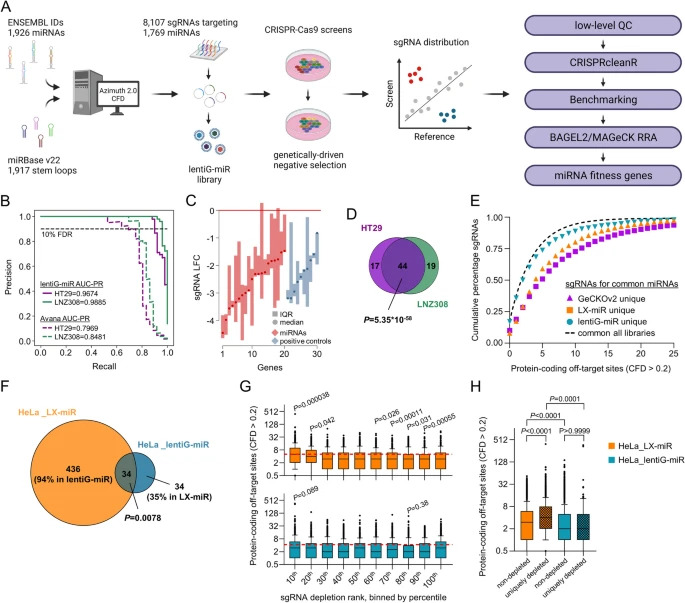 Fig.1 Construct and validate a novel CRISPR-Cas9 knockout library targeting human miRNA.1
Customer Reviews

FAQs
How does this service compare to using traditional single guide RNA (sgRNA) knockout methods?
Our dgRNA approach is significantly superior to sgRNA methods for miRNAs. While sgRNA relies on creating small, random indels (which may not always disrupt function), dgRNAs create a large, targeted genomic deletion, ensuring a permanent and more predictable loss-of-function. This greatly reduces the risk of ambiguous data and missed therapeutic targets.
Is the dgRNA method specific enough to distinguish between highly similar miRNAs?
Yes. One of the main advantages of dgRNA is the increased design flexibility. We can precisely design the two guide RNAs to target regions outside of the highly homologous seed sequences, allowing us to generate specific deletions for one miRNA without affecting other closely related family members. We provide sequencing confirmation to validate this specificity.
What if I only have a small budget? Is this service still accessible for focused studies?
Absolutely. Our service is highly scalable. While we offer high-throughput screening for hundreds of miRNAs, we frequently conduct highly focused knockout studies on smaller panels of 5–10 candidate miRNAs. We encourage you to contact our team to discuss your specific budget and project size.
Can I receive the stable knockout cell line after the screening is complete?
Yes, generating a stable, functionally validated knockout cell line is one of our primary deliverables. You will receive the cell line along with the comprehensive data and reports, ensuring you have the necessary biological tool to continue your research in-house without further editing.
Creative Biolabs' CRISPR mediated miRNA Knockout Screening Service provides the definitive, high-specificity tool to transform the complexity of microRNA data into clear, actionable therapeutic leads. By moving beyond transient inhibition and leveraging permanent genomic deletion via our dgRNA platform, we eliminate noise and accelerate your path to discovery. Stop settling for correlation—define causation with us.
Contact Our Team for More Information and to Discuss Your Project
Reference
- Merk, Daniel J., et al. "CRISPR-Cas9 screens reveal common essential miRNAs in human cancer cell lines." Genome medicine 16.1 (2024): 82. https://doi.org/10.1186/s13073-024-01341-4. Distributed under Open Access license CC BY 4.0, without modification.
