
CRISPR mediated Membrane Protein Knockout Screening Service
Introduction
Membrane proteins (30% of the human proteome, 60-70% of drug targets) are studied via Creative Biolabs' CRISPR mediated Membrane Protein Knockout Screening Service, which ablates gene function to analyze phenotypes. It combines high-throughput editing and bioinformatics for target validation and bioprocess enhancement. The service accelerates target validation and boosts biomanufacturing via AI-guided design, linking genomic data to strategies, aiding early decisions, and identifying hidden targets while optimizing platforms.
Discover How We Can Help - Request a Consultation
CRISPR mediated Membrane Protein Knockout Screening Service
Background of CRISPR Knockout
The CRISPR-Cas9 system uses a custom-designed sgRNA to guide the Cas9 nuclease to a specific genomic sequence, creating a double-strand break (DSB). The cell tries to repair this DSB through the error-prone Non-Homologous End Joining (NHEJ) pathway, which often introduces small insertions or deletions (indels). If these indels occur in the coding sequence of a gene, they usually cause a frameshift mutation, leading to a premature stop codon. This further results in the degradation of messenger RNA (mRNA) or the truncation of the resulting protein, ultimately achieving a functional knockout.
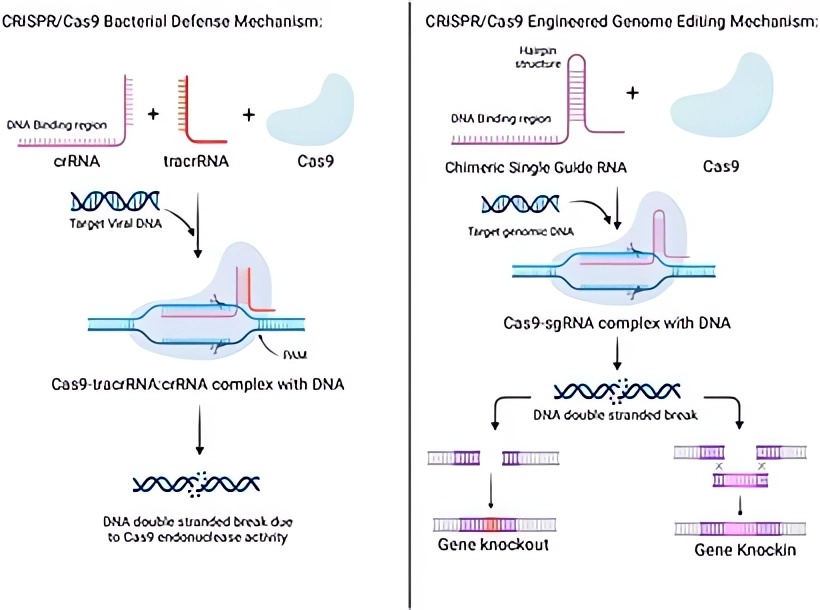 Fig.1 The mechanism of the CRISPR/Cas9 system for gene knockout in human genetic engineering.1,4
Screening Purpose
The primary purpose of knockout screening is functional genomics: to systematically link genotype (the missing gene) to phenotype (the observable cellular change). For membrane proteins, this means discovering which genes, when removed, modulate the target's expression, stability, trafficking, or interaction with downstream pathways. This systematic analysis helps to:
- Uncover novel regulators for critical drug targets.
- Validate the essentiality of a protein in a disease state.
- Identify compensatory mechanisms that may lead to drug resistance.
- Optimize industrial host cells by knocking out regulatory genes that limit protein synthesis or induce cell stress.
Subsequent Application
The insights and materials generated through this screening service have wide-ranging applications:
- Target Validation and De-risking: Confirming a target's relevance before expensive clinical development.
- Next-Generation Cell Line Engineering: Creating hyper-producing cell lines for therapeutic biologics (e.g., antibodies, viral vectors) with dramatically improved commercial viability.
- Drug Repurposing: Identifying unexpected connections between a knockout gene and existing drug mechanisms.
- Precision Medicine: Discovering and validating genetic modifiers that influence therapeutic response in patient-derived models.
Workflow
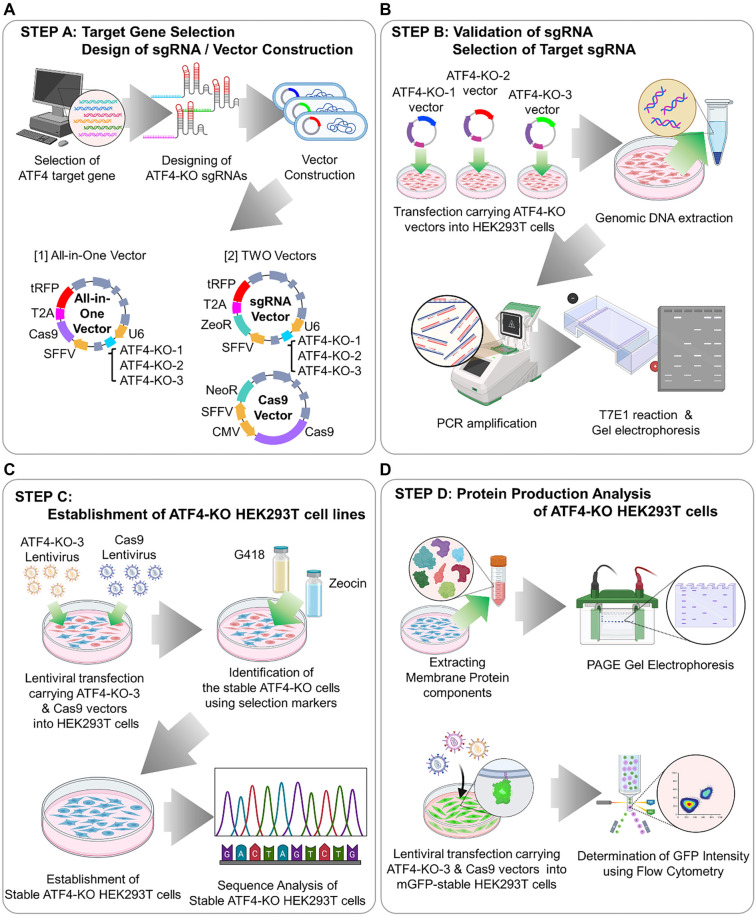 Fig.2 Schematic diagram of editing the ATF4 gene using CRISPR KO to construct a high-yield cell line of membrane protein.2,4
The end-to-end workflow is designed for scalability and transparency, ensuring every step provides actionable intelligence for your R&D team.
Required Starting Materials
- Target List: A list of 50-10,000 candidate genes or genomic regions of interest.
- Cell Line of Interest: Detailed culturing conditions and authentication data for the host cell line (e.g., HEK293T, patient-derived cells, or proprietary lines).
- Screening Assay: A quantitative, cell-based readout for the desired phenotype (e.g., cell survival, reporter gene activity, or membrane protein expression level).


AI-Guided sgRNA Library Design & Synthesis
We use proprietary deep-learning algorithms to design single guide RNAs (sgRNAs) with maximized on-target efficacy and minimized off-target effects. This library is synthesized and packaged into a lentiviral or AAV vector system.
High-Throughput Transduction and Selection
The CRISPR-Cas9 system and the sgRNA library are introduced into the host cell line. Cells successfully edited are amplified and cultured under specific selection pressure.

Phenotypic Screening and Enrichment
The pooled knockout cells are subjected to the client's functional assay. Cells displaying the desired phenotype (e.g., increased protein expression, enhanced cytotoxicity) are isolated and enriched using techniques like Fluorescence-Activated Cell Sorting (FACS).
Next-Generation Sequencing (NGS) and Data Deconvolution
The genomic DNA of the enriched and baseline populations is extracted. The sgRNA frequency is sequenced and compared. Computational deconvolution identifies the most statistically significant gene knockouts corresponding to the desired phenotype.

Single-Cell Clone Validation
Confirmatory studies are performed on top candidates. Single-cell clones are generated and validated using techniques like Western Blot, T7 Endonuclease I assay, and functional assays to verify the precise knockout and phenotypic effect.
Final Deliverables
- Comprehensive Knockout Data Report: Detailed sgRNA enrichment analysis, statistical validation, and functional correlation data for all screened targets.
- Validated Single-Cell Clones: The top 1-5 genetically confirmed, stable cell lines (shipped frozen or actively growing) with proven functional advantages.
- Optimized Vector Maps: Documentation and sequence files for the validated sgRNA constructs for future internal use.


Estimated Timeframe
The typical timeframe for this comprehensive service ranges from 10 to 16 weeks, depending on the complexity of the cell line (e.g., primary vs. established) and the throughput required for the initial phenotypic assay.
What We Can Offer
Creative Biolabs offers a partnership defined by genetic precision and scalable efficiency, ensuring the successful translation of your genomic hypotheses into industrial solutions.
Customized Library Design & Scope
We provide bespoke sgRNA library design, ranging from focused screening of a few hundred genes to whole-genome coverage, fully customizable to your unique therapeutic area or bioprocess bottleneck.
Guaranteed Gene-Editing Efficiency
Our proprietary sgRNA ranking algorithms, combined with optimized viral delivery (lentivirus/AAV), ensure high on-target knockout efficiency, a crucial factor for reliable high-throughput screening results.
Validated Host Cell Line Engineering
We offer robust genetic modification of standard cell lines (HEK293T, CHO, HeLa) or your own proprietary cell systems, specifically targeting pathways (e.g., ATF4) to maximize membrane protein production, solubility, and correct folding.
Multi-Parametric Phenotypic Analysis
Beyond simple viability screens, we develop and implement complex, quantitative assays tailored to the function of your membrane protein, including flow cytometry for receptor expression and binding, and functional tests for signaling pathways.
Expert Data Deconvolution and Insight
Our computational biology team performs in-depth statistical deconvolution of NGS data, providing a clear, ranked list of functionally relevant genetic hits and translating complex data into actionable biological insights.
Seamless Transition to Downstream Development
The stable, validated single-cell clones we deliver are suitable for immediate use in subsequent structural biology, antibody development, or large-scale biomanufacturing efforts.
Experience the Creative Biolabs Advantage - Get a Quote Today
Case Study
To achieve gene editing in primary human NK cells, researchers have developed a retroviral vector system that contains an sgRNA scaffold. NK cells were transduced using sgRNA vectors, Cas9 protein was introduced through electroporation, and purinomycin was used for screening during amplification. The screened cells were subjected to next-generation sequencing (NGS) for quantitative analysis of the relative abundance of sgRNA, and genes with higher enrichment were selected for further study.
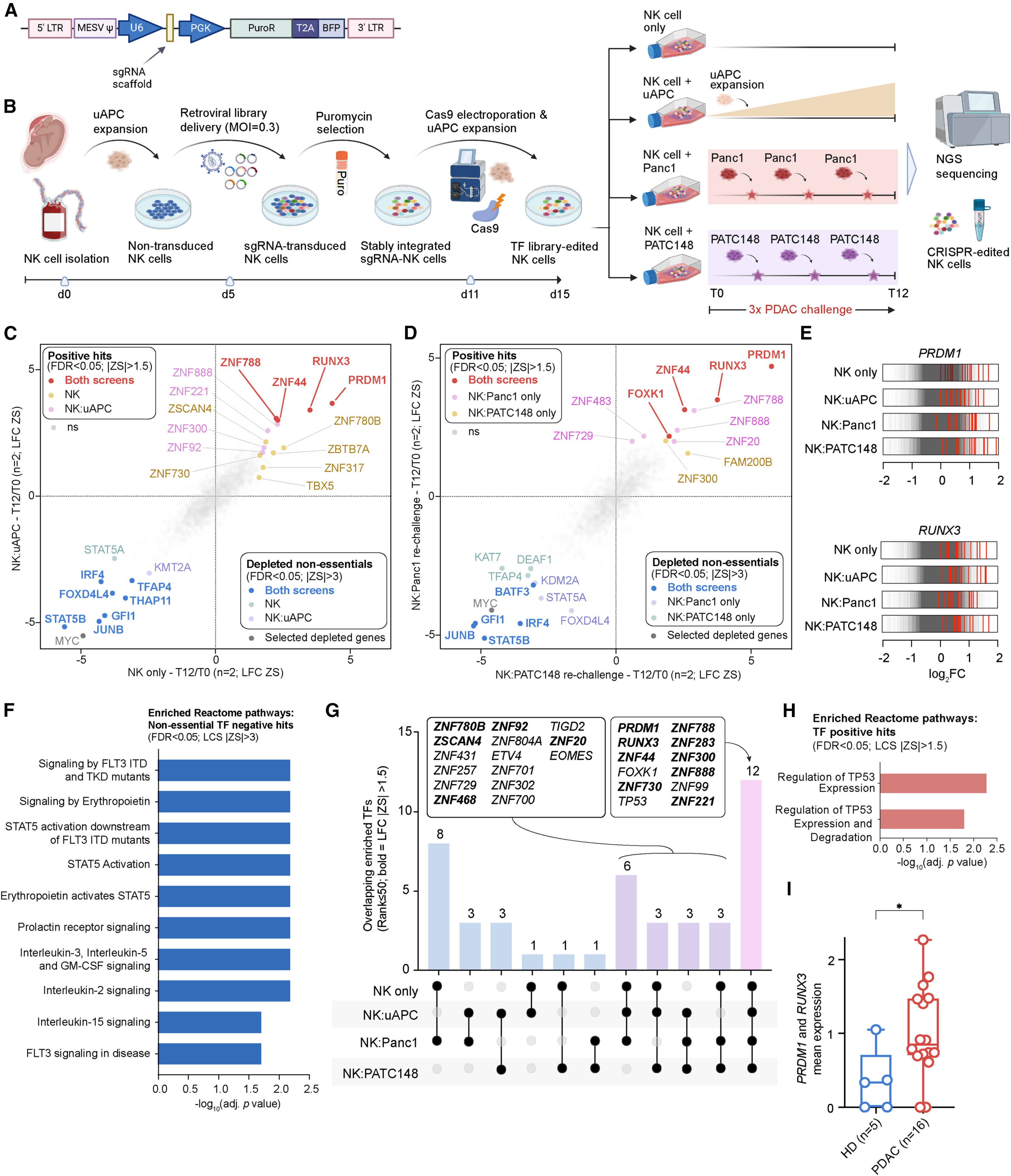 Fig.3 The gene editing process of targeted CRISPR KO screening of primary human NK cells using the transcription factor (TF) sgRNA library.3,4
Customer Reviews

FAQs
We need to optimize our host cell line yield. Can CRISPR screening identify genes that boost production like the ATF4 example?
Absolutely. Our screening is not limited to disease targets; it is highly effective for bioprocess optimization. We can screen metabolic or stress-response genes (like ATF4, which regulates the unfolded protein response) to identify edits that enhance protein folding capacity and secretion, leading to guaranteed yield improvements, typically over 50%.
Our team is concerned about off-target effects impacting downstream validation. How does Creative Biolabs mitigate this risk?
We tackle off-target concerns at two levels: First, through our highly specific, AI-optimized sgRNA design. Second, through comprehensive post-screen validation using Next-Generation Sequencing (NGS) and single-cell cloning, we ensure that we only deliver clones with verified on-target modifications and clean genetic backgrounds.
What is the benefit of integrating computational chemistry data with the knockout screen results?
By integrating the results, we can accelerate the subsequent small-molecule drug discovery phase. If the screen validates a target's function, our computational chemistry acceleration allows us to rapidly predict physicochemical properties and screen billions of potential ligands, reducing the time needed to move from a validated target to a promising lead compound by 1000\times.
We are working with a challenging, primary human cell line. Can your CRISPR system be successfully delivered and screened in non-established lines?
Yes. We offer multiple delivery systems, including optimized lentiviral and lipid nanoparticle formulations, and have established protocols for efficient transduction of primary and difficult-to-transfect cell lines. We recommend a brief consultation to tailor the vector and delivery method to your specific cell system.
The future of biopharma is defined by speed, precision, and efficiency. Creative Biolabs' CRISPR mediated Membrane Protein Knockout Screening Service provides the strategic advantage needed to secure your competitive edge—from identifying highly validated therapeutic targets to engineering super-producing cell lines that drastically cut manufacturing costs. We are your partner in translating complex genomic data into actionable, high-value outcomes.
Contact Our Team for More Information and to Discuss Your Project
References
- Kanbar, Karim, Roy El Darzi, and Diana E. Jaalouk. "Precision oncology revolution: CRISPR-Cas9 and PROTAC technologies unleashed." Frontiers in Genetics 15 (2024): 1434002. https://doi.org/10.3389/fgene.2024.1434002.
- Choi, Byung-Jo, et al. "Enhanced membrane protein production in HEK293T cells via ATF4 gene knockout: A CRISPR-Cas9 mediated approach." Biomolecules and Biomedicine 25.9 (2025): 1961. https://doi.org/10.17305/bb.2024.11519.
- Biederstädt, Alexander, et al. "Genome-wide CRISPR screens identify critical targets to enhance CAR-NK cell antitumor potency." Cancer cell (2025). https://doi.org/10.1016/j.ccell.2025.07.021.
- Distributed under Open Access license CC BY 4.0, without modification.
