Sequence specificity is conditional
Partial complementarity, seed-region binding, transcript isoforms, and intracellular concentration can produce unintended effects.

RNA interference can silence disease-relevant transcripts with high sequence precision, but therapeutic performance is constrained by delivery, intracellular trafficking, off-target activity, biological variability, safety, and the durability of target suppression.
RNA interference (RNAi) therapy can selectively silence disease-related genes, but its therapeutic potential is limited by RNA instability, inefficient delivery, off-target effects, immune responses, and challenges in translating gene knockdown into meaningful biological benefits. Creative Biolabs helps address these barriers through customized RNAi delivery method development, integrating carrier selection, targeting strategies, cellular uptake, intracellular release, and functional evaluation.
An effective laboratory siRNA is not automatically a viable therapeutic candidate. Early programs can reduce avoidable uncertainty by combining rational siRNA synthesis and modification with staged cellular screening before committing a small number of candidates to complex delivery and animal studies.
Partial complementarity, seed-region binding, transcript isoforms, and intracellular concentration can produce unintended effects.
RNA may accumulate in tissue or enter cells while remaining trapped in compartments that cannot support RISC loading.
Target suppression must be linked to protein change, pathway correction, functional response, and an acceptable safety window.
Therapeutic failure is rarely due to a single defect. A candidate may work in cell lines but fail in serum, distribution, endosomal escape, or tissue durability. Thus, the key question isn't just whether an RNA can silence a transcript—it’s where the exposure–response chain breaks and whether that can be fixed without creating new safety or manufacturing issues.
Nucleases, renal clearance, protein binding, and particle instability can reduce the amount of intact RNA reaching tissue.
Bulk tissue accumulation does not establish uptake by the cell population responsible for disease.
Endosomal trapping and inefficient guide loading can separate cellular uptake from functional knockdown.
mRNA reduction may not produce sufficient protein suppression or reverse established tissue pathology.
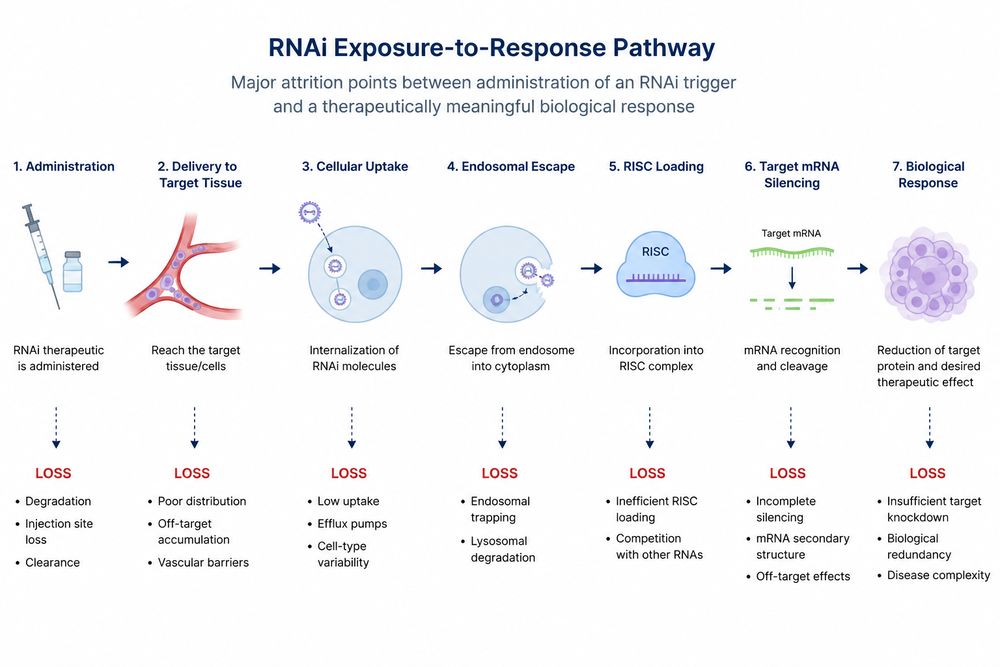
The relative importance of each limitation changes with the RNA format, administration route, target tissue, disease mechanism, and required duration of action.
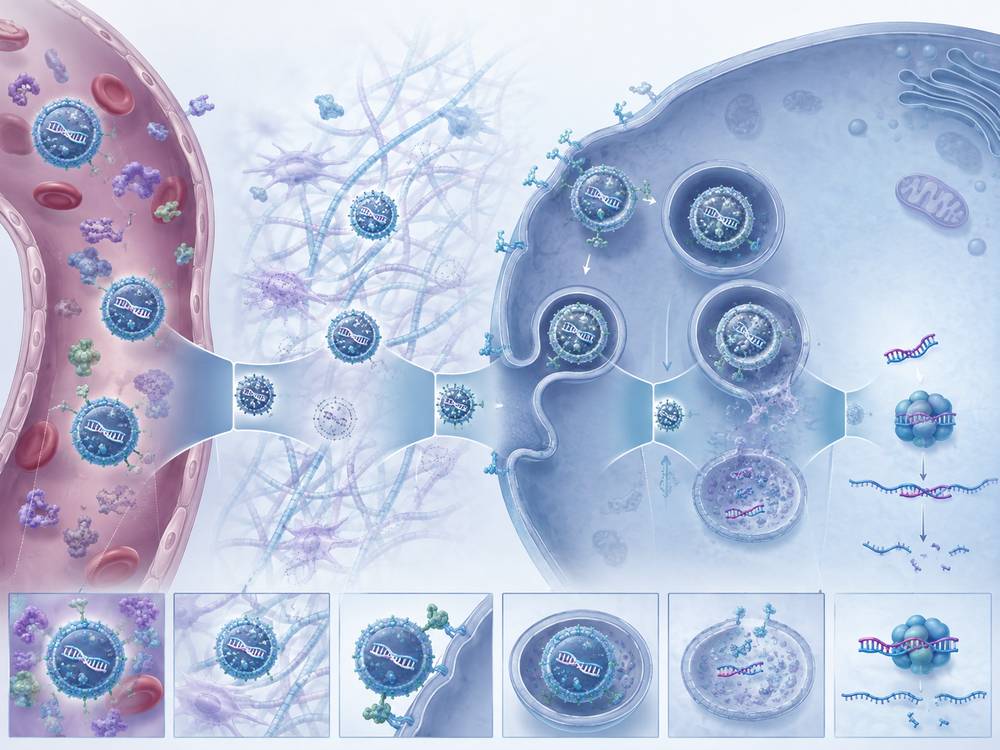
An RNAi delivery system must protect the RNA during circulation, support distribution to the intended tissue, promote uptake by the relevant cell population, and release sufficient intact guide RNA into the cytosol.
Tissue accumulation and cellular internalization are intermediate events rather than direct evidence of productive RNAi activity. Functional delivery should ultimately be confirmed through RISC-compatible RNA exposure, target knockdown, protein reduction, and a disease-relevant biological response.
A potent sequence can still be unsuitable when its guide strand regulates unintended transcripts, when the passenger strand is productively loaded, or when the targeted region is absent from clinically relevant transcript isoforms.
Candidate ranking should therefore separate intended target cleavage from seed-mediated repression, innate immune stimulation, cytotoxicity, and transfection-related effects. A structured siRNA in vitro screening strategy can compare multiple sequences, concentrations, controls, and orthogonal readouts under matched conditions.
Short seed-region matches can regulate transcripts that are not fully complementary to the guide. Effects may become more pronounced at high intracellular concentrations or prolonged exposure.
Incomplete strand bias can allow the unintended strand to enter RISC and create a second off-target profile. Terminal asymmetry and modification patterning can influence strand preference.
Alternative splicing, allele-specific variants, RNA editing, and disease-associated transcript changes may alter whether the selected site is present and accessible in the relevant biological context.
A genetically validated target may still perform essential functions in healthy tissues. The safest therapeutic effect may require partial rather than maximal knockdown.
Certain motifs, duplex features, impurities, or delivery conditions can engage innate immune sensors. Chemical modification can reduce this risk but requires empirical verification.
A formulation should be judged by productive cytosolic guide-strand exposure in the relevant cell population—not only particle uptake, tissue fluorescence, or total RNA concentration.
The carrier or conjugate must preserve RNA integrity while avoiding rapid clearance, aggregation, premature release, and unfavorable protein interactions.
Organ accumulation must translate into exposure of the disease-relevant cell type. Receptor abundance, vascular access, tissue structure, and disease state can all change uptake.
Internalized material must avoid destructive trafficking routes and release a sufficient fraction of intact RNA into the cytosol.
Cytosolic RNA must retain suitable chemistry and structure for guide selection, Argonaute loading, target recognition, and sustained catalytic silencing.
Observed biological changes may arise from intended target suppression, seed-mediated regulation of unintended transcripts, passenger-strand activity, innate immune sensing, or effects associated with the delivery vehicle.
These mechanisms should be evaluated independently using appropriate sequence controls, vehicle controls, concentration ranges, target-expression measurements, and orthogonal functional assays. This distinction is essential for determining whether a safety signal reflects target biology, RNA sequence, chemical modification, or formulation behavior.
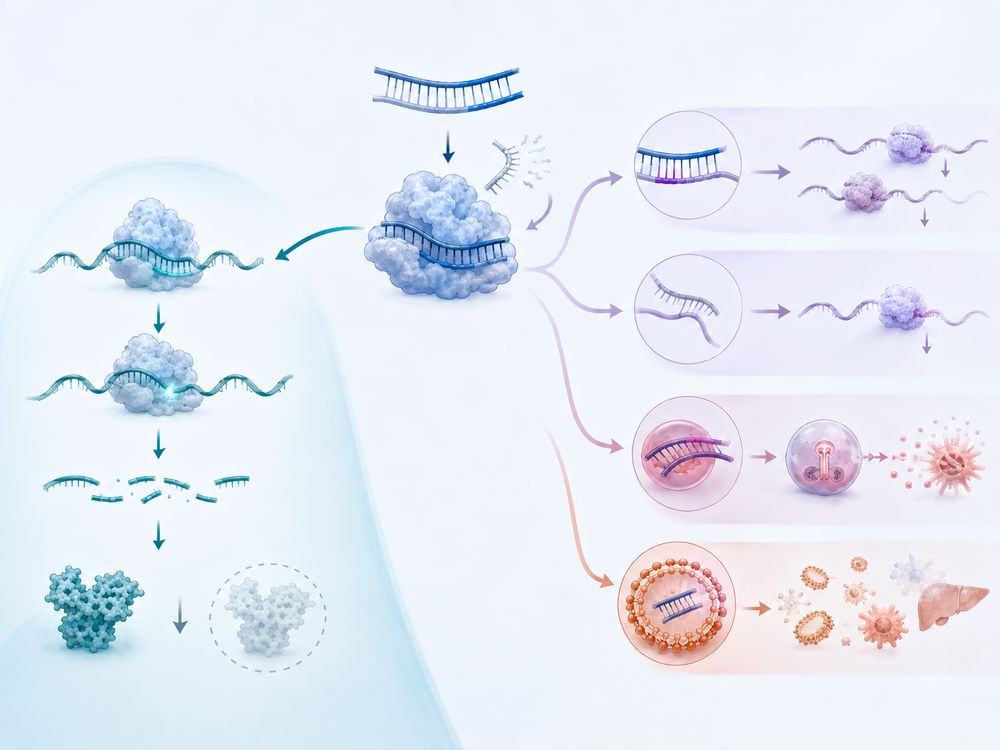
Safety signals should be traced to their likely source rather than attributed to the RNAi modality as a whole.
Seed-mediated effects or passenger-strand loading may alter genes unrelated to the intended mechanism.
RNA motifs, duplex structure, impurities, or carrier components may stimulate cytokine, complement, or inflammatory responses.
Excessive or prolonged suppression may interfere with normal functions of the target in healthy cells and organs.
Lipids, polymers, ligands, linkers, and degradation products may contribute independent dose-limiting effects.
Species biology, delivery receptor expression, disease heterogeneity, immune responses, and differences in administration scale can alter exposure and efficacy during translation.
| Translational issue | Why it matters | Evidence needed |
|---|---|---|
| Species-dependent uptake | Receptor abundance, receptor trafficking, vascular access, and immune recognition may differ between animal models and humans. | Cross-species receptor data, uptake studies, biodistribution, and functional target engagement in relevant models. |
| Disease-state heterogeneity | Fibrosis, inflammation, tumor architecture, cell composition, and disease stage can alter delivery and target dependency. | Disease-relevant primary cells, organoids, ex vivo tissues, and models that reproduce the intended treatment setting. |
| Target turnover | Transcript and protein resynthesis may shorten the functional effect even when initial mRNA knockdown is strong. | Time-resolved RNA, protein, pathway, phenotype, and recovery measurements. |
| Dose and formulation scale | A carrier optimized in small laboratory batches may change in size, loading, stability, or tolerability during scale-up. | Process-relevant characterization, release criteria, stability testing, and activity comparisons across batches. |
| Clinical relevance of knockdown | A statistically significant reduction may remain below the threshold required for meaningful disease modification. | Exposure-response modeling and a mechanistic link among target suppression, protein change, functional correction, and outcome. |
A staged workflow helps determine whether weak performance arises from sequence design, chemistry, delivery, target biology, or the experimental model.
Set the target cell, knockdown threshold, duration, route, and acceptable safety window.
Measure potency, concentration response, guide bias, specificity, and immune-related signals.
Balance nuclease stability, RISC compatibility, manufacturability, and tolerability.
Track intact RNA from formulation through tissue exposure, uptake, cytosolic release, and target engagement.
Connect exposure, mRNA knockdown, protein suppression, phenotype, durability, and safety.
Creative Biolabs supports RNAi programs by helping researchers identify and address the specific bottleneck limiting therapeutic performance. Depending on whether the principal uncertainty involves intrinsic sequence activity, stability, target-cell access, intracellular release, off-target effects, or tolerability, the project can begin with focused candidate testing or extend into an integrated RNAi development workflow.
| Development Challenge | Related Creative Biolabs Service | Potential Project Support |
|---|---|---|
| Distinguish weak sequence activity from a delivery-related failure | siRNA In Vitro Screening Service | Comparison of multiple siRNA candidates under controlled delivery conditions using concentration-response analysis, target-mRNA reduction, protein suppression, cellular phenotype, viability, and suitable positive and negative controls. |
| Improve RNA stability while retaining productive RISC activity | Custom siRNA Synthesis | Preparation of sequence-defined and chemically modified siRNA duplexes for stability, strand-selection, potency, specificity, labeling, delivery, and comparative validation studies. |
| Resolve tissue exposure, cellular uptake, or endosomal-release limitations | Delivery Method Development Service for RNAi | Evaluation of administration route, carrier type, RNA protection, target-cell uptake, intracellular trafficking, cytosolic release, and functional silencing in application-relevant systems. |
| Protect siRNA and support nanoparticle-mediated delivery | Lipid Nanoparticle (LNP) | LNP-related formulation support covering RNA encapsulation, particle properties, stability, cellular uptake, intracellular delivery, activity testing, and compatibility with the proposed dosing route. |
| Increase uptake by a defined receptor-positive cell population | Ligand-targeted Delivery for RNAi | Selection and evaluation of targeting ligands intended to improve receptor-mediated uptake, cellular selectivity, productive intracellular exposure, and the separation of target-cell activity from nonspecific distribution. |
| Determine whether adverse findings arise from RNA, target biology, or the delivery system | Safety and Toxicology Analysis | Assessment of sequence-dependent off-target activity, innate immune responses, vehicle-associated effects, exaggerated on-target pharmacology, organ-specific findings, repeat-dose tolerability, and recovery. |
| Coordinate candidate, delivery, pharmacology, and safety work within one program | RNAi Therapy Development Service | Integrated support spanning candidate preparation, experimental ranking, delivery-strategy selection, target-engagement studies, pharmacodynamic evaluation, efficacy testing, and safety assessment. |
There is no universal single limitation, but productive delivery is often the dominant constraint. The RNA must reach the correct cell population, escape intracellular vesicles, and become available for RISC loading at a tolerable dose. The limiting step varies by tissue, route, carrier, and disease.
No. Fluorescence or total cellular RNA may largely represent material retained in endosomes or bound to the cell surface. Productive delivery should be confirmed through cytosolic availability, target mRNA reduction, protein suppression, and mechanism-linked functional change.
Chemical modification can reduce selected risks, improve strand bias, and limit innate immune sensing, but it does not guarantee complete specificity. Candidate sequence, concentration, transcript context, tissue exposure, and duration must still be evaluated experimentally.
Standard transfection can bypass extracellular stability, tissue distribution, receptor-mediated uptake, and endosomal escape. An siRNA that performs well after direct cytosolic delivery may receive insufficient productive exposure when administered in an animal.
No. Reversible activity can support dose adjustment or treatment withdrawal and may be preferable when permanent suppression would create safety concerns. The disadvantage arises when the required dosing interval is impractical or repeated exposure introduces cumulative toxicity.
A strong package connects intact RNA exposure, distribution to the intended cells, target mRNA reduction, target protein suppression, pathway or phenotype correction, duration of response, and safety. These readouts should be measured over a suitable dose and time range.
Tell us about your project, and our experts will get back to you with a customized quote and proposal.
