AI-driven regulatory networks and optimized endoderm induction enhance iPSC-derived digestive cell maturity, while ESCRT pathway insights enable efficient EV production for research applications. Creative Biolabs integrates these breakthroughs into a robust platform, delivering high-purity adult-like digestive cells and complete functional systems to streamline drug screening and regenerative medicine projects.
Discover How We Can Help - Request a Consultation
iPSC differentiation into digestive system cells refers to the in vitro directional induction of induced pluripotent stem cells into functional epithelial cells, glandular cells, and other cell types of the gastrointestinal tract, liver, pancreas, and other digestive organs by simulating embryonic endoderm development and organogenesis. This technology overcomes the limitations of primary digestive system cells, such as scarce sources, poor in vitro viability, and donor heterogeneity, and has important applications in digestive disease modeling, regenerative medicine, and drug screening.
The digestive system originates from the embryonic endoderm, so the differentiation process is mainly divided into two core stages:
| Target Cell Type | Key Induction Conditions | Advantages | Disadvantages |
|---|---|---|---|
| Hepatocytes | Activin A → BMP4 + FGF2 → HGF + OSM | High maturity, strong synthetic function | Long induction cycle (2-3 weeks) |
| Pancreatic β-cells | Activin A + CHIR99021 → Retinoic acid → Nicotinamide | Can secrete insulin in response to glucose | Low differentiation efficiency |
| Intestinal Organoids | Activin A → CHIR99021 + EGF → R-spondin + Noggin | Simulate in vivo intestinal structure | Complex culture system, high cost |
Our workflow is designed to ensure maximum transparency and scientific rigor, moving from initial characterization to high-resolution functional validation.
At Creative Biolabs, we go beyond standard protocols to offer a scalable, industrial-grade differentiation ecosystem. We recognize that every regenerative medicine project has unique requirements, which is why we provide a fully customizable service model tailored to your specific research or clinical goals.
Complete service from laboratory-scale pilot studies to large-scale industrial cell production.
Optimized upstream induction and downstream purification for lineage-specific cells and vesicles.
High-volume culture systems (from 4,000L to 12,000L equivalents) capable of producing billions of functional cells.
Expert optimization of gene expression to facilitate superior marker expression in your selected cell lines.
Flexible fermentation/culture modes, including batch, fed-batch, or continuous systems to maximize differentiation yield.
Adherence to Quality-by-Design (QbD) and Process Analytical Techniques (PAT) to ensure batch-to-batch consistency.
Differentiation processes conducted under strict aseptic verification and GMP-compliant standards.
Comprehensive documentation of strain/line origin assessed and approved by our qualified Quality Assurance (QA) team.
Experience the Creative Biolabs Advantage - Get a Quote Today
This study aimed to generate endodermal organoids (IOs) from induced pluripotent stem cells (iPSCs) via activin A-induced endoderm differentiation. Cells isolated on day 0 were re-aggregated, with iPSC-derived definitive endoderm (DE) spheres observed on day 3. Supplementation with FGF4 and CHIR99021 promoted postnatal DE cell development to yield midgut/postgut endoderm cells, which were encapsulated in Matrigel for culture to generate intestinal spheres.
Quantitative PCR detected the temporal expression dynamics of endodermal and intestinal markers, with results normalized against adult small intestine (ASI) tissue. Multiple markers were significantly upregulated during differentiation, including endodermal markers SOX17, LGR5, and VIL1; transporter markers ABCG2 and SLC15A1; and functional markers such as CYP3A4, UGT1A1, CES2, and LYZ. PCR results confirmed the organoids contained intestinal stem cells, intestinal epithelial cells, and Paneth cells.
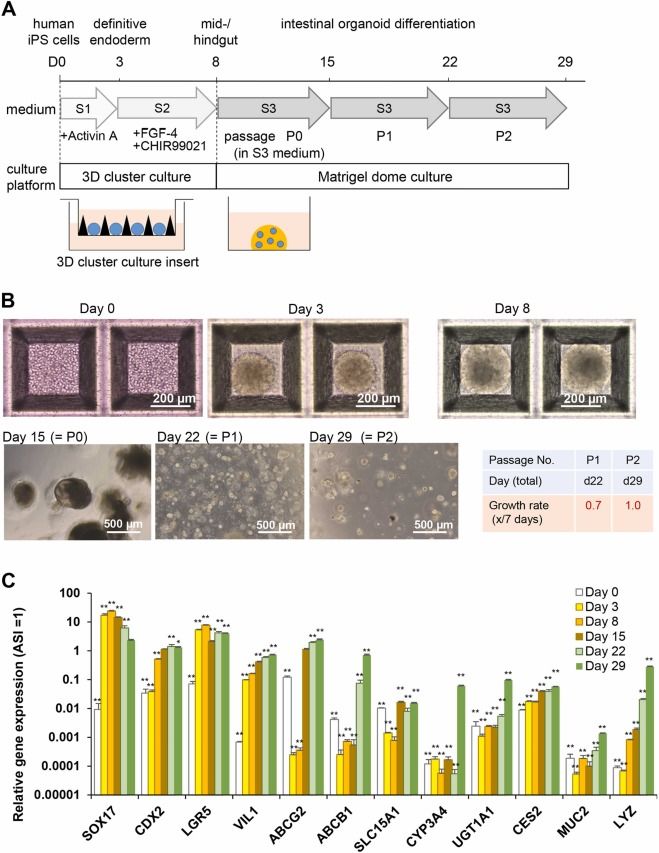 Fig.1 Human induced pluripotent stem cells (iPSCs) differentiate into intestinal organoids (IOs).1
A: We use a combination of AI-driven transcriptomic monitoring and functional benchmarks, such as glucose-responsive insulin secretion for β-cells and albumin/BSEP expression for hepatocytes, ensuring they meet adult-like criteria.
A: Yes. We offer custom differentiation services using client-provided iPSC or ESC lines, following a strict quality control assessment upon arrival.
A: Our EVs possess natural tetraspanin profiles and lineage-specific markers that allow for superior targeting and "stealth" immune evasion, which synthetic systems cannot replicate.
A: Yes. Our protocols are optimized for scale, providing large batches of high-purity cells (>80%) that exhibit consistent performance across 384-well plate formats.
A: While our cells are robust, we provide optimized maintenance media and detailed handling protocols to ensure phenotype stability post-thaw.
Creative Biolabs provides the industry's most advanced solutions for Comprehensive Digestive System Cell Differentiation Service, bridging the gap between pluripotent potential and clinical utility. From AI-validated hepatocytes to "heavy-payload" engineered EVs, we offer the tools you need to redefine regenerative medicine.
Contact Our Team for More Information and to Discuss Your Project
Reference
For Research Use Only. Not For Clinical Use.