Hematopoiesis derived from induced pluripotent stem cells recapitulates the developmental process of mature red blood cells, thereby enabling the generation of functional mature red blood cells. This resolves the limitations of short storage periods for donor blood and the problem of alloimmunization. Creative Biolabs leverages cutting-edge gene editing technologies to deliver high-purity, scalable blood components, eliminating donor sample variability and accelerating the translation of hematologic therapies from research to clinical application.
Discover How We Can Help - Request a Consultation
iPSC-derived blood cell differentiation is a pivotal technology in regenerative medicine and hematology, which guides induced pluripotent stem cells to differentiate into functional hematopoietic cells and their subtypes in vitro by recapitulating the process of embryonic hematopoiesis. This technology overcomes the limitations of primary blood cells, such as scarce sources, donor-dependent variability, and ethical constraints, and has broad applications in hematologic disease modeling, cell therapy, and drug screening.
| Blood Cell Lineage | Key Inducers/Conditions | Cell-Specific Markers |
|---|---|---|
|
Hematopoietic Progenitor Cells (HPCs) (Precursors of all blood cells) |
Wnt/β-catenin pathway activators (e.g., CHIR99021), BMP4, VEGF, SCF, TPO | CD34⁺, CD43⁺, KDR⁺ |
| Myeloid Cells - Granulocytes (Neutrophils/Eosinophils) | GM-CSF, G-CSF, IL-3 | CD11b⁺, CD15⁺, MPO⁺ |
| Myeloid Cells - Monocytes/Macrophages | M-CSF, GM-CSF, IL-4 | CD14⁺, CD68⁺, CD11b⁺ |
| Myeloid Cells - Dendritic Cells | GM-CSF, IL-4, TNF-α | CD11c⁺, CD80⁺, CD86⁺ |
| Erythroid Cells (Red Blood Cells) | EPO, SCF, IL-3, Transferrin | CD235a⁺ (Glycophorin A), Hemoglobin⁺ |
| Megakaryocytic Lineage/Platelets | TPO, IL-6, IL-11 | CD41⁺, CD61⁺, vWF⁺ |
| Lymphoid Cells - T Cells | Notch pathway activators (e.g., Delta-like 4), IL-7, FLT3-L | CD3⁺, CD4⁺/CD8⁺ |
| Lymphoid Cells - B Cells | IL-7, FLT3-L, CXCL12 | CD19⁺, CD20⁺, CD45RA⁺ |
| Lymphoid Cells - NK Cells | IL-15, IL-7, FLT3-L | CD56⁺, CD16⁺, CD3⁻ |
| Protocol Type | Process Characteristics | Advantages | Disadvantages |
|---|---|---|---|
| 2D Adherent Co-culture | Induce differentiation on feeder layers (e.g., OP9 stromal cells) with sequential addition of cytokines. | Simple operation, low cost, suitable for preliminary research | Low differentiation efficiency, heterogeneous cell population |
| 3D Suspension Culture | Culture iPSC-derived cells in suspension to form embryoid bodies (EBs), then induce hematopoietic differentiation in serum-free medium. | High yield of hematopoietic progenitor cells, good cell viability | Complex operation, difficult to control the uniformity of embryoid bodies |
| Feeder-free Defined Culture | Use serum-free, feeder-free medium supplemented with recombinant cytokines and matrix proteins. | High cell purity, compliant with GMP standards, suitable for clinical translation | High cost, strict requirements for culture conditions |
Our streamlined process ensures transparency and technical rigor at every stage:
Creative Biolabs provides an end-to-end solution for your hematological research needs. Our Multi-Lineage Blood Cell Induction Service are fully customizable to meet the rigorous demands of biology experts and clinical researchers.
Seamless transition from laboratory-scale iPSC culture to large-scale, automated bioprocessing.
Precision CRISPR/Cas9 editing to generate rare antigen profiles or enhanced therapeutic functionalities (e.g., CAR-NK, CAR-M).
Efficient upstream induction and downstream purification protocols to maximize yield and cell viability.
High-density culture in advanced stirred-tank bioreactors and perfusion systems for industrial-grade cell quantities.
Implementation of Quality-by-Design (QbD) and Process Analytical Techniques (PAT) to ensure batch-to-batch consistency.
Strict adherence to aseptic verification and basic principles of Good Manufacturing Practice (GMP) for clinical-ready deliverables.
Guaranteed stability of iPSC lines through validated cell banking and pre-cultivation procedures.
High-standard quality control (HACCP approach) to quantify and evaluate cell quality, deformability, and functional potency.
Experience the Creative Biolabs Advantage - Get a Quote Today
In the second stage of the original system, efficient hematopoietic organoid (HeO) generation was achieved via adherent static culture, but scalable production required the transition to suspension dynamic culture. Adopting dynamic adherent or static non-adherent conditions alone did not affect HeO formation, while the combination of these two conditions inhibited HeO formation and hematopoietic stem and progenitor cell (HSPC) yield, failing to meet clinical requirements.
To address this issue, three GMP-compliant cationic microcarriers (Cdex1, CP1, CP2) were tested for co-culture with embryoid bodies (EBs) under dynamic conditions. The results showed that EBs could chemotactically adhere to microcarriers and form HeOs, with HeO formation capacity comparable to the control group across all microcarrier groups. HSPC production was detected from the fourth week onwards, and the subsequent erythroid purity exceeded 90%, with negligible risks from non-erythroid cells. Cdex1 was selected as the optimal candidate due to its comparable and highest HSPC expansion rate relative to the control group.
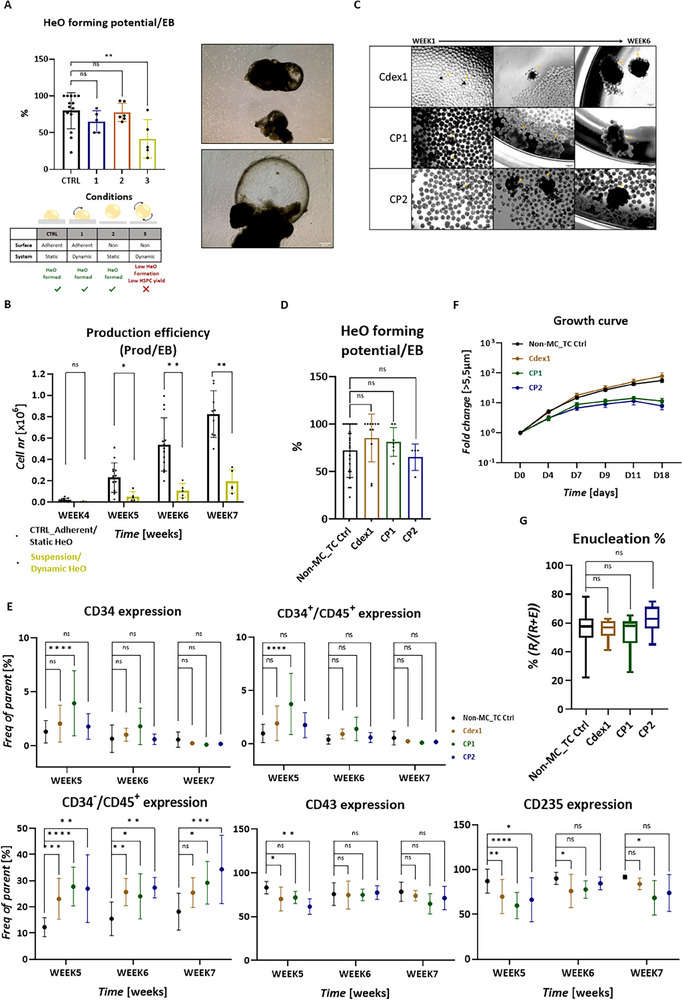 Fig.1 During the process of iPSC differentiating into red blood cells, the relevant surface markers were detected.1
A: Through our dynamic suspension and 3D organoid-based induction, we consistently achieve enucleation rates of 40-70%, which is significantly higher than traditional monolayer methods.
A: Yes, we utilize chemically defined, serum-free, and feeder-free media to ensure the products are suitable for future clinical translation and high-content drug screening.
A: Absolutely. We can receive your validated patient-derived lines or assist in the initial reprogramming phase before proceeding to differentiation.
A: We use specific small-molecule inhibitors and optimized oxygen-tension environments during the maturation phase to promote the expression of adult β-globin (HbA).
A: Our cells mimic the morphology, oxygen-carrying capacity, and membrane integrity of donor cells, with the added advantage of being "designer" products free from blood-borne pathogens and storage lesions.
Contact Our Team for More Information and to Discuss Your Project
Reference
For Research Use Only. Not For Clinical Use.