iPSC-derived hepatocyte differentiation generates functional liver cells, which recent literature cites as essential for assessing population variability and compound responses while reducing data uncertainty. Creative Biolabs delivers high-purity, standardized hiPSC hepatocytes that resolve traditional model bottlenecks. These metabolically competent cells enable robust toxicity screening and disease modeling, helping identify early DILI risk and bridge in vitro and clinical gaps.
Discover How We Can Help - Request a Consultation
iPSC-derived hepatocyte differentiation generates functional hepatocytes, addressing primary cell limitations and enabling diverse liver-related applications.
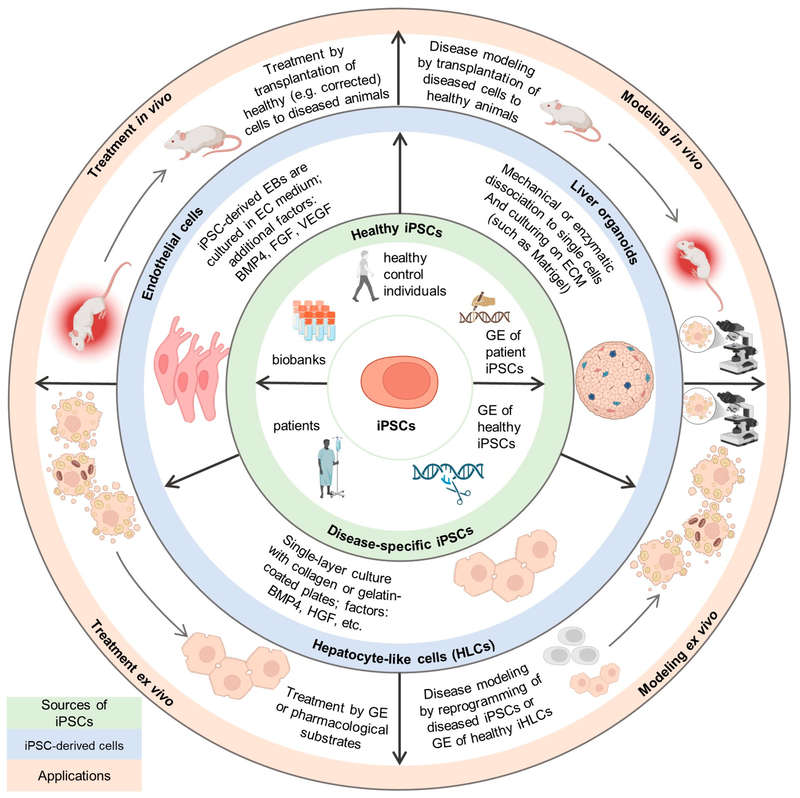 Fig.1 The application of iPSCs in the modeling and treatment of liver diseases.1,3
The differentiation process mimics the in vivo embryonic liver development trajectory, and iPSCs are induced to differentiate step by step by regulating key signaling pathways and adding cytokines and small molecules. It is divided into four core stages:
| Protocol Type | Process Characteristics | Advantages | Disadvantages |
|---|---|---|---|
| 2D Monolayer Differentiation | Flat adherent culture, sequential addition of cytokines and small molecules | Simple operation, easy to scale up, suitable for high-throughput screening | Slow maturation, low expression of functional genes, poor long-term function maintenance |
| 3D Spheroid/Organoid Differentiation | 3D scaffold or suspension culture to form cell spheroids or organoids | High maturation degree, stable functions, close to in vivo liver microenvironment | Complex operation, high cost, not conducive to large-scale production |
| Co-culture System | Co-culture hepatic progenitor cells with non-parenchymal cells (Kupffer cells, endothelial cells) | Promotes cell maturation and functional maintenance, simulates an in vivo cell interaction network | Difficult to control cell proportion, high technical requirements |
1. Marker Identification
| Detection Method | Target Markers |
|---|---|
| qPCR/RNA-seq |
1. Endoderm markers: FOXA2, SOX17 2. Hepatic progenitor markers: ALB, AFP 3. Mature hepatocyte markers: CYP450 family, HNF4α |
| Immunofluorescence/Flow Cytometry | ALB, CYP3A4; calculate differentiation purity |
The differentiation process at Creative Biolabs is a highly controlled, stage-specific transition that mimics embryonic liver development to ensure phenotypic accuracy.
As a global leader in stem cell solutions, Creative Biolabs provides a comprehensive and fully customizable Hepatocyte (Liver Cell) Differentiation Service tailored to the exacting standards of biology experts. We don't just provide cells; we provide a high-fidelity biological platform designed to fit your unique research parameters.
One-stop differentiation service from laboratory-scale pilot studies to large-scale industrial manufacturing of hiPSC-derived hepatocytes.
Expert optimization of culture conditions to maximize phenotypic maturity and metabolic yield based on your specific target profile.
Access to a vast panel of donor-specific strains with approved documentation and verified origin to ensure population-scale representativeness.
Large-scale differentiation pipelines capable of producing billions of functional cells, ensuring stability and consistency for high-throughput screening.
Quality-by-Design (QbD) approach utilizing high-standard analytical tools to quantify ALB secretion, CYP activity, and urea synthesis.
GMP-certified production environment with comprehensive aseptic procedures throughout the differentiation and maturation process.
Methodical risk management following Hazard Analysis Critical Control Point (HACCP) principles to guarantee product safety and reliability.
Experience the Creative Biolabs Advantage - Get a Quote Today
Researchers constructed expandable liver organoids from pluripotent stem cells (PSCs) by mimicking stage-specific liver development, progressing from PSCs to definitive endoderm, then to hepatic endoderm, immature hepatocytes, and finally mature hepatocytes. To optimize and standardize the protocol, organoid generation was advanced to the hepatic endoderm stage. Post-HE differentiation, cells were dissociated into single cells and embedded in Matrigel for 3D culture. On day 25 of differentiation, all 3D-cultured organoids were larger than the 2D control. Compared with the 2D control, the HM group showed a 2.6-fold increase in organoid number, and the EM group a 3.3-fold increase.
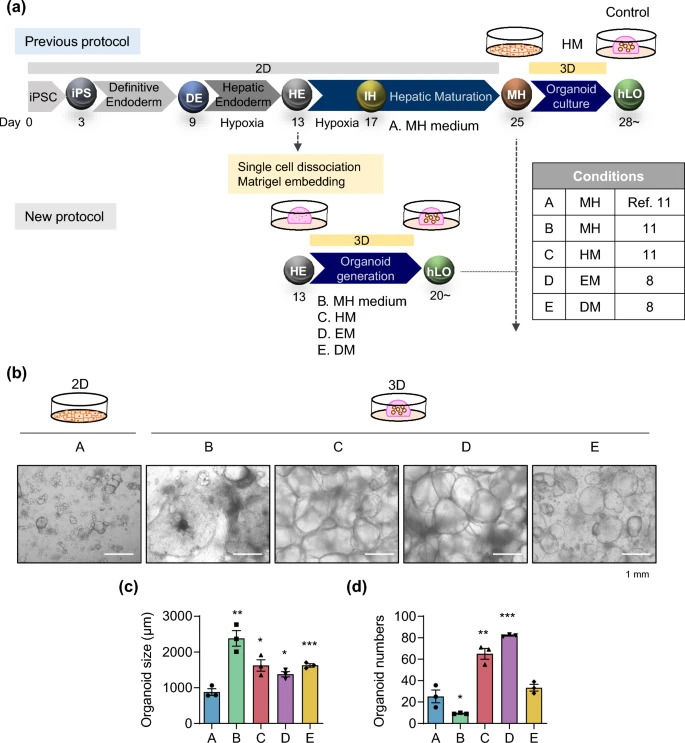 Fig.1 Efficient and reproducible generation of iPSC-derived liver organoids.2,3
A: Our cells provide comparable metabolic activity but offer the advantage of an infinite supply and genetic stability, allowing for reproducible experiments across different laboratories.
A: Yes, we can utilize client-provided iPSCs from patients with specific genetic conditions to create personalized disease models.
A: We routinely achieve over 85% albumin-positive cells, ensuring a highly enriched population for your assays.
A: Yes. Our maturation protocols ensure phenotypic stability longer than traditional 2D primary cell cultures.
A: Yes, we can provide co-culture systems, including Kupffer cells or Stellate cells, for more complex liver-on-a-chip applications.
Creative Biolabs provides end-to-end solutions for Hepatocyte (Liver Cell) Differentiation Service, including hiPSC reprogramming, stage-specific differentiation, and functional validation. Our models are tailored to support high-throughput toxicity screening, metabolic profiling, and precision medicine initiatives.
Contact Our Team for More Information and to Discuss Your Project
References
For Research Use Only. Not For Clinical Use.