iPSC differentiation causes pluripotent cells to become specialized functional cells. Creative Biolabs' Directed Induced Pluripotent Stem Cell (iPSC) Differentiation Services provides high-purity, functional human cell lineages through common small-molecule regulation and directed differentiation methods, supplying validated, ready-to-use cells that mimic human disease phenotypes. Based on 20 years of stem cell experience and high-throughput screening platforms, we simplify drug discovery and toxicology tests, solving the problem of incomplete cell maturation. Our models are more ethically acceptable and biologically relevant, avoiding the variability of lab-made protocols.
Discover How We Can Help - Request a Consultation
| Strategy Category | Specific Measures | Core Objectives |
|---|---|---|
| Establishment of Standardized iPSC Banks | Screen iPSC clones with high positive rates of pluripotency markers and normal karyotypes to establish standardized cell banks | Reduce differences caused by donor backgrounds and reprogramming processes. |
| Optimization of Culture and Differentiation Systems | Use chemically defined media (CDM) instead of serum/Matrigel; fix cell seeding density, cytokine ratios, and induction time points. | Standardize external culture conditions and reduce system-induced variability. |
| Optimization of Epigenetic Reprogramming | Eliminate epigenetic memory through passage acclimatization and treatment with small molecule compounds (e.g., 5-aza-dC) | Alleviate epigenetic heterogeneity of iPSCs and improve differentiation consistency. |
| Process Quality Control | Regularly monitor cell morphology, expression of pluripotency markers, and karyotypes; promptly eliminate abnormal cell populations. | Ensure the quality and genomic stability of cells during differentiation. |
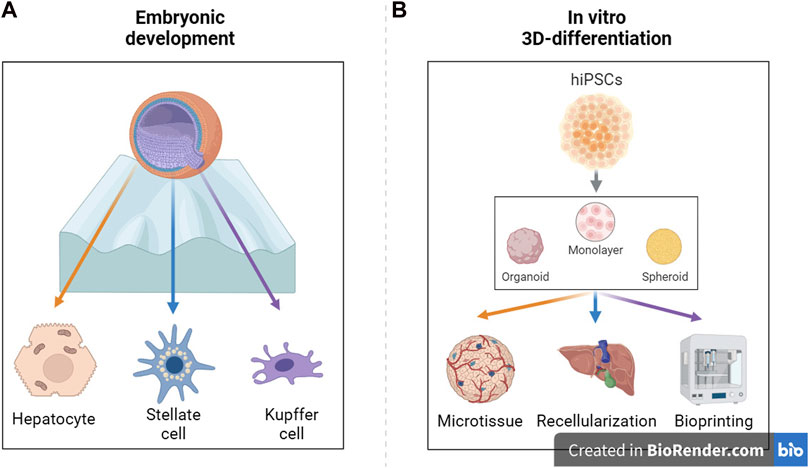 Fig.1 Schematic representation of in vitro differentiation protocols.1
To ensure the highest fidelity of the final cell product, our process is divided into rigorous, data-driven stages.
At Creative Biolabs, we go beyond standard protocols to offer a truly industrialized, end-to-end iPSC differentiation ecosystem. Our biology experts provide high-standard, customized solutions tailored to your unique research objectives, ensuring that every cell lineage we produce meets the most stringent quality and functional benchmarks.
Integrated services from initial iPSC line validation and gene editing to large-scale, terminal differentiation and functional assaying.
Specialized protocols designed to meet your specific disease modeling needs, including bespoke maturation markers and patient-specific genotypes.
High-throughput differentiation capabilities supported by automated culture systems, ensuring consistency across batch sizes from pilot studies to large-scale screening campaigns.
Implementation of Quality-by-Design (QbD) and Process Analytical Technology (PAT) to ensure lineage purity and genomic stability throughout the process.
Stringent assessment and approval of strain and line origin to guarantee the stability of cell banks and differentiated progeny.
Deployment of batch, fed-batch, or continuous culture modes to maximize yield and functional maturity of target cell types.
All processes follow the basic principles of Good Manufacturing Practice (GMP) and strict aseptic verification to ensure the highest standard of product quality.
Experience the Creative Biolabs Advantage - Get a Quote Today
A: We implement a multi-tiered screening approach. This includes G-banded karyotyping to detect numerical or structural chromosomal abnormalities and high-resolution Copy Number Variation (CNV) analysis at multiple critical stages—before, during, and after differentiation. This rigorous oversight ensures that the differentiation process does not induce silent chromosomal aberrations that could skew your experimental results.
A: Yes, we have extensive experience working with client-provided lines, including those carrying specific clinical disease mutations or complex CRISPR-mediated edits (such as knock-ins or knock-outs). We provide a thorough intake evaluation to ensure the starting material is viable for directed induction, offering a truly bespoke service for niche research requirements.
A: While target purity varies based on the biological complexity of the lineage, we typically achieve and validate >90% purity for most standard lineages. This is accomplished through optimized, lineage-specific enrichment protocols—such as FACS—minimizing the presence of undifferentiated cells or off-target progenitors that can introduce "biological noise" into your assays.
A: We specialize in providing assay-ready platforms, including pre-plated cells in 96- or 384-well formats. Our automated imaging and validation systems ensure consistent confluence and functional readiness across entire batches, significantly reducing the plate-to-plate variability that often plagues large-scale screening campaigns.
A: Unlike primary human cells, which are limited by donor availability and finite expansion potential, our iPSC-derived cells offer infinite scalability and consistent performance. More importantly, they allow for the selection of specific patient-derived genetic backgrounds, providing a level of disease recapitulation and genetic diversity that primary cell lines simply cannot match, all while maintaining a high functional correlation to adult human tissue.
Creative Biolabs offers a world-class suite of Directed Induced Pluripotent Stem Cell (iPSC) Differentiation Services, providing the biological foundation for your next breakthrough. From neural to cardiac lineages, our expertise ensures your research is built on a foundation of precision and reproducibility.
Contact Our Team for More Information and to Discuss Your Project
Reference
For Research Use Only. Not For Clinical Use.