Biological sex critically impacts therapeutic outcomes. Creative Biolabs’ Gender Determination Service identifies iPSC sex chromosome complements and verifies SRY gene expression, establishing high-fidelity sex-specific disease models to isolate sex as a biological variable. Leveraging isogenic lines with identical autosomes but distinct sex chromosomes, the service eliminates genetic confounding, ensures valid precision medicine models, and supports research on sex-biased disorders and drug metabolism, aligning with regulatory expectations.
Discover How We Can Help - Request a Consultation
iPSC Gender Determination refers to the set of experimental techniques for identifying the sex chromosome composition of induced pluripotent stem cell lines, which is a key part of iPSC quality control and characterization.
The gender of iPSCs is determined by their sex chromosome karyotype, which is consistent with the donor somatic cells from which they are reprogrammed.
At Creative Biolabs, we understand that every research project has unique biological requirements. We provide a One-Stop Gender Determination Service that scales from initial strain/cell bank validation to high-throughput screening applications.
Bespoke generation of sex-chromosome variants (X0, XX, XY, XXY) tailored to your specific disease model or therapeutic target.
Assessing and approving the origin and genomic stability of cell lines through a qualified Quality Assurance (QA) service.
Fine-tuning the expression of sex-linked genes to facilitate high-fidelity disease recapitulation in selected microphysiological systems.
Guaranteeing the stability of sex chromosome complements across large-scale expansions and cell banking procedures.
Implementation of high-standard QC tools and Hazard Analysis Critical Control Point (HACCP) principles to quantify and evaluate product integrity.
Seamless transition from laboratory-scale characterization to pilot-scale screening for gender-specific drug discovery.
Well-established quality systems following Quality-by-Design (QbD) and process analytical techniques (PAT) for regulatory-ready data.
Experience the Creative Biolabs Advantage - Get a Quote Today
To generate hiPSC clones with different isosomal karyotypes but identical autosomes, we reprogrammed non-chimeric XXY fibroblasts using CRISPR-Cas9 to obtain hiPSC containing XXY, XX, XY, and XO. Subsequently, the gender of all hiPSC cell lines was verified by qPCR, FISH, karyotype analysis, SNP analysis, and other methods, as well as their expression of undifferentiated state markers POU5F1 and NANOG, and their ability to differentiate into endoderm, mesoderm, and ectoderm lineages.
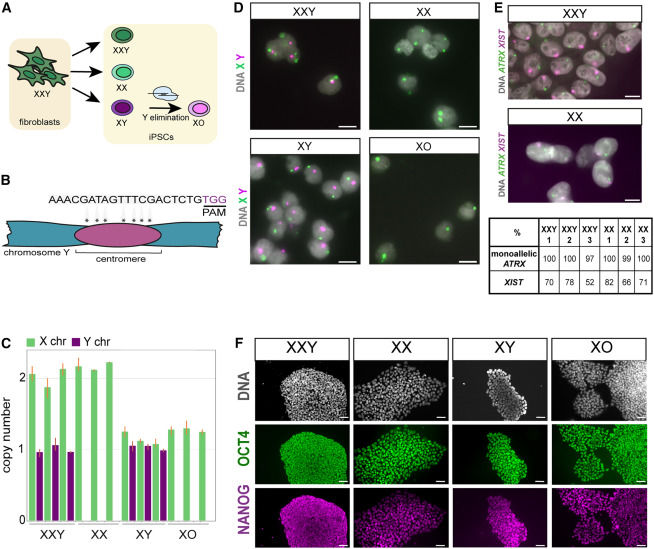 Fig.1 Generation and characterization of autosomal homologous hiPSC.1
A: Unrelated donors bring massive genetic variants (confounding noise) that mask sex-specific effects. Isogenic lines share identical autosomal backgrounds, ensuring differences are attributed to sex chromosomes, not individual variation.
A: Yes. High-passage iPSCs face genomic instability (e.g., Y chromosome loss). Our services verify chromosomal identity, avoiding abnormal cell populations in experiments.
A: We provide gender-verified isogenic models to generate human-relevant data on sex-based therapy differences, aligning with regulatory expectations and reducing clinical failure risks.
A: They help distinguish Y chromosome-related effects from X-chromosome dosage effects, enabling deeper analysis of sex-biased diseases than simple XX vs. XY comparisons.
Creative Biolabs provides the industry's most comprehensive suite of Gender Determination Service, ensuring your drug discovery pipeline is inclusive and future-proof.
Contact Our Team for More Information and to Discuss Your Project
Reference
For Research Use Only. Not For Clinical Use.