
Albumin nanoparticles are primarily deployed as carriers for poorly water-soluble cancer drugs. The HSA component specifically binds to receptors (gp60) overexpressed on tumor endothelial cells, enabling transcellular transport and enhanced uptake.
Albumin based Targeted Delivery Strategy
Albumin-based nanoparticles are transforming drug delivery by offering high biocompatibility and favorable pharmacokinetics. Creative Biolabs specializes in overcoming the critical challenges of albumin based nanoparticle development, such as batch-to-batch variability and large-scale production issues, providing expert R&D services to ensure your therapeutic concept achieves scalable, consistent quality.
Click Here to View more about our Service
Introduction to Albumin Based Nanoparticles
Albumin nanoparticles are ultra-small protein-based delivery systems, typically in the 100-200 nm range, utilizing Human Serum Albumin (HSA) as their core building block. HSA is an ideal carrier due to its high natural abundance, low immunogenicity, and extensive binding sites for various molecules. Albumin nanoparticles are fundamentally constructed in two ways: as Drug-Conjugated Albumin (a single albumin molecule covalently linked to a drug) or as Drug-Containing Nanoparticles (multiple albumin molecules encapsulating the drug). The most common manufacturing method involves desolvation, where an organic solvent like ethanol precipitates the albumin, which is then chemically cross-linked using agents such as glutaraldehyde to stabilize the particle structure.
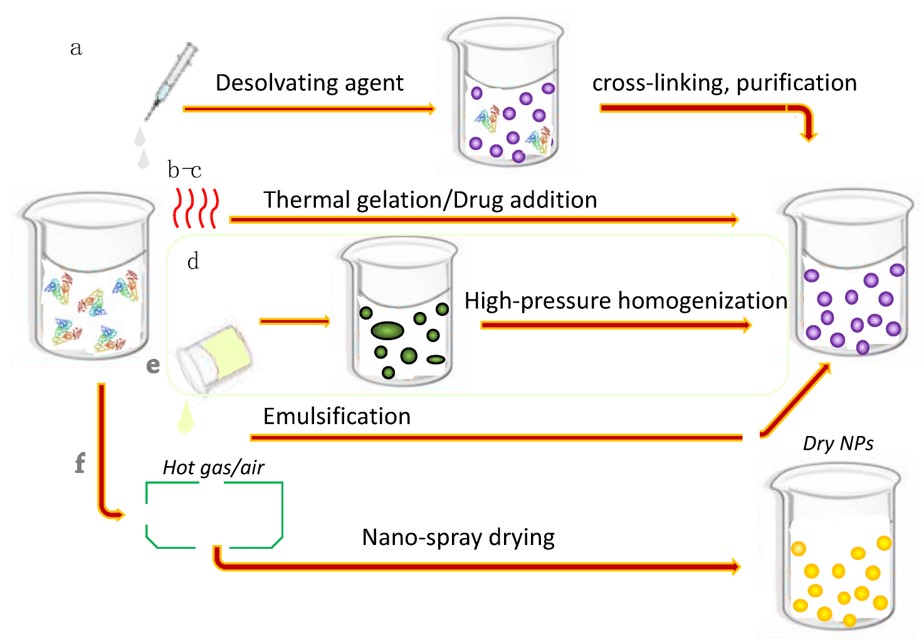 Fig.1 The preparation methods for albumin nanoparticles.1
Advantages of Albumin Based Nanoparticles
The primary advantage of albumin nanoparticle systems lies in their exceptional biocompatibility and desirable in vivo behavior. These systems offer several key characteristics that enhance therapeutic efficacy:
Prolonged Circulation
HSA naturally has a long plasma half-life, a property it transfers to the resulting nanoparticles, improving the drug's circulation time and bioavailability.
Passive and Active Targeting
Their size promotes accumulation in solid tumors via the Enhanced Permeability and Retention (EPR) effect (Passive Targeting). They also enable Active Targeting by utilizing the gp60 receptor and SPARC protein, which are often overexpressed in cancer cells, to enhance specific cellular uptake.
High Drug Loading
Albumin's numerous internal binding pockets allow for high-capacity encapsulation of both hydrophilic and hydrophobic compounds.
Stimulus-Responsiveness
Advanced systems can be engineered to release their payload only when triggered by tumor-specific conditions, such as the lower pH found in the endosomes or lysosomes of cancer cells.
Applications of Albumin Based Nanoparticles
Oncology and Anti-Tumor Therapy
Multifunctional Theranostics
Albumin acts as a Template and Stabilizer for creating advanced systems capable of both therapy and imaging. For instance, HSA can be used to synthesize and stabilize fluorescent inorganic materials, such as gold nanoclusters (GNCs). These nanoprobes can perform simultaneous fluorescence imaging while delivering a drug payload that is selectively released by the acidic tumor environment pH-triggered release).
Drug Discovery and Pre-Clinical Screening
Albumin is routinely used in vitro as an Immobilized Target in early drug development. By measuring the Plasma Protein Binding (PPB) of a new drug candidate to immobilized HSA, researchers can accurately predict the drug's in vivo half-life and its overall bioavailability before extensive animal testing.
Anti-Inflammation and Autoimmune Diseases
Driven by the success in oncology, research into albumin nanoparticles for treating inflammatory diseases (e.g., rheumatoid arthritis) is rapidly increasing. Albumin's inherent ability to accumulate in inflamed tissues makes it an ideal choice for targeted anti-inflammatory drug delivery.
Blood-Brain Barrier (BBB) Penetration
Advanced albumin formulations are being developed to overcome the BBB for treating neurological disorders and brain tumors. HSA can be modified or used in hybrid systems (e.g., albumin-chitosan hybrids) to enhance transport across this highly restrictive barrier.
Table.1 Examples of albumin nanoparticles.
| Application Area | NP Class | Key Mechanism |
|---|---|---|
| Oncology (Clinical) | Drug-Albumin Nanocarrier | Passive targeting via EPR effect and gp60 receptor binding |
| Autoimmune Disease | Albumin-Binding Antibody | Targeting tumor necrosis factor (TNF-α) in inflamed tissue |
| Theranostics (R&D) | Albumin-GNCs | pH-triggered drug release and fluorescent imaging |
| Pharmacokinetics Screening | Immobilized HSA | Affinity measurement for Plasma Protein Binding (PPB) |
| Gene Delivery (R&D) | Albumin-Polymer Hybrid (e.g., Albumin-Chitosan) | Protection of genetic material and enhanced cellular transfection |
If you are developing complex albumin-based nanoparticle delivery systems, or exploring novel liposome and polymer hybrid development, leverage Creative Biolabs' platform and service advantages. Our expertise guarantees consistent, high-quality, and scalable nanoparticle manufacturing. Contact us today to discuss your next breakthrough project.
Reference
- Hornok, Viktória. "Serum albumin nanoparticles: problems and prospects." Polymers 13.21 (2021): 3759. Distributed under Open Access license CC BY 4.0, without modification. https://doi.org/10.3390/polym13213759.
Our services are For Research Use Only. We do not provide services to individuals.
Online Inquiry