
By targeting overexpressed lipid receptors (LDL-R), lipoprotein nanoparticles can deliver chemotherapy agents or gene therapies directly to malignant cells, significantly reducing off-target systemic toxicity.
Lipoprotein based Targeted Delivery Strategy
Creative Biolabs specializes in the development of lipoprotein-based nanoparticle delivery systems, helping clients overcome the complex challenges of non-specific toxicity and poor solubility for novel drugs. We leverage the body's natural transport pathways to ensure highly targeted and effective therapeutic delivery.
Click Here to View more about our Service
Introduction to Lipoprotein Based Nanoparticles
Lipoprotein nanoparticles are bio-inspired drug carriers that mimic the structure of natural lipoproteins, such as high-density lipoprotein (HDL) and low-density lipoprotein (LDL). These endogenous nanoparticles consist of a hydrophobic core of lipids (like cholesteryl esters) encapsulated by an amphiphilic shell of phospholipids and stabilizing apolipoproteins (e.g., ApoA-1 for HDL, ApoB-100 for LDL). The most effective lipoprotein nanoparticles are generated via reconstitution, where therapeutic agents are substituted for the core lipids or covalently attached to the apolipoprotein surface during a controlled self-assembly process, yielding a stable, uniform, and highly potent nanocarrier.
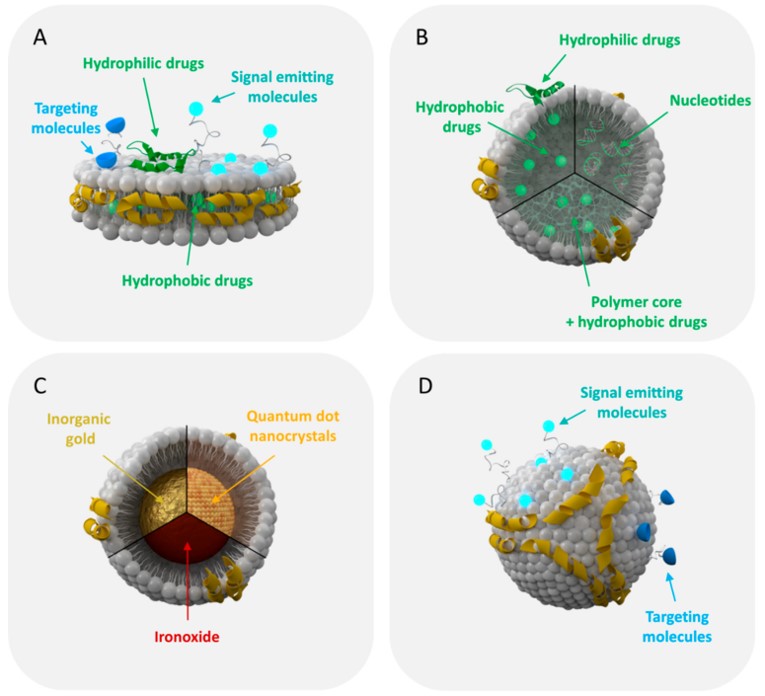 Fig.1 The reconstituted HDL (rHDL) nanoparticle platform for drug delivery and imaging.1
Advantages of Lipoprotein Based Nanoparticles
Lipoprotein nanoparticle delivery systems possess numerous characteristics that confer significant advantages over synthetic nanocarriers:
Superior Immune Evasion
By mimicking native particles, lipoprotein nanoparticles are recognized as "self" and are highly effective at evading the body's mononuclear phagocyte system (MPS). This provides long systemic circulation times—a crucial factor for achieving adequate accumulation at the target site.
Active Metabolic Targeting
Lipoprotein nanoparticles exploit the high metabolic demand of many diseases, particularly cancer. Malignant cells often upregulate receptors like the low-density lipoprotein receptor (LDL-R) or scavenger receptor class B type I (SR-BI) to fuel rapid proliferation, providing an innate, active targeting mechanism.
Optimal Drug Encapsulation
The natural hydrophobic core facilitates exceptionally high loading of poorly water-soluble drugs. Furthermore, the small size of HDL mimetics (5 - 12 nm) enables deep tumor penetration and maximizes accumulation via the Enhanced Permeability and Retention (EPR) effect.
Theranostic Versatility
The structure allows for the co-encapsulation of both therapeutic drugs and imaging agents (e.g., contrast metals or fluorophores), creating a single platform for both treatment and real-time diagnostic monitoring of drug biodistribution and efficacy.
Applications of Lipoprotein Based Nanoparticles
Targeted Cancer Therapy
Central Nervous System (CNS) Drug Delivery
Lipoprotein nanoparticles show promise in delivering therapeutics across the Blood-Brain Barrier (BBB), a major hurdle in treating neurological disorders and glioblastoma.
Cardiovascular Disease (CVD) Treatment
Leveraging the natural role of HDL in reverse cholesterol transport, lipoprotein nanoparticles can be engineered to deliver anti-inflammatory or anti-atherosclerotic agents directly to plaque sites within arterial walls.
Vaccine and Gene Therapy
The stable, uniform nature of lipoprotein nanoparticles makes them ideal for encapsulating sensitive payloads like mRNA or siRNA for gene silencing, utilizing endogenous pathways to facilitate cytosolic release.
Table.1 Examples of lipoprotein nanoparticles.
| Application Area | NP Class | Key Mechanism |
|---|---|---|
| Oncology (Chemotherapy) | LDL Mimetic | Targeting LDL-R Overexpression |
| Tumor Imaging | HDL Mimetic | Co-loading Contrast Agents for Theranostics |
| Gene Therapy (siRNA) | HDL Mimetic | SR-BI Receptor-Mediated Cytoplasmic Delivery |
| Atherosclerosis (Vascular) | HDL Mimetic | Reverse Cholesterol Transport Pathway Targeting |
Creative Biolabs continues to provide expert lipoprotein nanoparticle delivery system development services using our state-of-the-art reconstituted lipoprotein nanoparticle platform. We also offer lead generation services for novel liposome development, highlighting our platform's advantages in precision and scalability. Contact us today to discuss your specific drug formulation needs and how our bio-inspired nanocarriers can accelerate your drug pipeline.
Reference
- Kornmueller, Karin, Ivan Vidakovic, and Ruth Prassl. "Artificial high density lipoprotein nanoparticles in cardiovascular research." Molecules 24.15 (2019): 2829. Distributed under Open Access license CC BY 4.0, without modification. https://doi.org/10.3390/molecules24152829
Our services are For Research Use Only. We do not provide services to individuals.
Online Inquiry