
Products are developed to target specific Tumor-Associated Antigens (TAAs), utilizing the natural chemotaxis and infiltration ability of macrophages to seek out and penetrate dense tumor masses, a task challenging for T-cells.
Targeted Drug Delivery for CAR-M Cell Therapy
Chimeric antigen receptor macrophages (CAR-M) therapy combines CAR-targeting with the macrophages' natural power for tumor invasion, phagocytosis, and TME reprogramming to conquer solid tumors. However, controlling gene modification and function remains a key industrial challenge. Creative Biolabs offers targeted delivery technology development, focusing on overcoming the inherent transfection difficulties of macrophages and accelerating the development of next-generation CAR-M products.
What is Targeted Delivery?
In CAR-M cell therapy manufacturing, targeted delivery refers to the gentle and highly efficient introduction of the CAR-encoding gene (usually mRNA) into primary or induced macrophages in vitro or in vivo. It focuses on bypassing the major cellular hurdle: phagocytic clearance. This involves designing non-viral vectors (like lipid nanoparticles or nanogels) with specialized surface chemistry and charge properties that effectively evade macrophage endosome/lysosomal degradation to achieve efficient intracytoplasmic transfection. Besides, mRNA delivery for transient expression is crucial for quick screening and safety control, or DNA vector protocols for stable expression to suit long-term clinical strategies.
Applications for CAR-M Cell Therapy
CAR-M technology is designed to fundamentally change the way cell therapies interact with solid tumors, providing multi-pronged attack strategies:
Solid Tumor Targeted Therapy
Enhanced Phagocytic Activity
Delivery of optimized CAR structures—often featuring phagocytosis-enhancing signaling domains—significantly enhances macrophage-specific clearance (phagocytosis) of tumor cells that express the target antigen.
Tumor Microenvironment (TME) Reprogramming
Immunomodulatory molecules or cytokines are synergistically delivered alongside the CAR. This actively helps to suppress immunosuppressive M2 macrophages and ensure the CAR-Ms maintain an activating M1 phenotype.
Adaptive Immunity Bridge
Following phagocytosis, CAR-M cells function as potent Antigen-Presenting Cells (APCs), efficiently processing and presenting tumor antigens to endogenous T-cells, triggering a robust, secondary adaptive immune response.
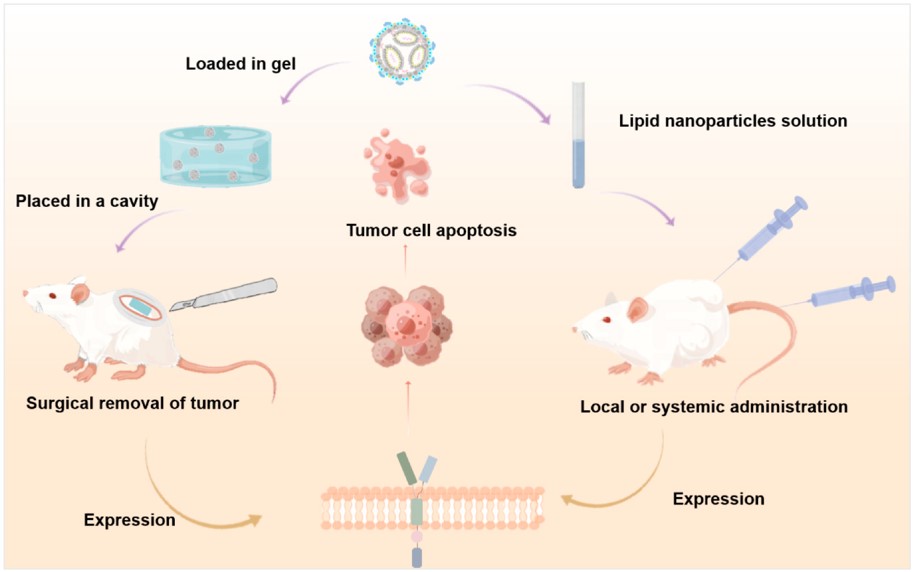 Fig.1 Lipid Nanoparticles (LNPs) express CAR at tumor sites through different drug-delivery pathways.1
Delivery Challenges of CAR-M Cell Therapy
Extremely Low Transfection Efficiency of Primary Cells Cell Polarization Control Balance Between CAR Expression and Phagocytic Function
Primary macrophages (and their precursor cells, monocytes) are famously recognized as difficult-to-transfect immune cells. Their evolutionary role as professional phagocytes means their high phagocytic activity quickly captures and destroys most conventional non-viral and viral vectors via lysosomal degradation, severely limiting efficiency.
What We Can Offer
We offer professional, proprietary targeted delivery technologies, focusing on solving the efficiency, functional stability, and polarization control challenges inherent in CAR-M therapy manufacturing:
Breakthrough Macrophage Transfection
We provide optimized LNPs and nanogels tailored to macrophage characteristics. Their unique surface modifications and charge properties effectively evade lysosomal degradation, ensuring high-activity CAR-mRNA or DNA delivery directly into the cytoplasm.
Transient and High-Efficiency CAR Gene Expression
We offer proprietary CAR-mRNA delivery protocols designed to achieve rapidly transient, yet highly effective CAR gene expression. This helps clinical teams control CAR activity duration, mitigate the risk of long-term off-tumor toxicity, and accelerate product screening velocity.
Cell Polarization-Controlled Delivery
We can synergistically deliver polarization-regulating molecules (such as M1-related transcription factor mRNA or microRNAs) alongside the CAR. This guarantees that macrophages maintain a highly active M1 state with sustained anti-tumor activity, overcoming TME-induced M2 reversion.
Non-Viral Universal Manufacturing Optimization
Our delivery solution is highly scalable, perfectly supporting the efficient engineering of iPSC-induced macrophages, accelerating the large-scale, cost-effective production of universal (allogeneic) CAR-M products.
Why Choose Us?
Macrophage-Specific Expertise
Dedicated non-viral vectors and protocols optimized solely for macrophages.
Durability Focus
Technology designed to stabilize the critical M1 anti-tumor phenotype.
Scalability
High-efficiency, non-viral platforms ready for universal (iPSC) CAR-M manufacturing.
Translational Focus
Solutions directly addressing the persistence and durability limitations observed in early CAR-M trials.
Workflow
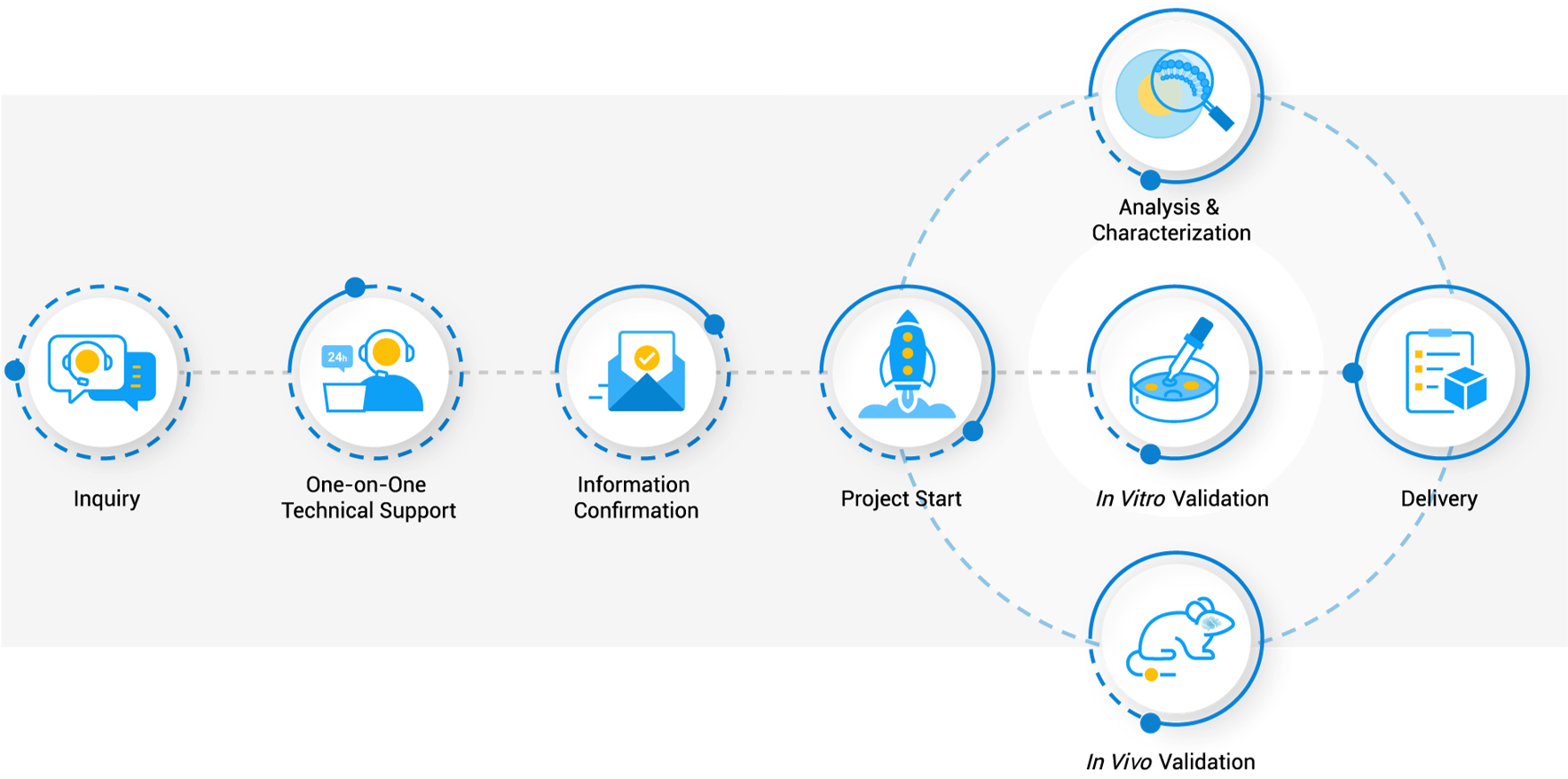
Equip your CAR-M cells with cutting-edge targeted delivery technology! Your CAR-M therapy is the key to conquering solid tumors. Please contact our dedicated CAR-M delivery expert team today for customized non-viral engineering solutions.
Reference
- Cao, Lili, Yingying Liu, and Guimei Lin. "Strategies for Altering Delivery Technologies to Optimize CAR Therapy." International Journal of Molecular Sciences 26.7 (2025): 3206. Distributed under Open Access license CC BY 4.0, without modification. https://doi.org/10.3390/ijms26073206.
Our services are For Research Use Only. We do not provide services to individuals.
Online Inquiry