
Precision engineering enables the delivery of disease-specific antigens or T Cell Receptors (TCRs) to develop Treg products designed to specifically suppress autoreactive T cells while leaving general immunity intact.
Targeted Drug Delivery for Treg Therapy
Regulatory T cells (Tregs) are key to maintaining immune tolerance and suppressing excessive inflammatory responses. Treg therapy provides a revolutionary treatment approach for autoimmune diseases, organ transplant rejection, and chronic inflammation by restoring immune balance. Creative Biolabs provides advanced targeted delivery system development services, helping clients maximize therapeutic efficacy, enhance product stability, and overcome complex manufacturing challenges.
What is Targeted Delivery?
In Treg therapy, targeted delivery is the precise, low-toxicity introduction of functional payloads—such as mRNA for chemokine receptors, tolerogens, or FOXP3 stabilizing agents—into Tregs ex vivo. This nanomedicine approach ensures Tregs are conditioned for optimal performance. The primary aim is to enhance the immunosuppressive function, enforce phenotypic stability, and orchestrate the specific migration of Tregs to the target site of inflammation. By concentrating therapeutic function, targeted delivery enables higher efficacy with significantly lower cellular doses, moving the field toward surgical precision.
Applications for Treg Therapy
Autoimmune Diseases
Organ Transplant Tolerance
Treg products can be modified with chemokine receptor genes to enhance their homing ability to the transplanted organ. This localized action improves the therapeutic index and can potentially reduce the necessary dosage of systemic immunosuppressive drugs.
Chronic Inflammatory Diseases
Therapeutic cells can be loaded with anti-inflammatory cytokines or metabolic reprogramming molecules to enhance their survival and immunosuppressive activity. This stabilization ensures the Treg population remains functional and effective within the often-hostile, inflammatory microenvironment.
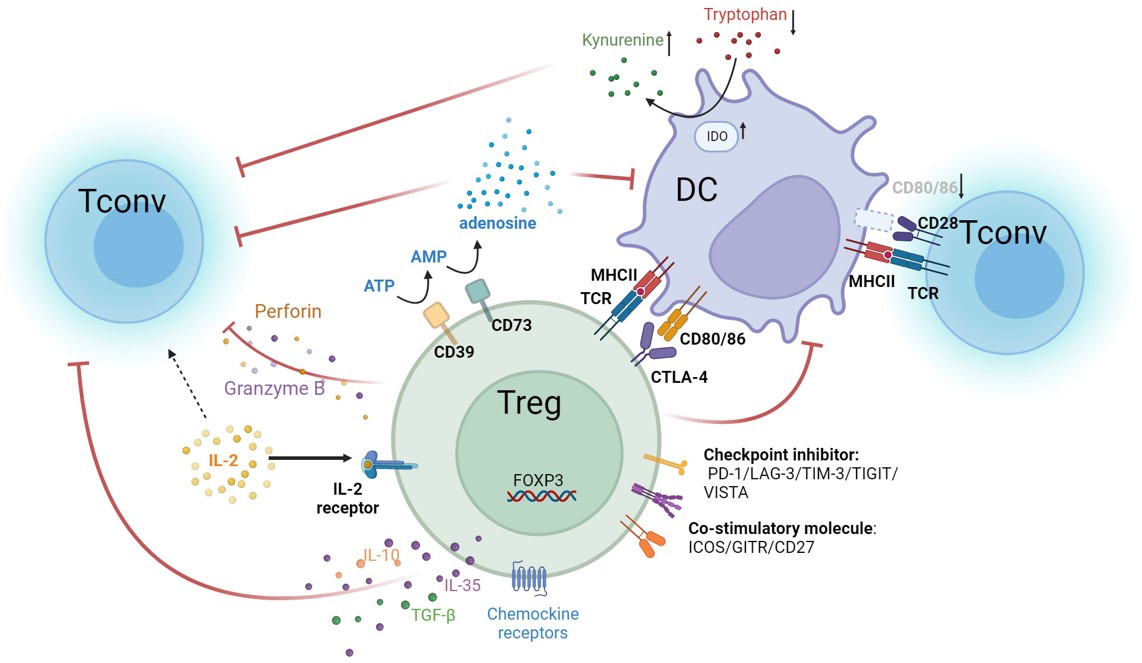 Fig.1 Multiple immunosuppressive mechanisms of Tregs.1
Delivery Challenges of Treg Therapy
This remains a critical safety liability: in the presence of inflammatory signals, Tregs risk losing FOXP3 expression and converting into pathogenic effector T cells (Teffs), which can negate the therapeutic effect and provoke autoimmune responses.
What We Can Offer
We offer professional targeted delivery technologies, engineered to solve the core challenges of stability, homing, and gene modification efficiency in Treg therapy manufacturing.
Precise Delivery of Homing Molecules
Achieved by delivering specific chemokine receptor mRNAs (such as CCR2 or CCR4) via nanoparticles, enabling Tregs to actively track and concentrate at inflamed sites, dramatically boosting local effects.
Functional Stability Enhancement Vectors
Built into our proprietary systems, co-delivering molecules that stabilize FOXP3 expression or siRNAs to silence pro-inflammatory signaling pathways.
Mild & Efficient Non-Viral Transfection
Utilizing ultra-low cytotoxic LNP and nanogel platforms specifically tailored to Treg sensitivity, ensuring high viability of FOXP3-expressing cells during gene modification.
Antigen-Specific Treg Engineering
Efficiently delivering TCRs or CARs to support the development of highly specific Treg products that inhibit only targeted autoreactive T cells.
Why Choose Us?
Targeted Delivery Expertise
We bridge the gap between Treg biology and nanomedicine.
Validated Components
Access to highly purified, scalable, and validated stabilizing agents and carrier systems.
Focus on Stability
Our primary goal is eliminating phenotypic plasticity, the single greatest safety risk.
Efficiency
Achieve higher efficacy with lower cell doses, streamlining clinical trials and reducing manufacturing costs.
Workflow
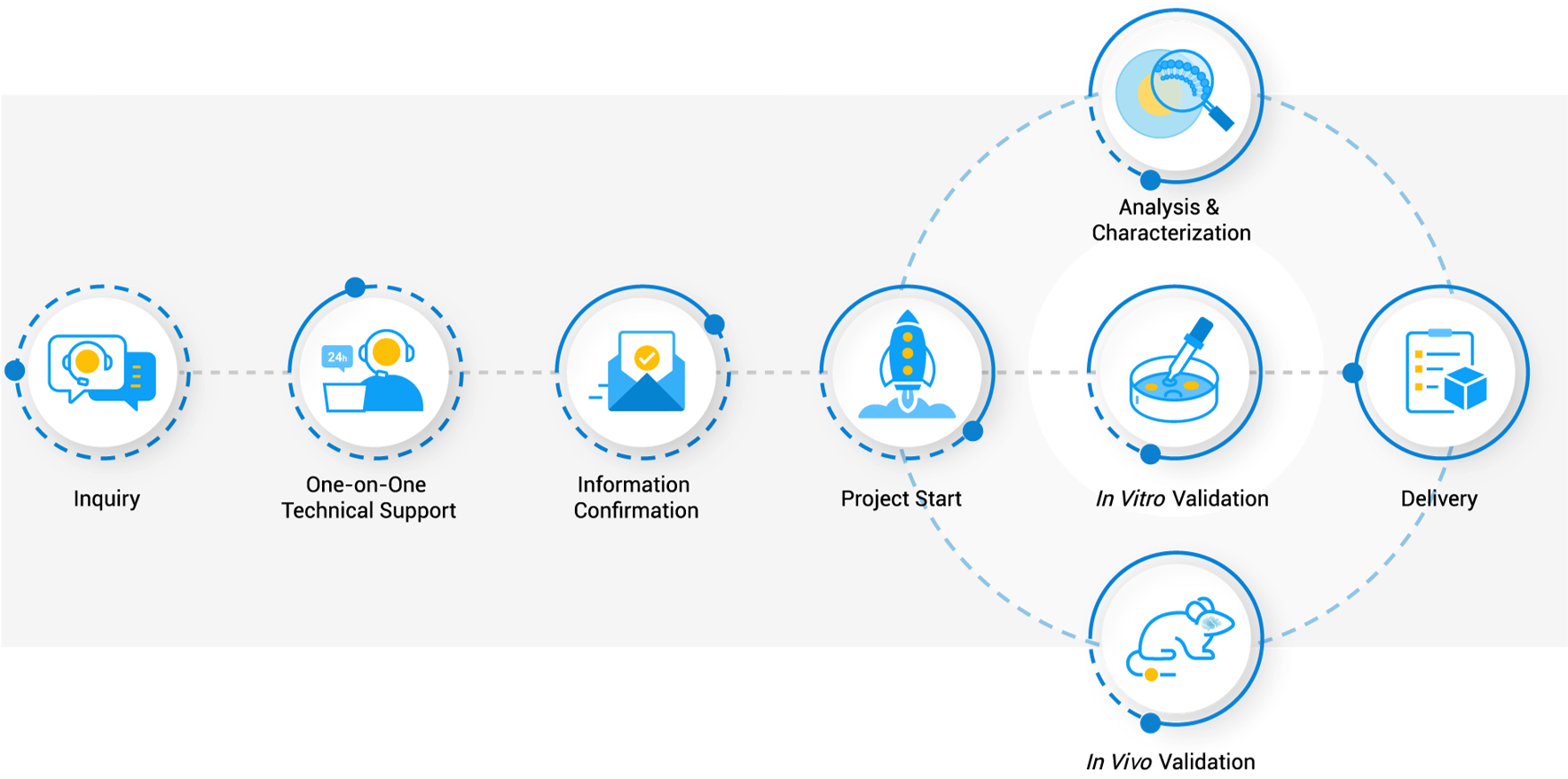
Utilizing targeted delivery technology to achieve precise homing and functional stability of Tregs! If your Treg therapy is challenged by functional stability or homing efficiency, please contact us for a customized non-viral or non-CAR gene engineering solution.
Reference
- Qin, Diyuan, et al. "Targeting tumor-infiltrating tregs for improved antitumor responses." Frontiers in Immunology 15 (2024): 1325946. Distributed under Open Access license CC BY 4.0, without modification. https://doi.org/10.3389/fimmu.2024.1325946.
Our services are For Research Use Only. We do not provide services to individuals.
Online Inquiry