Delivering specific mRNAs or miRNAs, optimizing culture medium composition and cell signaling pathways, significantly increasing the fold increase and activity of TIL cells in vitro.
Targeted Drug Delivery for Tumor-Infiltrating Lymphocyte (TIL) Cell Therapy
Tumor-infiltrating lymphocyte (TIL) therapy is a major hope for solid tumors because of its natural antigen recognition ability. Success, however, is blocked by three core obstacles: in vitro expansion, functional exhaustion, and TME suppression. Creative Biolabs' targeted delivery technology focuses on the efficient delivery of functional molecules and precise cell modification to enhance TIL cell performance and unleash its full potential in solid tumor treatment.
What is Targeted Delivery?
Targeted delivery here specifically refers to the highly efficient, low-toxicity molecular modification and enhancement of TIL cells in vitro. The key lies in: Empowerment: Delivering functional genes or molecules (such as anti-exhaustion factors and cytokines) to enhance cell proliferation and in vivo persistence; Homing: Delivering homing signaling molecules to enhance the tumor-specific migration ability of TIL cells. This precision approach ensures that therapeutic payloads are concentrated at the cellular level to maximize anti-tumor potential while minimizing off-target effects.
Advanced Applications for TIL Cell Therapy
This technology is utilized across several critical aspects of TIL therapy development:
TIL Amplification and In vitro Enhancement
Development of "Armored" TILs
Synergistic delivery of interleukin (such as IL-12, IL-15) genes, enabling TIL cells to autonomously secrete cytokines to overcome the inhibition of the tumor microenvironment.
Reversal and Prevention of Functional Exhaustion
Delivering siRNA or ASO (antisense oligonucleotides) for gene silencing, targeting exhaustion-related checkpoints or metabolic pathways such as PD-1 and LAG-3, to restore cellular killing function.
Enhancing TIL Homing Ability
Delivering chemokine receptor genes or modifying the surface of TIL cells to enhance their specific migration and penetration into the solid tumor microenvironment.
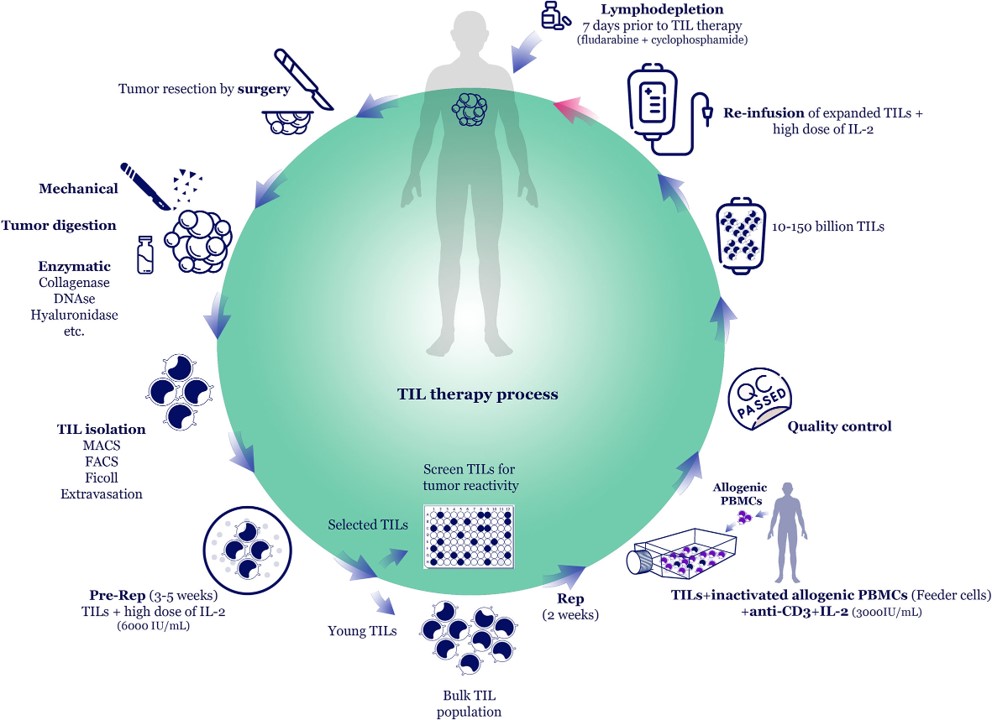 Fig.1 The process of TIL therapy.1
Delivery Challenges of TIL Therapies
Poor Functional Persistence and Durability Insufficient Resistance to TME Inhibition In vitro Expansion Efficiency and Stability
TIL cells are often in a state of exhaustion within the tumor microenvironment (TME). A major challenge is determining how in vitro molecular modification can successfully reverse this exhaustion and maintain long-term cellular function after infusion.
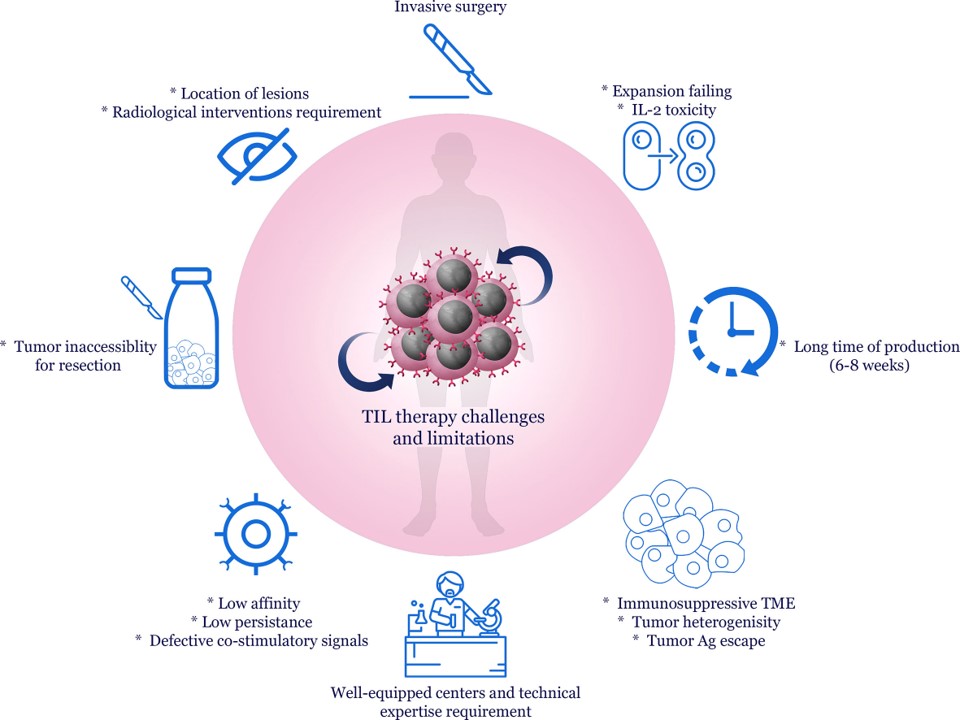 Fig.1 Challenges and limitations of TIL therapy.1
What We Can Offer
We offer professional targeted delivery technologies, providing enhanced functionality, cost-optimized, and scalable engineering tools for your TIL cell therapy program:
Enhanced Cytokine Secretion
Delivery of IL-12 or IL-15-encoded mRNA/DNA transforms TIL cells into "armed TILs", producing high concentrations of cytokines locally at the tumor site, enhancing the activity of both the cell's own and surrounding immune cells, eliminating the need for high-dose systemic IL-2.
Homing/Permeability Modification
Delivery of chemokine receptor mRNA/plasmids enhances the in vivo response of TIL cells to tumor-specific chemokines, improving tumor invasion efficiency.
Serum-Free/Non-Viral Process Integration
Our delivery system is compatible with automated cell culture and expansion systems, helping to reduce the risk of viral contamination and manufacturing costs, accelerating the development of clinical-grade TIL products.
Why Choose Us?
Validated Nanotechnology Expertise
We leverage cutting-edge LNP and nanogel delivery systems, proven in clinical settings, ensuring unparalleled efficiency and low cellular toxicity for gene delivery (mRNA, siRNA, plasmid).
End-to-End Scalability
Our non-viral platform seamlessly integrates into automated, high-throughput manufacturing workflows, drastically cutting production time and costs associated with complex ex vivo culture.
Pioneering In Situ Strategy
We offer design consultation for next-generation therapies, including in situ T-cell modulation constructs, enabling a "drug-like" approach to TIL activation that minimizes systemic side effects and simplifies logistics.
Expert Consulting
Our team of TIL delivery specialists provides tailored molecular construct design and process optimization to accelerate your program from bench to clinic.
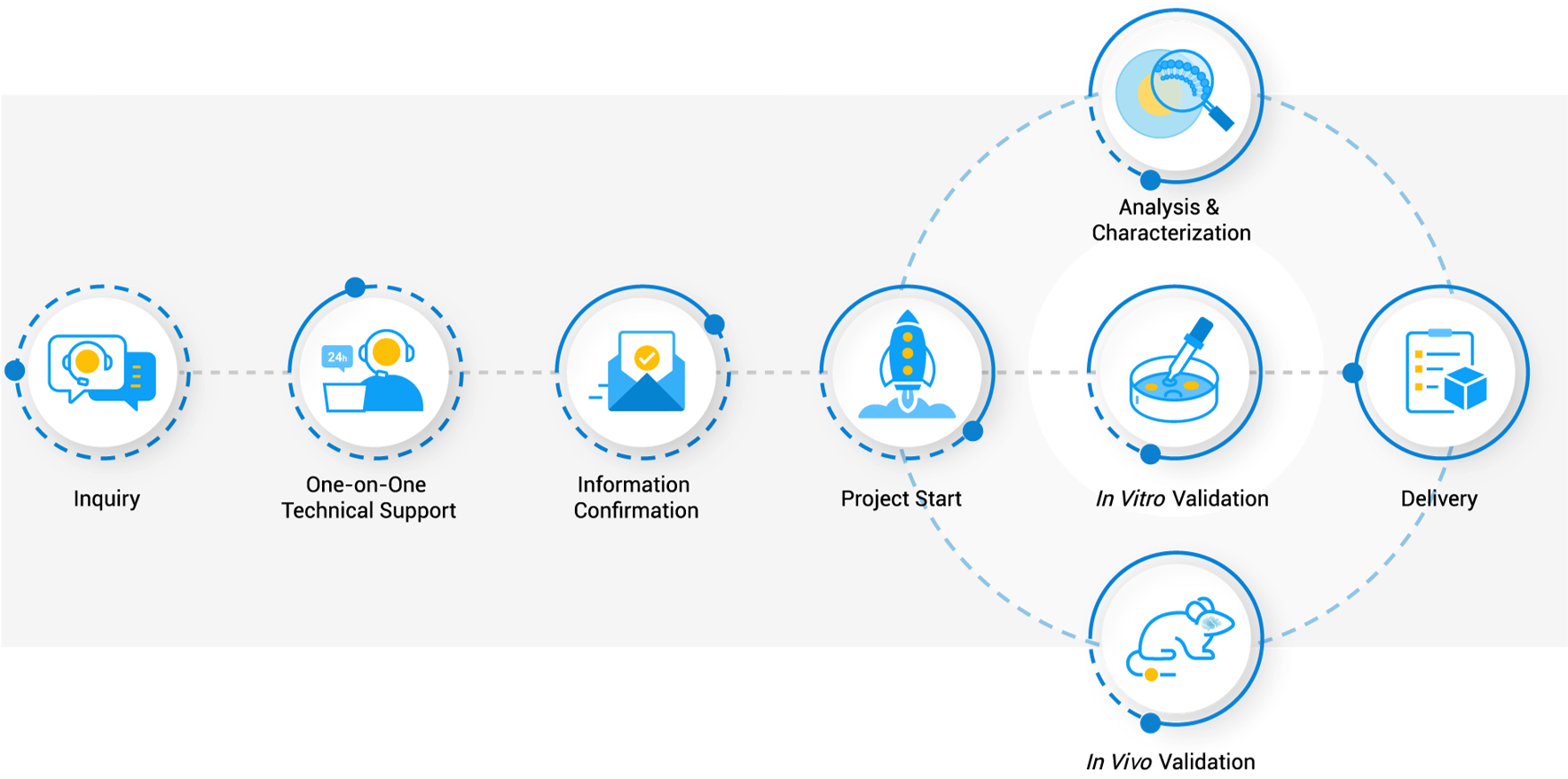
Workflow
Unlock the full potential of TIL therapy in solid tumors! Overcome the challenges of in vitro expansion and in vivo depletion of TIL cells by choosing state-of-the-art molecular delivery technology. Please contact our team of TIL delivery experts for customized solutions.
Reference
- Kazemi, Mohammad Hossein, et al. "Tumor-infiltrating lymphocytes for treatment of solid tumors: It takes two to tango?." Frontiers in Immunology 13 (2022): 1018962. Distributed under Open Access license CC BY 4.0, without modification. https://doi.org/10.3389/fimmu.2022.1018962.
Our services are For Research Use Only. We do not provide services to individuals.
Online Inquiry