
Empowering the development of TCR-T cells targeting crucial intracellular antigens, such as viral antigens, tumor-specific mutations (e.g., KRAS G12D), and shared tumor-associated antigens (e.g., MAGE-A4, NY-ESO-1).
Targeted Drug Delivery for TCR-T Cell Therapy
T cell receptor (TCR) T cell therapy surpasses CAR-T's limitations by targeting intracellular antigens, which opens vast possibilities for solid tumor treatment. However, successful clinical outcomes hinge on precise TCR gene delivery, correct chain pairing, and optimized T cell engineering. Creative Biolabs' targeted delivery technology focuses on solving the core efficiency and safety challenges in TCR-T manufacturing.
What is Targeted Delivery?
Targeted delivery in TCR-T cell therapy refers to the in vitro introduction of optimized TCR α and β chain genes into a patient's T cells. The key lies in efficient delivery: ensuring a high percentage of T cells are successfully transduced and survive the process, and precise expression: resolving the critical mismatch between endogenous TCR strands and transduced exogenous TCR strands. This ensures high, correct pairing of the exogenous functional TCR strands, maximizing both therapeutic efficacy and patient safety by preventing new autoimmune toxicities.
Applications for TCR-T Cell Therapy
Breakthrough in solid tumor treatment
High-affinity TCR delivery
Providing efficient, non-viral tools to safely introduce affinity-enhanced TCR genes into T cells, significantly improving recognition sensitivity and functional killing capacity against low-antigen-expressing tumors.
Universal TCR-T development
Supporting delivery protocols that utilize advanced gene editing to knock out endogenous TCRs before delivering the therapeutic TCRs. This approach is essential for developing "off-the-shelf" allogeneic therapies by eliminating the risk of graft-versus-host disease (GvHD).
Construction of Enhanced TCR-T Cells
Facilitating the co-delivery of additional cytokine genes (e.g., IL-12) or synthetic signaling molecules (e.g., PD-1-CD28 switch receptors) to enhance the proliferation, in vivo survival, and anti-tumor killing ability of the engineered cells, thus minimizing T cell exhaustion.
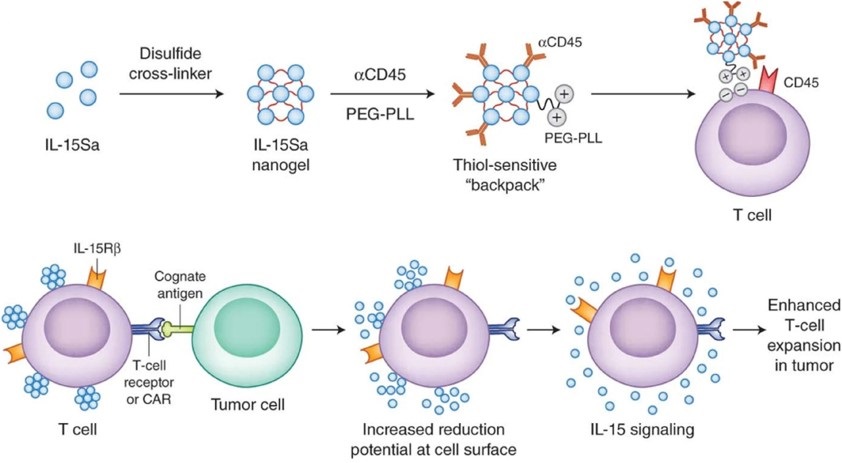 Fig.1 Enhanced T cell therapy through TCR-signaling-responsive drug delivery.1
Delivery Challenges of TCR-T Manufacturing
Traditional methods for generating TCR-T cells face significant obstacles that limit clinical success and scalability:
TCR Chain Mispairing (Safety Risk) Transduction Efficiency and High Cost T Cell Exhaustion and Low Expression
This is the most critical safety issue. Exogenous and endogenous TCR chains may mispair, forming hybrid receptors that lead to severe, unintended autoimmune toxicities and significantly reduce the efficacy of the therapeutic receptor.
What We Can Offer
Creative Biolabs offers professional, highly precise targeted delivery technologies, focusing on solving the core challenges in TCR-T therapy manufacturing:
High-Precision Non-Viral TCR Delivery
Our technology leverages optimized LNP and polymer nanocarriers, specifically designed for efficient, low-toxicity TCR gene (mRNA or DNA) delivery. This platform provides transfection efficiencies comparable to viral vectors while offering the distinct advantages of speed, scalability, and dramatically lower manufacturing costs.
Strand Mismatch Risk Elimination
We offer synergistic delivery protocols utilizing highly efficient gene editing tools for robustly knocking out endogenous TCR genes (TCR α and β) before delivering the therapeutic TCR. We also provide modified TCR structural genes (such as constant region pairing enhancement), fundamentally resolving the strand mismatch safety and efficacy risks.
TCR Expression Optimization
Our proprietary system delivers codon-optimized and enriched stable sequence TCR-encoding mRNA, which ensures high, transient, and sustained function of the therapeutic TCR strand on the T cell membrane surface, counteracting efficacy decline due to decreased expression.
T-cell Function Enhancement Delivery
We facilitate the co-encapsulation of the TCR gene with complementary payloads, such as anti-exhaustion molecules, synthetic switch receptors, or targeted cytokine regulators (like IL-12). This enhances the TCR-T cell's resistance to the suppressive tumor microenvironment and significantly improves in vivo persistence and killing capacity.
Why Choose Us?
Unrivaled Safety
Proven expertise in non-viral delivery to minimize immunogenicity and eliminate strand mispairing risk.
Scalability & Cost
Fast, compatible LNP platforms that drastically cut viral vector costs and time-to-market.
Targeted Innovation
Co-delivery of gene editing tools and T cell armor (e.g., switch receptors) in a single platform.
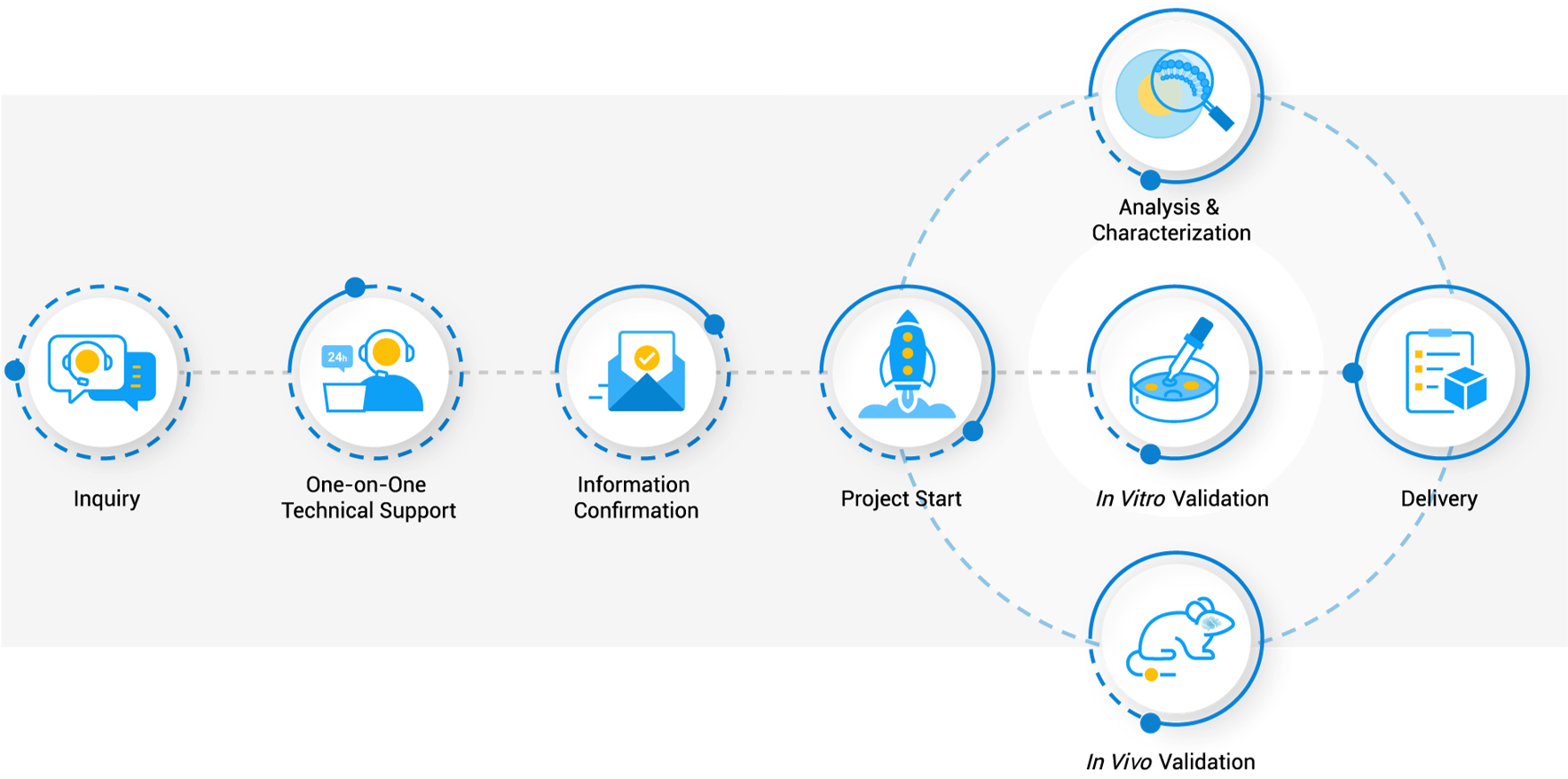
Workflow
Eliminate the risk of TCR-T chain mismatch and accelerate breakthroughs in solid tumors! Your TCR-T therapy requires the most precise gene delivery strategy. Please contact our TCR-T delivery expert team for a customized, non-viral engineered solution.
Reference
- Shen, Jingrui, Yang Zhou, and Lichen Yin. "Nano/genetically engineered cells for immunotherapy." BMEMat 3.1 (2025): e12112. Distributed under Open Access license CC BY 4.0. The image was modified by extracting and using only part of the original image. https://doi.org/10.1002/bmm2.12112.
Our services are For Research Use Only. We do not provide services to individuals.
Online Inquiry