Providing highly efficient and versatile gene delivery vectors optimized for low immunogenicity and long-term expression.
Virus based Nanoparticles for Targeted Delivery
Are you currently facing long drug development cycles due to poor nanoparticle consistency, low immunogenicity of subunit vaccines, or uncontrolled drug release? Creative Biolabs provides VNP Development Service helps you accelerate drug discovery and obtain superior biological therapeutics through advanced, atomic-precision bio-templated engineering and industrial-scale manufacturing.
Click Here to View more about our Services
Introduction of Virus-based NPs Nanoparticles
Virus-based Nanoparticles (VNPs), or Virus-Like Particles (VLPs), are the next-generation solution for nanomedicine. These highly symmetrical, self-assembling protein shells are non-infectious (lacking the viral genome) but retain structural robustness. Their intrinsic biological precision simplifies synthetic challenges, making them optimal, safe immune and delivery vehicles.
What is VNPs?
The Creative Biolabs' VNP Development Service is for research, diagnostics, and therapeutic development. We utilize naturally self-assembling protein cages as robust, non-pathogenic, and highly uniform nanoscaffolds for multi-functional conjugation. Our core expertise spans several specialized viral architectures:
Cowpea Mosaic Virus (CPMV)
Utilizing robust plant-based icosahedral scaffolds for high-precision bioconjugation and targeted imaging applications.
Virus-like particles (VLPs)
Engineering non-infectious, self-assembling protein cages that mimic viral structures to elicit potent immune responses.
Oncolytic Viruses
Developing tumor-selective viral agents designed to replicate within and systematically destroy malignant cells while sparing healthy tissue.
Application Scenarios
- Targeted Drug Delivery: Creating precision systems that encapsulate therapeutics and display specific targeting ligands for cell-specific delivery to tissues like tumor vasculature.
- High-Potency Vaccines: Designing vaccine candidates that leverage the VNP's inherent ability to present antigens in a dense, repetitive array, triggering superior humoral and cellular immune responses against pathogens or cancer markers.
- Biophotonics & Diagnostics: Developing highly stable VNP probes, optimized for dye density and placement, to function as superior optical contrast or imaging agents.
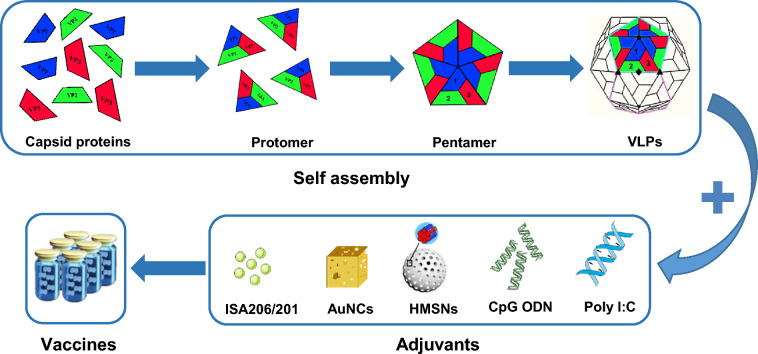 Fig.1 Diagram of the VLP Vaccine Preparation Process.1
Why Choose Us?
Creative Biolabs' VNP platform offers irreplaceable advantages over synthetic methods, delivering precision and reliability essential for clinical translation.
Atomic Precision & Monodispersity
Unlike traditional nanoparticles prone to variability, VNPs are biologically templated, ensuring every particle is structurally identical, guaranteeing monodispersity and simplifying QC and regulatory pathways.
Irreplaceable Immunogenicity
The highly repetitive antigen displays inherent to VNP structure acts as a powerful adjuvant, maximizing the potency and efficacy of subunit vaccine candidates.
Industrial Scale & Cost Efficiency
Utilizing natural viral production systems enables low-cost, high-volume manufacturing suitable for clinical trial supply.
Built-in Controlled Release
Our VNPs feature a robust protein shell that ensures therapeutic cargo integrity during circulation and offers an Endolysosomal Triggered Release mechanism, deploying the payload only upon successful cellular uptake.
Unmatched Versatility
VNPs offer distinct surface chemistries and internal cavities for dual functionalization, allowing simultaneous attachment of targeting ligands externally and large cargo encapsulation internally.
Key Technologies
VNP development is underpinned by advanced bioconjugation strategies and a deep understanding of structure-function relationships, demonstrating professional depth in nanomedicine.
Discover How We Can Help - Request a Consultation!
Engineering Key Points

We prioritize exterior surface conjugation for imaging probes, preventing fluorescence quenching and maximizing optical signal output.
Utilizing specific chemistries allows for atomic-level control over the attachment site on the VNP's 300+ available surface residues.
We leverage the critical finding that VNP nanoparticle shape dictates in vivo fate, specifically noting that rod-shaped architectures are proven to circulate significantly longer than spherical VNPs.
Optimization of the molar ratio of payload-to-VNP is essential to maximize efficacy and immunogenicity while avoiding negative effects like aggregation or dimer stacking, which lead to radiationless relaxation.
Cutting-Edge Technology
VNPs development containing flexibility in selecting the optimal VNP scaffold to address your specific targeting and application needs.
| VNP Core Scaffold | Targeting Advantage & PK Profile | Application Examples (Targeting) |
|---|---|---|
| Icosahedral (e.g., CPMV) | Spherical shape, 30nm diameter. Generally faster clearance kinetics. High surface lysine density (up to 300 addressable sites). | Rapid Imaging/Diagnostic Probes, VNP-based therapeutic to target Cancer Cells via receptor-specific ligands, or Macrophage uptake for immune modulation. |
| Rod/Filamentous (e.g., TMV) | Cylindrical shape, 300x18nm dimensions. Demonstrated extended circulation time in vivo. Ideal for vascular or systemic delivery. | Passive Targeting of Tumors (EPR effect), delivery for Platelet surface modification to enhance hemostasis, or sustained release therapeutics. |
| Engineered Ferritin/Other Protein Cages | Icosahedral shape, varying sizes. Exceptional thermal stability. High internal cavity volume for large cargo encapsulation. | Self-assembling Nanovaccines with high immunogenicity, targeted delivery of large therapeutic proteins, or Cancer Cell theranostics. |
QC Method: Building Trust and Reliability
Core analytical methods for validating VNP vectors, ensuring their reliability and clinical viability, include:
- UV–vis Spectroscopy: Accurate quantification of dye, drug, or protein payload conjugation efficiency and final concentration.
- Native & Denaturing Gel Electrophoresis: Verification of VNP structural integrity and confirmation of successful, high-efficiency covalent conjugation via characteristic band shifts.
- Transmission Electron Microscopy (TEM) / Cryo-EM: High-resolution visualization to confirm structural integrity, monodispersity, and measure particle size distribution.
- Dynamic Light Scattering (DLS): Fast, non-destructive measurement of hydrodynamic size and polydispersity index (PDI) to ensure batch homogeneity.
Key Benefits
Unmatched Monodispersity and Homogeneity
VLPs are inherently identical, simplifying downstream processing and ensuring consistent clinical outcomes.
Engineered Pharmacokinetics (PK)
We can tune particle shape (rod vs. sphere) to directly control in vivo circulation time, optimizing drug exposure.
High Payload Capacity
The VNP offers both exterior surface modification for targeting and an internal cavity for large-volume cargo loading.
Intrinsic Safety Profile
Utilizing non-pathogenic plant and bacteriophage viruses eliminates mammalian pathogenicity concerns.
Built-in Adjuvanticity
The highly repetitive, particulate nature of the VNP acts as a strong immune stimulant, maximizing the potency of vaccine candidates.
Full Production Scalability
Our established systems translate smoothly from preclinical development to industrial-scale manufacturing.
Experience the Edge with Creative Biolabs - Request a Quote Now!
Products
| Products | Description | Inquiry |
|---|---|---|
| Functionalized Lipid Products | Functional lipids like DSPE-PEG-RGD and DSPE-PEG-TAT for precision in therapeutic and imaging applications. | |
| Lipid Nanoparticle Products | LNPs, as a leading non-viral vector platform for nucleic acid delivery, are precisely engineered self-assembling systems designed to protect and deliver therapeutic payloads |
Frequently Asked Questions
Is the VNP platform safe given it is derived from a virus?
Absolutely. We use non-pathogenic plant or bacterial viruses (like CPMV or bacteriophages) that cannot infect mammalian cells. The VNPs are purified protein shells, completely lacking the viral genome, making them non-replicating, non-infectious, and highly biocompatible.
Can your VNP service accommodate large or complex payloads, such as nucleic acids?
Yes. The interior cavity of our VNP scaffolds is specifically designed for encapsulating large, complex cargo, including nucleic acids or protein therapeutics. Furthermore, our exterior surface chemistry allows for the precise covalent attachment of large targeting antibodies or peptides, enabling multi-functional design.
How does Creative Biolabs ensure the long-term stability of the conjugated VNP product?
VNP capsids are naturally robust. We confirm this through comprehensive structural integrity validation and stability assays. We also optimize conjugation chemistry and dye/drug density to prevent aggregation or chemical degradation, ensuring your product remains viable during storage and transit.
The Creative Biolabs VNP Development Service provides the biopharma industry with an unprecedented platform for targeted delivery and potent vaccine design. By combining the natural perfection of self-assembling viral structures with cutting-edge bioconjugation chemistry and proven scale-up expertise, we eliminate the structural and manufacturing challenges that plague synthetic nanocarriers. Contact our expert team today to discuss your specific project requirements and explore how our advanced VNP technology can provide the precision and stability you need.
Reference
- Ren, Mei, et al. "Use of virus-like particles and nanoparticle-based vaccines for combating picornavirus infections." Veterinary Research 55.1 (2024): 128. Distributed under Open Access license CC BY 4.0, without modification. https://doi.org/10.1186/s13567-024-01383-x.
Our services are For Research Use Only. We do not provide services to individuals.
Online Inquiry