We provide a comprehensive, end-to-end service from initial project design and gene synthesis to high-quality antibody production and final biomarker quantification. This integrated approach simplifies your workflow and reduces lead times.
Are you currently facing challenges such as high background interference in hypertension research, difficulty in quantifying low-abundance Angiotensinogen (AGT) variants, or complex clinical sample matrices? Our AGT Analysis Services help you streamline your biomarker validation and drug development processes through ultrasensitive detection platforms and high-specificity antibody pairs. Creative Biolabs leverages advanced proteomic techniques to ensure your research achieves the precision required for breakthrough therapeutic outcomes.
Contact our team to get an inquiry now!
Introduction to AGT: The Gatekeeper of the Renin-Angiotensin System
Angiotensinogen (AGT) is a circulating glycoprotein primarily synthesized in the liver and is the sole precursor of all angiotensin peptides. As the essential substrate of the Renin-Angiotensin System (RAS), AGT plays a pivotal role in the regulation of blood pressure, fluid balance, and electrolyte homeostasis. Structurally, AGT belongs to the serpin (serine protease inhibitor) family, though it lacks the typical inhibitory activity, instead serving as a specialized transport and release vehicle for Angiotensin I.
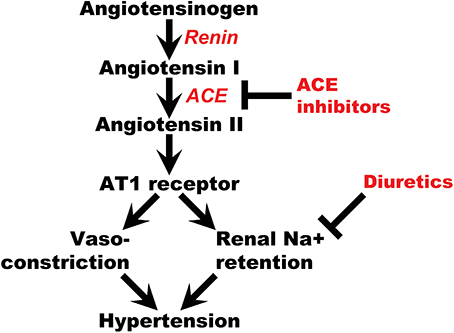 Fig.1 AGT in Renin-Angiotensin pathway.1
Recent literature highlights the clinical significance of AGT levels in diverse pathologies. Studies emphasize that elevated urinary and plasma AGT are predictive biomarkers for chronic kidney disease (CKD) progression and preeclampsia. The cleavage of AGT by renin is the rate-limiting step of the RAS cascade; therefore, precise quantification of intact vs. cleaved AGT provides critical insights into systemic and local RAS activation. Furthermore, AGT is increasingly recognized for its role in inflammatory signaling pathways and metabolic syndrome, making it a high-priority target for both diagnostic and therapeutic intervention in cardiovascular medicine.
Application of AGT Analysis in Biomedical Research
The quantification and characterization of AGT are vital across multiple research and clinical domains:
- Hypertension and Cardiovascular Research: Monitoring AGT levels to assess the efficacy of RAS inhibitors and antihypertensive candidates.
- Nephrology Diagnostics: Utilizing urinary AGT as a non-invasive biomarker for intrarenal RAS activity and diabetic nephropathy monitoring.
- Maternal-Fetal Medicine: Early detection of preeclampsia risk through circulating AGT isoform analysis.
- Drug Mechanism of Action (MoA): Evaluating the impact of novel RNAi or antisense oligonucleotide (ASO) therapies designed to knock down hepatic AGT production.
- Oncology: Investigating the role of AGT in the tumor microenvironment and angiogenesis-related signaling.
Service Highlights
Creative Biolabs provides industry-leading AGT analysis services characterized by scientific rigor and technological excellence.
One-Stop Service
Unmatched Sensitivity
Utilizing ultrasensitive immunoassay platforms (such as Simoa or MSD), we can detect AGT in complex matrices at sub-picogram levels, surpassing the limitations of conventional ELISA.
Diverse Antibody Formats
We offer a wide selection of antibody formats to suit your application, including full-length human IgGs and specialized formats like scFv and Fab for competitive binding assays.
Guaranteed High Purity
Our advanced purification protocols ensure that the capture and detection reagents used in our assays achieve a purity of up to 99% with low endotoxin levels, critical for reliable in vitro diagnostic assays.
Comprehensive QC Analysis
We perform extensive QC testing at every stage, including SDS-PAGE, ELISA, and HPLC. This rigorous analysis ensures every batch meets the highest standards for specificity and stability (Published Data).
Powered by Proven Technology
Our services are built on validated platforms, incorporating hybridoma and phage display technologies to ensure the development of high-affinity AGT binders.
Service Workflow
01Initial Consultation and Project Design
The process begins with a detailed consultation where our scientific team discusses your research goals, target AGT isoforms, and desired analytical outcomes. This phase establishes the parameters for either a standard assay or a customized validation strategy.
02Sample Submission and Quality Control
Upon receipt, all biological matrices undergo stringent quality control (QC) to check for hemolysis or degradation. This ensures the integrity and suitability of the samples for reproducible performance.
03Assay Development and Optimization
For novel research applications, our experts undertake comprehensive optimization. This includes validating antibody pairs for specific AGT variants and establishing optimal reaction buffers to minimize matrix effects in renal or cardiac samples.
04Data Acquisition and Analysis
Optimized samples are processed using state-of-the-art platforms. We utilize high-resolution mass spectrometry or ultrasensitive immunoassays to acquire meticulous raw data, which is then interpreted using rigorous statistical methods.
05Final Report and Consultation
The project concludes with a comprehensive report detailing the methodology, raw data, and expert interpretation. We provide a follow-up consultation to recommend subsequent research steps based on the AGT profiles observed.
FAQs
-
How can intact AGT be distinguished from its cleaved form (des-Angiotensin I AGT) in a biological assay?
Differentiation is typically achieved using neo-epitope antibodies that specifically target the C-terminal sequence exposed only after renin-mediated cleavage. Alternatively, sandwich ELISAs using a capture antibody specific to the Angiotensin I sequence at the N-terminus of AGT can selectively measure intact AGT.
-
What are the primary physiological factors that influence AGT concentration in plasma vs. urine?
Plasma AGT is primarily regulated by hepatic synthesis, influenced by glucocorticoids, estrogens, and inflammation. In contrast, urinary AGT is considered a specific marker of intrarenal RAS activity, as the large molecular weight of AGT (approx. 50-60 kDa) limits its glomerular filtration under normal physiological conditions.
-
Are AGT protein structures highly conserved across mammalian species used in preclinical research?
While the core serpin structure is conserved, there is significant sequence variation in the N-terminal cleavage site. For instance, human renin does not efficiently cleave rodent AGT. Therefore, cross-species analysis requires specific reagents validated for the N-terminal sequence of the target species (e.g., mouse, rat, or NHP).
-
Which biochemical techniques are most effective for mitigating matrix interference from high-abundance proteins like albumin?
Effective strategies include the use of high-affinity monoclonal antibodies with low cross-reactivity, sample dilution strategies, and the implementation of advanced buffer systems containing blockers. In mass spectrometry-based analysis, liquid chromatography (LC) separation prior to detection is essential to resolve AGT from co-eluting high-abundance proteins.
-
How do common genetic polymorphisms, such as M235T, affect AGT biochemical analysis?
The M235T polymorphism is associated with increased plasma AGT concentrations. From an analytical perspective, such variants can potentially alter antibody binding affinity if the mutation occurs within an epitope region. Scientific validation should ensure that the detection system is robust against known single nucleotide polymorphisms (SNPs) unless the study specifically aims to differentiate between variants.
Creative Biolabs offers a world-class suite of AGT analysis services, combining decades of biochemical expertise with cutting-edge detection technologies. Whether you are conducting fundamental research into the renin-angiotensin system or developing the next generation of cardiovascular therapeutics, our team is dedicated to providing the high-quality data and professional support you need to succeed.
Reference
- Do, Anh N et al. "The effects of angiotensinogen gene polymorphisms on cardiovascular disease outcomes during antihypertensive treatment in the GenHAT study." Frontiers in pharmacology vol. 5 210. 16 Sep. 2014, Distributed under Open Access license CC BY 4.0, without modification. https://doi.org/10.3389/fphar.2014.00210
For Research Use Only.