In cancer research, ACVR1B analysis helps in understanding its dual role as a tumor suppressor in pancreatic adenocarcinoma and its complex involvement in the progression of other malignancies like breast, ovarian, and colorectal cancers. This analysis can identify specific mutations or expression patterns that can serve as diagnostic or prognostic biomarkers.
Creative Biolabs offers comprehensive laboratory testing solutions in biomarker analysis, leveraging our expertise to provide a unique approach to each project and deliver optimal strategies for your activin receptor type-1B (ACVR1B) biomarker discovery and validation.
Introduction of ACVR1B
ACVR1B, also known as ALK4, is a type IB receptor for activin, a member of the transforming growth factor-beta (TGF-β) superfamily. This receptor is a crucial component of a signaling cascade that regulates fundamental biological processes, including cell proliferation, differentiation, growth arrest, and apoptosis. Recent research has solidified its role in various pathologies. For example, inactivating mutations of ACVR1B have been identified in pancreatic cancer, where it acts as a tumor suppressor. Conversely, tumor-specific truncated forms of ACVR1B that lack the kinase domain are expressed in human pituitary adenomas. ACVR1B's expression is most prominent in key organs such as the kidney, pancreas, brain, lung, and liver, highlighting its widespread biological impact.
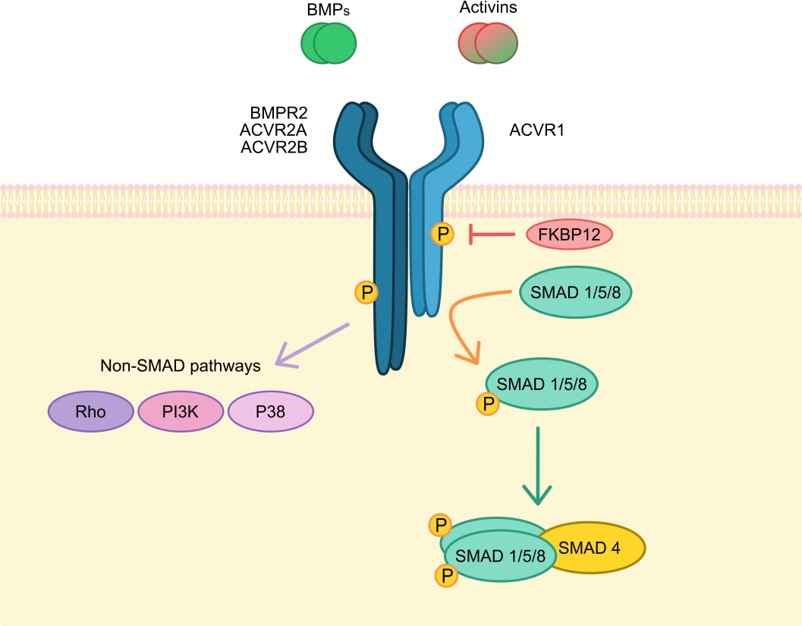 Fig.1 The main signal transduction of ACVR1.1
ACVR1B Analysis Services at Creative Biolabs
Creative Biolabs is at the forefront of biomarker analysis, providing solutions that measure shifts in pathogenesis and biological processes in response to candidate products. Our custom biomarker analysis services are designed to support your project from initial antibody development to final data analysis. We take great pleasure in offering our clients a tailored approach to meet their specific research goals.
Our ACVR1B-targeting services include, but are not limited to:
- ACVR1B Genomic Analysis
We utilize cutting-edge NGS and qPCR to accurately identify key mutations, SNPs, and copy number variations in the ACVR1B gene.
- ACVR1B Transcriptomic Profiling
Our services employ state-of-the-art RNA sequencing and RT-qPCR to precisely quantify ACVR1B gene expression and identify splice variants.
- ACVR1B Proteomic Solutions
We offer robust WB and IHC services to precisely measure ACVR1B protein levels and localization within cells and tissues.
- Custom Assay Design
We collaborate with you to design bespoke assays tailored to your specific research questions, including ELISA and ISH.
Additionally, we provide complementary molecular interaction analysis services, such as antibody screening and biomolecule interactions. All our ACVR1B reagents, including antibodies, lysates, and proteins, are produced and quality-controlled in-house, ensuring they are ready for use in your customized assay development.
Service Workflow
Our ACVR1B analysis service follows a clear, step-by-step workflow designed for efficiency and precision.
01Initial Consultation
The process begins with a detailed discussion to understand your research objectives, project scope, and specific analytical requirements. We work with you to define the optimal strategy for your ACVR1B analysis.
02Sample Submission
Once the project plan is finalized, clients provide the necessary starting materials. This may include tissue samples, blood, cell lines, or purified nucleic acids and proteins, depending on the chosen analysis.
03Laboratory Analysis
Our expert team performs the specified ACVR1B analysis using our state-of-the-art facilities. This involves meticulously controlled procedures for genomic, transcriptomic, or proteomic solutions to ensure data integrity and accuracy.
04Data Analysis & Reporting
Upon completion of the laboratory work, we perform a comprehensive data analysis. We then compile a detailed report that includes the raw data, a thorough interpretation of the results, and actionable insights to guide the next steps of your research.
Applications
Oncology
Muscle Disorders
In the study of muscular dystrophies and other muscle-wasting conditions, ACVR1B analysis provides insights into its role in muscle atrophy and fibrosis. By analyzing ACVR1B signaling, researchers can identify potential therapeutic targets to stimulate muscle regeneration and hypertrophy.
Beyond the Common Pathologies
ACVR1B analysis is also crucial for exploring its association with other conditions. The elevated expression of ACVR1B can be analyzed as a potential biomarker for inflammatory states such as sepsis, or its genetic variations can be studied in relation to congenital heart anomalies.
Service Highlights
- Comprehensive Analytical Suite: We offer a full spectrum of services, from genomic to proteomic analysis, providing a holistic view of ACVR1B biology.
- Customized Solutions: Our services are highly tailored to your specific project needs, ensuring you receive the precise data and insights required for your research.
- Expert Consultation: You have access to our team of experienced scientists who provide guidance and support from project design to data interpretation.
- Quality-Controlled Reagents: We use our own in-house produced and quality-controlled ACVR1B reagents, guaranteeing the reliability and consistency of every assay.
FAQs
-
Can you help identify novel splice variants of ACVR1B?
Yes, we are equipped to identify novel splice variants of ACVR1B. Our transcriptomic profiling services, particularly RNA sequencing and RT-qPCR, detect and quantify alternative splicing events. We analyze isoform expression and its correlation with disease states, which is critical for understanding ACVR1B's complex functions.
-
How do you validate the antibodies used in your proteomic services?
We ensure high quality and specificity of our antibodies through a rigorous in-house validation process. This includes Western blot against recombinant proteins, immunohistochemistry on controls, and competitive binding assays. This meticulous validation guarantees our antibodies are reliable and produce accurate results.
-
Can you customize an assay to screen for small molecule inhibitors of ACVR1B signaling?
Yes, we customize assays to screen for small molecule inhibitors of ACVR1B signaling. Our expertise allows us to develop and validate high-throughput screening assays tailored to your needs. We design cell-based or biochemical assays that monitor the phosphorylation of SMAD proteins or the expression of downstream reporter genes.
-
How do you ensure the confidentiality and security of my project data and samples?
We are committed to maintaining the highest standards of confidentiality and data security. All project data is stored on secure servers with restricted access, and our facility has security measures to protect your physical samples. We operate under strict confidentiality agreements, and staff are trained on data protection protocols.
-
What is the difference between your genomic analysis and transcriptomic profiling services?
Our genomic and transcriptomic profiling services target different aspects of ACVR1B. Genomic analysis focuses on the gene itself, identifying permanent genetic changes like mutations or SNPs. In contrast, transcriptomic profiling measures the amount of ACVR1B mRNA produced, providing a measure of actual gene activity.
If you cannot find the service you're looking for, contact us today to develop custom solution for specific needs at Creative Biolabs.
Reference
- Valer, José Antonio, et al. "ACVR1 function in health and disease." Cells 8.11 (2019): 1366. Distributed under Open Access license CC BY 4.0, without modification. https://doi.org/10.3390/cells8111366
For Research Use Only.