Quantitative BCL2 analysis is essential for the stratification of B-cell malignancies. By distinguishing between "Double-Hit" and "Double-Expressor" lymphomas, clinicians can determine the necessity for more aggressive therapeutic interventions compared to standard care.
Armed with extensive experience in targeted therapy research, Creative Biolabs possesses an in-depth understanding of apoptotic signaling. We provide comprehensive laboratory BCL2 assays, offering a variety of strategic options to help customers navigate the complexities of drug discovery and clinical stratification. Our biomarker services are available as an integrated pre-clinical package or as stand-alone analytical options tailored to global research needs.
Introduction of BCL2
The BCL2 protein family represents a cornerstone of the core regulatory mechanisms of apoptosis. These proteins act as molecular sensors, receiving and transmitting critical intracellular signals and external environmental stressors, including nutrient deprivation, hypoxia, DNA damage, and oncogene overactivation. Beyond its prominent role in oncology, BCL2 dysregulation has been increasingly linked to psychiatric disorders and autoimmune diseases. Functionally, BCL2 dictates cell fate by regulating the integrity of the mitochondrial membrane, primarily through the formation of homodimers or heterodimers with pro-apoptotic members such as the BAX protein.
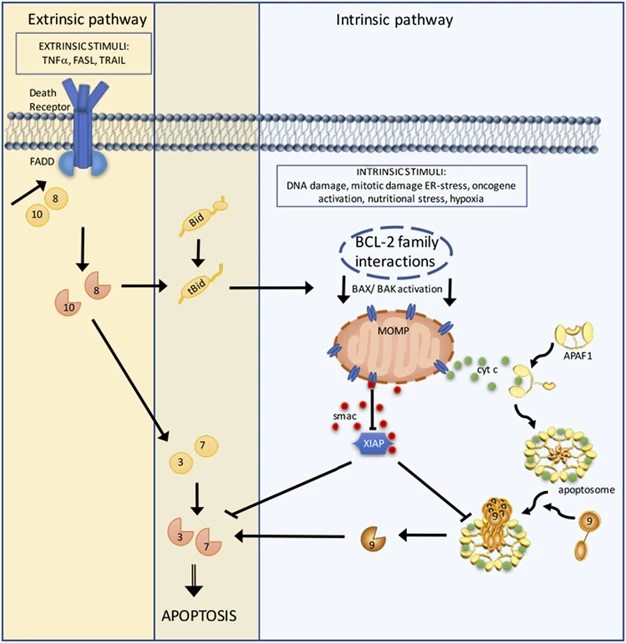 Fig.1 External and internal mechanisms of apoptosis.1,3
Current therapeutic strategies leverage BCL2 inhibitors to disrupt these protein-protein interactions. By competitively binding to the BCL2 hydrophobic groove, these inhibitors prevent BCL2 from sequestering BAX, thereby allowing the cell to resume the programmed death process. These inhibitors demonstrate significant clinical utility, either as monotherapies to directly eliminate malignant cells or in combination with other agents to sensitize resistant tumors to conventional chemotherapy.
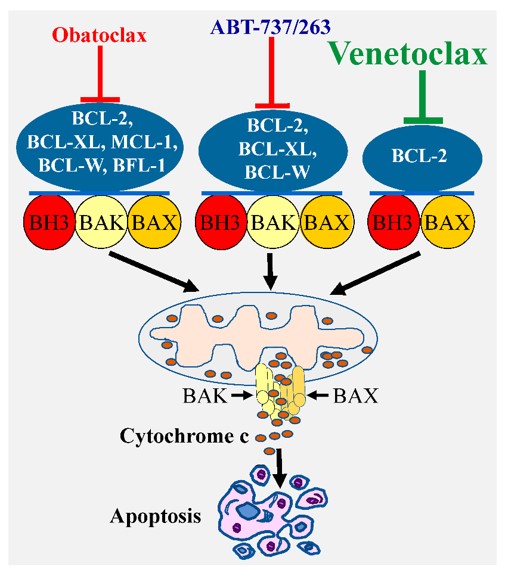 Fig.2 Specificity of different BCL2 inhibitor classes and their role in triggering apoptosis.2,3
BCL2 Analysis Services at Creative Biolabs
Research on BCL2 currently prioritizes the development and rigorous validation of novel inhibitors and BH3-mimetics. BCL2 targeted therapy is particularly promising due to the relatively low rate of primary drug-resistant mutations. Creative Biolabs provides a modular suite of analysis services designed to characterize BCL2 at the genomic, transcriptomic, and proteomic levels.
Our services can be customized to suit the specific needs of our clients, popular analysis services targeting BCL2 and BCL2 inhibitors include but are not limited to the following:
BCL2 Biomarker Analysis
- BCL2 Antibody Development
Engineering of high-affinity monoclonal and polyclonal antibodies specifically designed for specialized applications like IHC or neutralizing assays.
- BCL2 Protein Expression
Recombinant production of high-purity BCL2 proteins in various systems to support structural biology and in vitro binding studies.
- BCL2 Sequence Assay
Genetic profiling to identify t(14;18) translocations or point mutations, such as Gly101Val, that may confer resistance to standard inhibitors.
- BCL2-KO Cell Line Construction
Generation of BCL2 knockout models using gene editing technology to validate drug specificity and study compensatory survival pathways.
- BCL2 Immunohistochemistry (IHC) Assay
High-resolution spatial mapping of protein expression within tumor microenvironments to identify Double-Expressor (DEL) phenotypes.
- BCL2 Immunofluorescence (IF) Assay
Utilizing multi-color labeling to visualize the subcellular localization of BCL2 and its co-localization with mitochondrial markers.
- BCL2 Western Blotting Assay
Precise semi-quantitative analysis of BCL2 protein isoforms and total protein levels across various experimental treatment groups.
Experimental Analysis of BCL2 Inhibitors
- BCL2 Inhibitor Screening Assay
High-throughput identification of small molecules or peptides that successfully compete for the BCL2 binding pocket.
- BCL2 Apoptosis Assay
Functional evaluation of cell death induction, utilizing Annexin V/PI staining and caspase activation metrics following BCL2 inhibition.
- BCL2 Inhibitory Activity Assay
Determination of IC50 values and binding kinetics (Kd) using Surface Plasmon Resonance (SPR) or isothermal titration calorimetry.
- BCL2 Phosphorylation Analysis
Investigation of post-translational modifications at Ser70, Ser87, or Thr69 that modulate the anti-apoptotic potency of the BCL2 protein.
Service Workflow
Creative Biolabs operates a streamlined, rigorous workflow for BCL2 analysis to ensure rapid turnaround times and high-fidelity results. The service follows this step-by-step progression:
01Initial Consultation
We engage in technical dialogue to align on project objectives, from protein quantification to inhibitor screening.
02Sample Submission
The client provides starting materials, such as frozen tissue, FFPE slides, primary cells, or candidate inhibitors.
03Assay Customization
Our scientists develop specialized BCL2 antibodies and protocols to optimize signal-to-noise ratios and target specificity.
04Laboratory Execution
Analysis is performed using high-resolution IHC, SPR for binding kinetics, or inhibitory activity assay.
05Quality Control
Every BCL2 assay undergoes multi-level checks to verify replicates and ensure findings meet diagnostic accuracy standards.
06Final Delivery
We provide a comprehensive report containing raw data, interpreted graphs, microscopy images, and a strategic development summary.
Applications
Identification of Hematologic Subtypes
Prediction of BH3-Mimetic Sensitivity
Mitochondrial priming assays evaluate how close a cell is to the apoptotic threshold. Determining the BCL2-dependency of a specific tumor allows for the accurate prediction of patient response to inhibitors like Venetoclax, optimizing clinical trial enrollment.
Monitoring Minimal Residual Disease (MRD)
Highly sensitive BCL2 sequencing and flow cytometry enable the detection of low-frequency malignant clones following treatment. This application is critical for assessing the depth of remission and predicting potential relapses in leukemia patients.
Investigating Resistance Mechanisms
Long-term BCL2 inhibition can lead to compensatory up-regulation of other anti-apoptotic proteins. Analyzing the BCL2/MCL-1 and BCL2/BCL-XL ratios provides a blueprint for developing combination therapies to overcome acquired drug resistance.
Solid Tumor Research
While traditionally focused on blood cancers, BCL2 analysis is expanding into solid tumors, including small cell lung cancer and breast cancer. Investigating BCL2 expression helps in understanding the evasion of apoptosis in complex tumor microenvironments.
Psychiatric and Autoimmune Studies
BCL2 serves as a biomarker for cellular resilience in neurobiology. Analyzing expression patterns in neural tissues assists in researching neurodegenerative diseases and psychiatric conditions where programmed cell death is abnormally regulated.
Safety and Toxicology Assessment
Evaluating BCL2 levels in non-target tissues ensures that novel inhibitors do not induce systemic toxicity. This application is vital during pre-clinical safety assessments to define the therapeutic window for new drug candidates.
Service Highlights
- Unrivaled Analytical Specificity: We utilize proprietary blocker portfolios and high-affinity antibody pairs to eliminate background noise in complex serum or tissue matrices.
- Fully Customizable Platforms: Every assay is tailored to specific research goals, ranging from simple protein detection to complex protein-protein interaction mapping.
- High-Resolution Spatial Profiling: Our IHC and IF capabilities provide detailed insights into the cellular localization of BCL2 within the native tumor architecture.
- Expert Interpretive Support: Clients receive direct access to senior biologists who assist in translating complex apoptotic data into strategic drug development decisions.
FAQs
-
Q: Can your BCL2 assays distinguish between the various members of the BCL2 family, such as BCL-XL or MCL-1?
A: Yes, our platform is designed for high cross-reactivity screening. We use specific monoclonal antibodies and optimized buffer systems to ensure that the signal generated is exclusively from the BCL2 protein without interference from closely related paralogs.
-
Q: How does phosphorylation at specific sites like Ser70 affect the results of an inhibitory activity assay?
A: Phosphorylation can significantly alter the binding affinity of BH3-mimetics to the BCL2 pocket. Our phosphorylation-specific arrays can quantify these modifications, allowing you to understand why a potent inhibitor might show reduced efficacy in certain cellular environments.
-
Q: Is it possible to perform BCL2 analysis on FFPE (Formalin-Fixed Paraffin-Embedded) samples that have been stored for several years?
A: BCL2 is a relatively stable protein, and we have successfully performed IHC and even certain protein extraction techniques on older FFPE blocks. However, we always perform an initial pilot test to ensure the antigenicity has been preserved before proceeding with a full study.
-
Q: Can BCL2 analysis be used to predict toxicity in healthy lymphocytes?
A: Absolutely. We often conduct parallel assays on healthy peripheral blood mononuclear cells (PBMCs) to determine if a candidate BCL2 inhibitor shows an acceptable safety profile by comparing the apoptotic induction in healthy vs. malignant cells.
-
Q: What are the advantages of using your BCL2 antibody development service over off-the-shelf products?
A: Commercial antibodies are often not optimized for specific niches like neutralizing assays or high-multiplex IF. Our custom service allows for the selection of specific epitopes that may be hidden or modified in certain disease states, providing superior sensitivity.
-
Q: How do you ensure the stability of BCL2 proteins during recombinant expression?
A: We utilize specialized chaperones and low-temperature induction protocols in mammalian or insect cell systems. This prevents the formation of inclusion bodies and ensures that the BCL2 protein maintains its native folding and hydrophobic groove functionality for binding studies.
Creative Biolabs is committed to providing the highest quality of custom services and products at the most reasonable prices. Please feel free to contact us for more information and a formal quote.
References
- Kalkavan, Halime, and Douglas R. Green. "MOMP, cell suicide as a BCL-2 family business." Cell Death & Differentiation 25.1 (2018): 46-55. https://doi.org/10.1038/cdd.2017.179
- Hafezi, Shirin, and Mohamed Rahmani. "Targeting BCL-2 in cancer: advances, challenges, and perspectives." Cancers 13.6 (2021): 1292. https://doi.org/10.3390/cancers13061292
- Distributed under Open Access license CC BY 4.0, without modification.
For Research Use Only.