ADH5 analysis is essential for identifying and optimizing specific GSNOR inhibitors targeting inflammatory lung diseases like severe asthma and COPD, which are characterized by detrimental hyper-S-nitrosylation.
Creative Biolabs delivers customized, high-fidelity alcohol dehydrogenase 5 (ADH5) Analysis services globally. We offer strategic genetic and protein-level analytical options to accelerate therapeutic development and biomarker discovery in complex NO signaling and detoxification pathways.
Introduction of ADH5
ADH5 is a highly conserved, 374-amino acid cytoplasmic protein belonging to the class III subfamily of alcohol dehydrogenases. It functions as an essential homodimer using zinc as a cofactor to catalyze the oxidation of S-hydroxymethyl-glutathione. This activity defines its crucial role as formaldehyde dehydrogenase (FDH), initiating the rapid clearance of highly toxic and carcinogenic formaldehyde from the cell. ADH5 is ubiquitously expressed and central to essential C1 metabolic pathways, acting as a non-redundant detoxification mechanism.
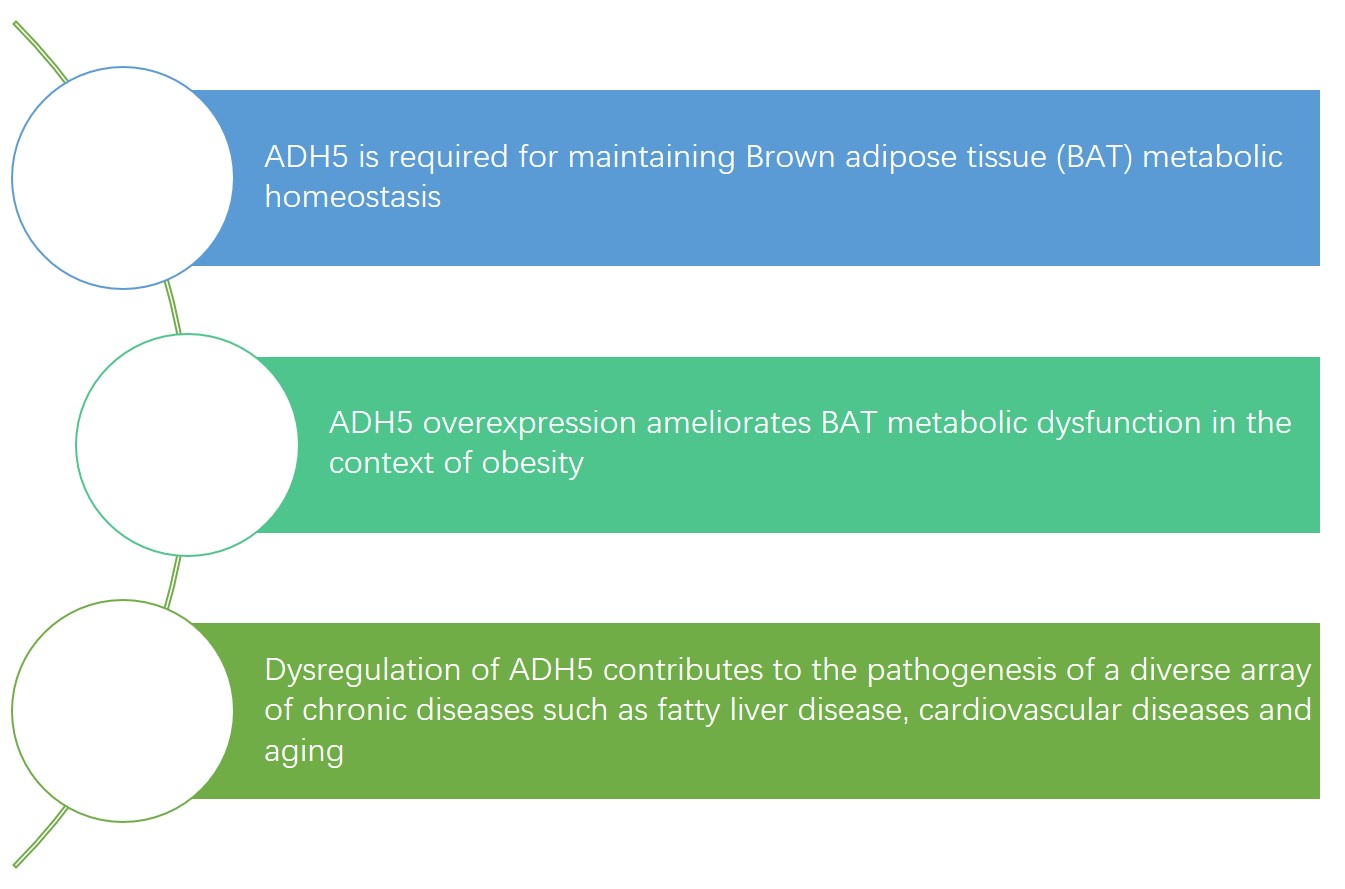
Critically, ADH5 also acts as S-nitrosoglutathione reductase (GSNOR), making it the primary regulator of NO signaling through the metabolism of S-nitrosoglutathione (GSNO). Dysregulation of this vital dual-function enzyme contributes significantly to diverse chronic diseases, including inflammatory lung conditions like COPD, neurodegeneration (Alzheimer's), and various cancers. Genetic polymorphisms, such as Val309Ile and Asp353Glu, can dramatically alter ADH5 stability and activity, profoundly affecting drug dependence and disease susceptibility in human populations.
ADH5 Analysis Services at Creative Biolabs
Creative Biolabs' ADH5 Analysis Services provide end-to-end support for researchers investigating NO signaling, formaldehyde toxicity, and drug target validation. We offer integrated analytical solutions from protein quantification to advanced structural characterization. This comprehensive approach is designed to provide actionable data on ADH5 expression, activity, and structural integrity across diverse sample types (human, mouse, rat), ensuring unparalleled clarity and precision for your preclinical and translational programs.
Our service portfolio includes but is not limited to:
- Enzymatic Activity Assays
High-throughput kinetic analysis of both GSNOR and FDH function for IC50 and Ki determination of therapeutic candidates.
- Polymorphism & Genotyping Analysis
SNP and mutation analysis (e.g., ADH5∗3) for patient stratification and drug metabolism studies.
- Protein Quantification (ELISA, WB)
Highly specific anti-ADH5 monoclonal antibody pairs optimized for quantitative immunoassay development in various matrices.
- Cellular Localization (IHC, ICC, IF)
High-resolution imaging and immunohistochemistry analysis of ADH5 expression across tissues and subcellular compartments.
- Protein-Protein Interaction (PPI)
Mapping ADH5 interactomes using Co-IP and mass spectrometry to understand complex regulatory networks.
Service Workflow
The Creative Biolabs ADH5 Analysis Service follows a validated process ensuring high-quality, traceable results.
01Initial Consultation
We begin with a detailed discussion to define your analytical goals, required throughput, and sample source (e.g., tissue, cell lysate, or plasma).
02Sample Submission & QC
Clients submit starting materials, which are immediately verified for quality, concentration, and stability against predetermined ADH5 analytical specifications.
03Customized ADH5 Assay Execution
Our expert team conducts the requested ADH5 analyses (e.g., kinetic GSNOR assay, SNP genotyping, or quantitative WB) using optimized protocols and proprietary reagents.
04Data QA/QC and Interpretation
All raw data undergo rigorous quality assurance checks before being processed and interpreted by our lead scientists.
05Final Delivery
The client receives a comprehensive final report, including raw data, interpreted results, detailed methodology, and strategic recommendations specific to their ADH5 research questions.
Applications
Drug Target Validation in Pulmonary Disease
Toxicity and Cancer Risk Assessment
Quantification of FDH activity provides a crucial metric for evaluating cellular resilience to endogenous and environmental formaldehyde exposure, directly impacting toxicology studies and understanding environmental carcinogenesis risks.
Biomarker Discovery and Patient Stratification
ADH5 SNP analysis and expression profiling enable the stratification of patient cohorts, linking genetic variants to drug metabolism efficiency and susceptibility to NO-mediated cardiovascular and neurodegenerative conditions.
Structural-Activity Relationship (SAR) Optimization
Integrated structural services (e.g., thermal shift assays or TSA) accelerate the medicinal chemistry process by providing high-resolution data on how small molecules bind and stabilize the ADH5 enzyme, guiding lead compound modification.
Service Highlights
- Dual-Activity Distinction: We offer proprietary kinetic assays that specifically differentiate between the GSNOR and FDH functions of ADH5, ensuring unmatched target selectivity data for your therapeutic programs.
- Integrated Multi-Omics: Our service seamlessly combines genetic (SNP) analysis with protein-level (WB, ELISA) quantification for a holistic ADH5 molecular profile, providing robust and cross-validated data.
- Expert Consultation Included: Each project is supervised by PhD-level experts with over a decade of experience in dehydrogenase research, guaranteeing scientific depth and actionable interpretation of complex results.
FAQs
-
How can your service accurately distinguish between GSNOR and FDH activities?
Our service utilizes distinct, highly optimized proprietary kinetic assays tailored to each function of the ADH5 enzyme. The GSNOR assay measures GSNO consumption, while the FDH assay measures formaldehyde clearance in the presence of NAD+, allowing precise functional differentiation. This specialized methodology minimizes cross-reactivity and provides accurate data on functional selectivity for therapeutic candidates.
-
Which specific anti-ADH5 antibodies do you use for IHC and ICC localization studies?
We utilize a panel of highly validated, high-quality anti-ADH5 monoclonal antibodies that have been rigorously tested across multiple species (human, mouse, rat) and fixation protocols. These antibodies are optimized to ensure minimal background staining and high specificity, guaranteeing accurate visualization of ADH5 protein expression and subcellular localization in your samples.
-
Do you offer services to study how ADH5 interacts with other proteins in a complex?
Yes, we offer dedicated protein-protein interaction (PPI) studies to map the ADH5 interactome and regulatory complexes. Techniques such as co-immunoprecipitation (Co-IP) followed by mass spectrometry can be employed. Understanding these interactions is essential for uncovering novel regulatory mechanisms and defining therapeutic synergy.
-
What quality control steps are in place to ensure the reliability of the quantitative data?
Our commitment to data integrity is guaranteed by our quality assurance framework, which includes stringent calibration, positive and negative controls, and sample normalization. All raw data undergo a three-tier review process by independent PhD-level scientists. This meticulous approach ensures that all quantitative results are highly reliable and fully auditable.
-
What if my submitted sample volume is lower than your minimum requirement for ADH5 analysis?
We highly recommend adhering to the specified minimum sample volume for optimal assay performance and reliable results. If your sample volume is severely limited, we will discuss potential assay miniaturization or the prioritization of the most critical analysis steps. We explore all possible customized solutions to maximize data yield from precious biological materials.
If you cannot find the service you're looking for, contact us today to develop custom solution for specific needs at Creative Biolabs.
For Research Use Only.