High-depth sequencing to identify pathogenic SNPs and Indels across the 50+ exons of the ANK2 gene, critical for diagnosing cardiac and neurological syndromes.
Creative Biolabs' expert team utilizes a high-throughput, precision-driven platform to provide comprehensive ankyrin-B (ANK2) analysis. Our services offer a variety of strategies and readout options, helping clients gain an additional layer of information through assay setups tailored to specific research needs.
Introduction of ANK2
The ANK2 gene encodes ankyrin-B, a critical scaffolding protein that anchors integral membrane proteins, such as ion channels and transporters, to the spectrin-actin cytoskeleton. This structural linkage is essential for cellular stability and signaling, and its disruption is a known driver in the etiology of autism spectrum disorders (ASD), where ANK2 acts as a high-confidence candidate gene. Beyond neurology, ANK2 serves as a versatile oncological biomarker; while its downregulation in colorectal and thyroid cancers suggests tumor-suppressive properties, its mutation or elevated expression in advanced lung adenocarcinoma (LUAD) correlates with enhanced efficacy of immune checkpoint inhibitors. Consequently, precise ANK2 analysis is vital for advancing both neurodevelopmental research and personalized cancer immunotherapy.
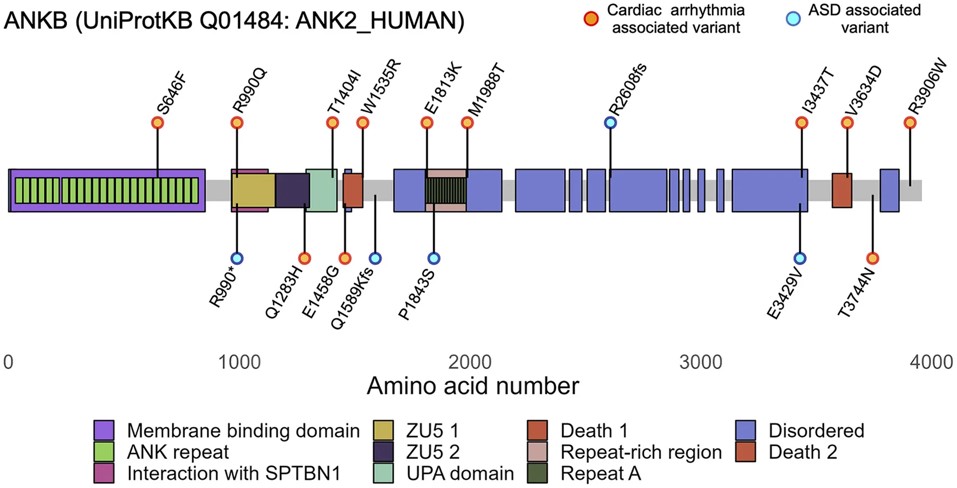 Fig.1 Diagrammatic overview of ANK2 isoforms.1
ANK2 Analysis Services at Creative Biolabs
Professional biomarker analysis provides the quantitative data necessary to validate therapeutic targets for in vitro disease research. Accurate detection of candidate biomarkers is essential in drug discovery to prevent costly late-stage failures. Creative Biolabs offers specialized ANK2 detection through advanced immunoassays, molecular assays, or integrated solutions. Our featured cell-based assays are excellent for screening after hit discovery, observing compound action in living cells.
Our featured ANK2 services include:
ANK2 Mutation Analysis
ANK2 Expression Analysis
Quantitative assessment of mRNA and protein levels across different tissues to evaluate downregulation in gastrointestinal cancers or upregulation in LUAD contexts.
ANK2 Variant Identification
Specialized detection of the 440 kDa brain-specific giant isoform versus the 220 kDa ubiquitous isoform to determine tissue-specific pathological impacts.
ANK2 Antibody Development
Creation of high-affinity, custom antibodies targeting specific domains of ankyrin-B for use in western blotting, IHC, or specialized ELISA platforms.
Custom Tailored ANK2 Assay
Bespoke assay development designed to measure the recruitment of Nav1.5 or NCX1 by ANK2, providing functional insights into the scaffolding interactome.
Service Workflow
Our ANK2 analysis follows a streamlined, rigorous workflow to ensure data precision and clinical relevance:
01Technical Consultation
We begin with an in-depth consultation to define project objectives, required readouts, and the most appropriate assay strategies.
02Sample Submission
Clients provide starting materials, which may include genomic DNA, fresh-frozen tissue biopsies, cell pellets, or stabilized cell lines.
03Experimental Execution
Utilizing validated protocols, our laboratory performs the requested analysis, ranging from NGS-based mutation screening to live-cell functional trafficking assays.
04Data Processing & Interpretation
Raw data is processed through our proprietary bioinformatic pipelines to filter polymorphisms and identify clinically significant ANK2 variants.
05Reporting & Delivery
A comprehensive analytical report is delivered, featuring raw data, high-resolution imaging, and expert scientific interpretation to support your research goals.
Applications
Neurodevelopmental Research
Analysis of ANK2 variants provides critical insights into the molecular pathology of non-syndromic autism. Quantifying the giant 440 kDa isoform helps researchers understand how disrupted microtubule bundling leads to the ectopic axonal branching characteristic of ASD phenotypes.
Cardiac Electrophysiology
Mapping ANK2 mutations is essential for identifying the underlying cause of Type 4 Long QT Syndrome. Evaluating the stability of the ankyrin-B/NCX1/Na+/K+ ATPase complex allows for the characterization of calcium-dependent arrhythmias and sinus node dysfunction.
Immunotherapy Stratification
Assessing ANK2 mutational status in lung adenocarcinoma serves as a predictive tool for immune checkpoint inhibitor (ICI) response. High tumor mutational burden involving ANK2 often correlates with improved clinical outcomes and prolonged progression-free survival in patients.
Metabolic Syndrome Studies
Investigation into the ankyrin-B/GLUT4 pathway reveals the genetic basis of impaired glucose transport. Analysis of ANK2 expression in adipose and muscular tissues assists in identifying susceptibility markers for Type 2 Diabetes and related metabolic imbalances.
Oncology Prognostics
Monitoring the downregulation of ANK2 mRNA in colorectal and thyroid malignancies serves as a prognostic indicator. Reduced scaffolding activity often mirrors the loss of cell-cell adhesion, providing a metric for assessing metastatic potential and tumor grade.
Service Highlights
- Isoform-Specific Resolution: Unique ability to distinguish between the ubiquitous 220 kDa and the brain-specific 440 kDa isoforms of ankyrin-B.
- Functional Readouts: Beyond simple quantification, we offer assays that measure the actual scaffolding efficiency and ion channel trafficking.
- Deep Intronic Coverage: Our sequencing protocols include regulatory regions often missed by standard exome panels, capturing cryptic splice-site mutations.
- Integrated Multi-Omics: Option to combine transcriptomic and proteomic data for a holistic view of ANK2 regulation within a single project.
- Expert Interpretation: Access to senior biologists with decades of experience in the ankyrin interactome to help translate data into biological insights.

FAQs
-
Q: Which starting materials are most suitable for ANK2 expression analysis?
A: For protein-level detection, fresh-frozen tissue or cell pellets are preferred to maintain the integrity of the large ankyrin-B protein. For mRNA studies, RNA-stabilized samples or high-quality total RNA are sufficient to provide accurate quantitative PCR or RNA-Seq results.
-
Q: Can your platform distinguish between the different isoforms of ANK2?
A: Yes, our specialized primers and antibodies are designed to target the neurospecific domain unique to the 440 kDa giant isoform. This allows for precise quantification of the brain-specific variant versus the more common 220 kDa isoform found in the heart.
-
Q: How do you handle the high polymorphism rate of the ANK2 gene during analysis?
A: We utilize a proprietary bioinformatic pipeline that cross-references identified variants against extensive databases of healthy controls and known pathogenic cohorts. This allows us to accurately filter out benign polymorphisms and focus on clinically significant mutations.
-
Q: Is it possible to develop a custom ELISA specifically for my target ANK2 domain?
A: Our team can produce custom monoclonal or polyclonal antibodies against specific peptides or recombinant domains of ankyrin-B. These are then validated for sensitivity and specificity within a sandwich or indirect ELISA format tailored to your research.
-
Q: How do you ensure the stability of the large ANKB protein during Western Blotting?
A: Due to the high molecular weight of the 440 kDa isoform, we employ specialized high-porosity gels and optimized transfer buffers. These modifications ensure that even the largest isoforms are successfully separated and transferred for accurate immunodetection.
-
Q: Can ANK2 analysis be used to predict drug-induced cardiotoxicity?
A: Investigating the interaction between a candidate compound and the ankyrin-B scaffolding complex can reveal indirect cardiotoxic effects. If a drug interferes with ANK2-mediated channel anchoring, it may lead to arrhythmias, making this analysis a valuable safety screen.
Creative Biolabs provides industry-leading ANK2 analysis, combining technical expertise with tailored assay strategies to advance your research. If you are interested in our services, please feel free to contact us for more information.
Reference
- York, Nicole S., et al. "Mechanisms underlying the role of ankyrin-B in cardiac and neurological health and disease." Frontiers in Cardiovascular Medicine 9 (2022): 964675. Distributed under Open Access license CC BY 4.0, without modification. https://doi.org/10.3389/fcvm.2022.964675.
For Research Use Only.