We perform comprehensive quantitative assessments of both protein and mRNA levels across diverse tumor tissues and liquid biopsies, utilizing qPCR and ultra-sensitive immunoassays to detect subtle expression shifts.
For over two decades, many expert teams have pioneered the study of Annexin A6 (ANXA6) as a pivotal regulator in cancer progression. Leveraging our advanced singleplex biomarker analysis platform, Creative Biolabs provides versatile strategy options to help global clients accurately quantify ANXA6 across diverse biological matrices, accelerating diagnostic and therapeutic discovery.
Introduction of ANXA6
ANXA6 is a unique Ca2+-dependent phospholipid-binding protein, distinguished as the largest member of its family by an eight-domain core structure. Beyond its role in mediating endosome aggregation and vesicle fusion during exocytosis, ANXA6 is a critical driver of tumor plasticity. Notably, cancer-associated fibroblast-derived ANXA6+ extracellular vesicles are known to fuel pancreatic cancer aggressiveness and metabolic reprogramming. As a multifunctional scaffold, ANXA6 dysregulation serves as a sophisticated biomarker for diagnosis and prognosis, though its specific contribution to multidrug resistance remains a frontier that our analysis services aim to decode.
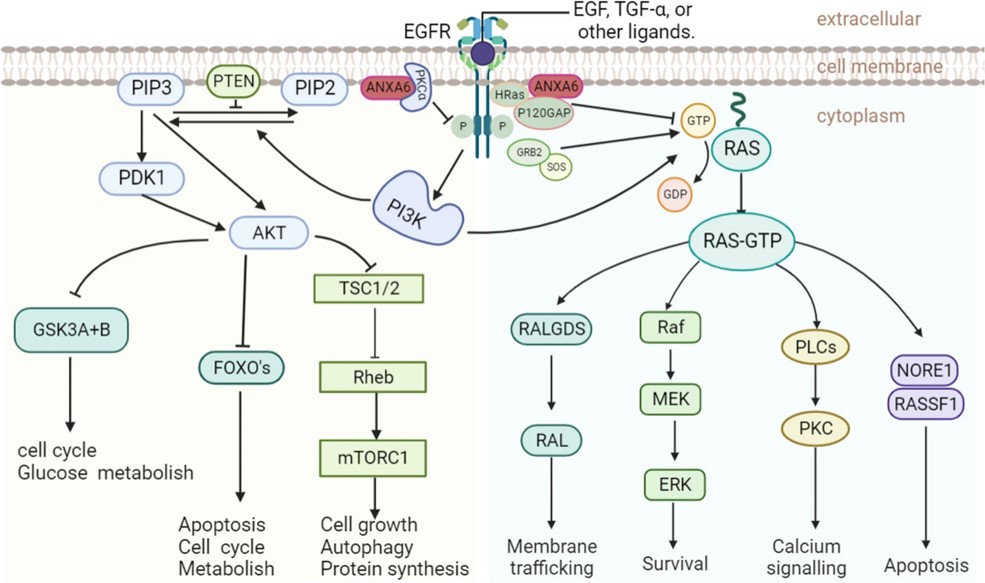 Fig.1 ANXA6 involved signaling pathways.1
ANXA6 Analysis Services at Creative Biolabs
Creative Biolabs provides a comprehensive suite of ANXA6-targeting analytical services, meticulously validated to ensure high affinity and specificity. Our laboratory utilizes gold-standard methodologies, including WB, IHC, ICC, and ultra-sensitive ELISA, benchmarked against known positive and negative controls. We have successfully developed species-specific ELISA assays for human, mouse, bovine, and rat ANXA6 detection, ensuring cross-species translational reliability.
Our ANXA6-targeting analysis services include, but are not limited to the following:
ANXA6 Expression Analysis
Tandem Mass Tag (TMT) Quantitative Proteomic Analysis
Our platform delivers high-resolution mapping of the ANXA6 interactome, identifying novel protein-protein interactions and evaluating the protein's downstream influence on the broader cellular proteome and signaling networks.
Functional Genomic Assays
We utilize gene editing or high-potency RNAi for targeted ANXA6 knockdown and overexpression, enabling the rigorous validation of specific biological roles within custom-engineered cell lines.
Exosomal ANXA6 Detection
Our laboratory provides specialized isolation and rigorous quantification of ANXA6 within extracellular vesicles, facilitating the study of paracrine signaling mechanisms and exosome-mediated drug resistance within the tumor microenvironment.
Nucleotide-Binding Analysis
We offer detailed biochemical evaluations of the unique ATP-binding characteristics of ANXA6, a feature that distinguishes it from other annexins and modulates its scaffolding function under physiological conditions.
Subcellular Translocation Mapping
Using high-resolution microscopy and fractionation, we track the calcium-induced movement of ANXA6 between the plasma membrane and late endosomes to elucidate its role in membrane repair and trafficking.
Service Workflow
Our workflow is engineered for scientific precision, ensuring every ANXA6 project delivers actionable, high-resolution data:
01Project Scoping & Design
Our PhD-level consultants define objectives, specifically identifying relevant ANXA6 isoforms or spliced variants relevant to your pathological context.
02Sample Receipt & Prep
Clients provide matrices such as frozen tissue, patient serum, or isolated ANXA6+ exosomes. We utilize specialized lysis protocols to prevent Ca2+-dependent degradation.
03Technical Optimization
We fine-tune buffer conditions, critical for stabilizing the eight-domain core binding, and perform antibody titration to ensure zero cross-reactivity with other annexins.
04Full-Scale Analysis
Execution of the chosen analytical strategy (e.g., TMT Proteomics or IHC) using our automated high-throughput platforms.
05Data Interpretation & Delivery
You receive a comprehensive technical report including raw data, normalized quantification, high-resolution imagery, and a professional summary of findings relevant to your therapeutic goals.
Applications
Precision Oncology and Tumor Subtyping
ANXA6 expression profiles serve as critical determinants for subtyping aggressive malignancies, particularly Triple-Negative Breast Cancer (TNBC). Detailed analysis facilitates the differentiation between low-expression "lipolytic" phenotypes and high-expression mesenchymal-like subsets, establishing a molecular basis for personalized therapeutic selection and prognostic stratification.
Evaluation of Exosome-Mediated Resistance Mechanisms
Quantification of ANXA6 enrichment within circulating extracellular vesicles enables the systematic tracking of horizontal resistance transfer in gastric, cervical, and pancreatic cancers. This application functions as a highly sensitive, non-invasive method for longitudinal therapy monitoring and the early detection of clinical recurrence.
Research into Metabolic Reprogramming
As a fundamental regulator of Niemann-Pick C1 (NPC1) activity and late-endosomal cholesterol trafficking, ANXA6 analysis is indispensable for investigating LDL-inducible cellular migration and atherosclerosis. Furthermore, these assays elucidate the metabolic shifts that enhance metastatic potential within the complex tumor microenvironment.
Muscle Physiology and Sarcolemmal Repair
In regenerative medicine, ANXA6 analysis focuses on the kinetic assembly of the "repair cap" at sites of sarcolemmal membrane disruption. Such investigations provide essential data for the development of protective pharmacotherapies aimed at mitigating muscular dystrophy and acute cardiovascular tissue damage.
Service Highlights
- Unmatched Specificity: Validation across WB, IHC, and ELISA using proprietary reference standards ensures zero cross-reactivity with other family members.
- Matrix Versatility: Proven protocols for detecting ANXA6 in difficult samples, including exosomal fractions and necrotic tumor cores.
- Species-Cross Reactivity: Validated assays for human, rat, and mouse models to support seamless transition from bench to bedside.
- Scaffold-Centric Insights: We focus on ANXA6’s role as a molecular scaffold, providing critical data on binding partners.
- Rapid Turnaround: Optimized workflows allow for custom assay development and data delivery within 2 weeks.
FAQs
-
Q: How do you differentiate between the different spliced transcript variants of ANXA6 in a single sample?
A: Our technical team utilizes isoform-specific primers for qPCR and specialized monoclonal antibodies targeting unique exon-junction sequences to precisely distinguish and quantify variants during comparative expression analysis.
-
Q: Can your ELISA assays detect ANXA6 in extremely low concentrations found in exosomes?
A: Yes, we employ advanced signal amplification techniques and high-sensitivity plates that allow for the reliable detection and quantification of exosomal ANXA6 at the picogram level in limited volumes.
-
Q: What measures are taken to prevent Ca2+-dependent degradation of ANXA6 during sample processing?
A: We utilize specialized, optimized lysis buffers containing specific chelating agents and protease inhibitor cocktails to stabilize the protein's fragile membrane-binding state throughout the entire extraction and purification process.
-
Q: Do you provide validation for ANXA6 knockdown efficiency in primary cells?
A: Definitely. Following the creation of knockdown lines, we perform mandatory validation via Western Blot and RT-qPCR to ensure a statistically significant reduction of target expression before proceeding with functional assays.
-
Q: How do you handle the high cholesterol content in membranes which might interfere with ANXA6 binding assays?
A: Our protocols include lipid-standardization steps and specific buffer adjustments to ensure that varying cholesterol levels do not lead to false-negative results or interference in binding affinity studies.
-
Q: Do you offer ANXA6 analysis for non-mammalian species?
A: While our standard validated kits cover human, mouse, and rat, we provide bespoke custom assay development services for other species based on rigorous sequence homology and cross-reactivity testing.
At Creative Biolabs, we integrate deep biological expertise with robust analytical platforms to deliver superior ANXA6 biomarker insights. Contact us today to develop a custom solution for your specific research needs.
Reference
- Cao, Jinlong, et al. "ANXA6: a key molecular player in cancer progression and drug resistance." Discover oncology 14.1 (2023): 53. Distributed under Open Access license CC BY 4.0, without modification. https://doi.org/10.1007/s12672-023-00662-x.
For Research Use Only.