The detection of BABAM2-ALK fusions in aggressive clear cell carcinomas provides a vital therapeutic window. Identifying these structural variants allows for the inclusion of patients in ALK-inhibitor clinical trials, potentially overcoming standard chemotherapy resistance.
Leveraging the high-throughput singleplex biomarker analysis platform, Creative Biolabs' veteran scientific team provides comprehensive, one-stop BABAM2 services. We offer an array of strategic diagnostic and molecular options to help customers precisely navigate the complexities of DNA repair pathways and oncology research.
Introduction of BABAM2
BABAM2 (also known as BRE or BRCC45) serves as a pivotal adapter protein within the deubiquitinating BRISC and BRCA1-A complexes. It acts as a master regulator in multiple signaling pathways, interfacing with various in vivo biomarkers to modulate cell cycle arrest and apoptosis. By orchestrating these ubiquitin-dependent interactions, BABAM2 promotes the survival of cells harboring damaged DNA, playing a critical role in maintaining genomic integrity and pluripotency following exogenous stress or oncogenic transformation.
The clinical profile of BABAM2 spans a broad spectrum of malignancies, with detectable mRNA levels in breast, cervical, and rectal cancers. In gynecological clear cell carcinoma—a particularly aggressive and platinum-resistant tumor—the recent discovery of BABAM2-ALK fusions via next-generation sequencing highlights its role as a potential pathogenic driver and therapeutic target. Conversely, in breast cancer patients undergoing radiotherapy, high BABAM2 expression correlates with favorable prognoses, underscoring its utility as a versatile biomarker for patient stratification and treatment monitoring.
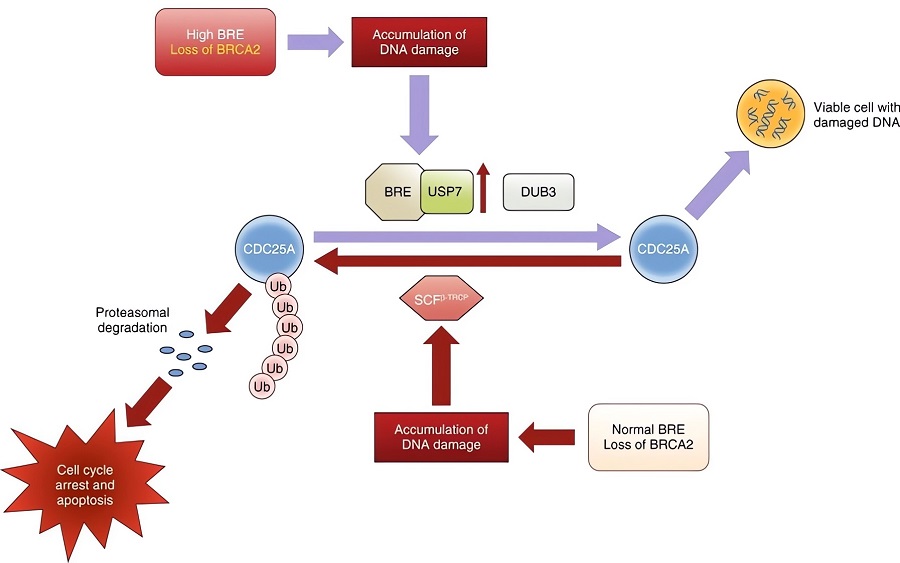 Fig.1 BRCC45 overexpression confers survival advantage in BRCA2-deficient cells.1
BABAM2 Analysis Services at Creative Biolabs
Traditional research into BABAM2 has relied heavily on cell transfection and animal model tissue analysis. Creative Biolabs modernizes this approach by offering an integrated, custom-tailored analysis suite that addresses every phase of your investigation, from basic discovery to clinical validation.
Our services can be customized to suit the specific needs of our clients, popular analysis services targeting BABAM2 include but are not limited to the following:
Immunology Diagnostic Platform
- BABAM2 Antibody Development
We engineer high-affinity monoclonal and polyclonal antibodies specifically validated for BABAM2 detection across diverse laboratory applications, ensuring minimal cross-reactivity and superior sensitivity.
- BABAM2 Protein Ubiquitination Assay
Our specialized assays quantify the K63-linked ubiquitination status of BABAM2, providing deep insights into its functional activation and its regulatory role within the BRISC complex.
- Immunofluorescence (IF) Assay
We utilize high-resolution IF to visualize the subcellular localization of BABAM2, tracking its translocation to the nucleus upon DNA damage induction.
- Immunohistochemical (IHC) Analysis
Our team provides expert IHC staining and scoring for BABAM2 in paraffin-embedded sections, essential for characterizing expression patterns in breast and gynecological tumor tissues.
- Co-Immunoprecipitation (Co-IP) Assay
We perform rigorous Co-IP to map the physical interactions between BABAM2 and its partners, such as BRCA1 or ABRAXAS1, in complex biological matrices.
- BABAM2 Fusion Protein Development
Our scientists design and express recombinant BABAM2 fusion proteins to facilitate structural biology studies and high-throughput drug screening efforts.
Molecular Diagnostic Platform
- BABAM2 PCR Assay
We provide highly sensitive quantitative PCR services to measure BABAM2 mRNA expression levels, offering a precise baseline for transcriptomic studies in cancer cohorts.
- BABAM2 Sequencing Assay
Utilizing NGS technology, we identify structural variants and gene fusions, such as the BABAM2-ALK translocation, ensuring comprehensive genomic profiling.
- BABAM2 Gene KO/Over-expression Plasmid Development
We construct customized vectors for the targeted knockout or stable overexpression of BABAM2, enabling the study of gain-of-function or loss-of-function phenotypes.
- BABAM2 Gene KO/Over-expression Cell Production
Our facility generates validated, stable cell lines with modulated BABAM2 expression, providing a ready-to-use model for longitudinal therapeutic testing.
Service Workflow
Creative Biolabs provides a streamlined workflow to handle delicate BABAM2 protein complexes and genetic fusions, ensuring data integrity from consultation to delivery:
01Project Consultation
Our PhD-led team determines the effective BABAM2 strategy, focusing on ubiquitination, IHC scoring, or NGS fusion detection.
02Sample Submission
Clients provide FFPE sections, frozen tissue, or pellets. We ensure cold-chain transport to preserve fragile BABAM2-related protein interactions.
03Preparation & QC
Samples undergo rigorous quality checks. We perform RNA/DNA extraction or prepare protein lysates and perform antigen retrieval.
04Analytical Execution
Our laboratory executes customized protocols, including enrichment for K63-ubiquitinated proteins or targeted NGS for BABAM2-ALK junctions.
05Data Analysis
Raw data is processed via bioinformatics pipelines or reviewed by pathologists for precise BABAM2 quantification and localization.
06Final Reporting
We deliver a comprehensive report containing high-resolution images and expert interpretations, providing actionable insights for your research.
Applications
Identification of Actionable Gene Fusions
Prediction of Radiotherapy Outcomes
Monitoring BABAM2 expression levels in breast cancer cohorts serves as a significant prognostic tool. High levels of the protein are associated with enhanced survival rates post-radiation, assisting clinicians in tailoring the intensity of localized therapies.
Understanding Platinum-Based Chemoresistance
In gynecological malignancies, BABAM2's role in the DNA Damage Response is closely linked to platinum resistance. Analyzing its expression helps unravel the mechanisms that allow tumor cells to bypass DNA adduct-induced apoptosis.
Drug Target Validation in DDR Pathways
Pharmaceutical researchers utilize BABAM2 profiling to validate the efficacy of novel compounds targeting the BRCA1-A complex. This analysis is crucial for confirming that small molecules successfully disrupt the protein-protein interactions required for DNA repair.
Stem Cell Pluripotency Research
BABAM2 is essential for maintaining the pluripotency of stem cells during replicative stress. Researchers analyze its regulatory functions to better understand how cell cycle checkpoints are managed during early developmental stages or in regenerative medicine.
Tumor Microenvironment Profiling
Investigating BABAM2 within the BRISC complex provides data on how tumors modulate interferon signaling. This application is increasingly relevant for studies focused on combining DDR inhibitors with immune checkpoint blockade therapies.
Service Highlights
- Unmatched Specificity: Our BABAM2-targeted assays are designed to eliminate interference from homologous proteins, ensuring high-fidelity data.
- Clinical Relevance: Every analysis is optimized to highlight actionable biomarkers, such as the BABAM2-ALK fusion, relevant to modern oncology.
- Bespoke Scalability: We provide flexible service tiers, accommodating everything from single-sample pilot studies to large-scale clinical trial cohorts.
- PhD-Led Consultation: Projects are managed by expert biologists who provide deep context for BABAM2's role in ubiquitin-dependent signaling.
- Rapid Data Integration: Our bioinformatics pipeline seamlessly merges molecular and immunological data for a holistic view of BABAM2 activity.
FAQs
-
Q: Can your IHC platform distinguish between nuclear and cytoplasmic BABAM2?
A: Yes, our high-resolution immunohistochemistry protocols are specifically optimized to reveal the subcellular localization of the protein. Since BABAM2 translocates from the cytoplasm to the nucleus during DNA damage response, this spatial data is essential for interpreting its functional state.
-
Q: How do you ensure the specificity of your BABAM2 antibodies?
A: Our development process involves rigorous validation against knockout cell lines. By comparing the signal in wild-type cells versus BABAM2-deficient cells, we confirm that our antibodies target the intended epitope with zero background noise.
-
Q: Is it possible to analyze BABAM2 in BRCA1-deficient cell models?
A: Absolutely. We frequently perform BABAM2 analysis in BRCA1-mutant backgrounds to study how the loss of the BRCA1-A complex affects overall genomic stability. This is a critical area of study for researchers focusing on PARP inhibitor resistance.
-
Q: Can BABAM2 expression be used as a standalone diagnostic marker?
A: While BABAM2 is a powerful prognostic indicator, particularly in breast cancer, it is most effective when used as part of a multi-marker DDR panel. We recommend analyzing it alongside BRCA1, BARD1, and ALK to provide a complete diagnostic picture.
-
Q: What are the storage requirements for samples sent for BABAM2 protein analysis?
A: For protein-based studies like Co-IP, samples should be snap-frozen in liquid nitrogen and shipped on dry ice. Maintaining the cold chain is vital to prevent the degradation of protein-protein interactions involving the BABAM2 adapter.
-
Q: Can you help design a custom plasmid for BABAM2 over-expression?
A: Yes, our molecular team can design various vector backbones including lentiviral, adenoviral, or standard plasmid systems. We can incorporate specific promoters or fluorescent tags (like GFP) to facilitate your downstream tracking of BABAM2.
Creative Biolabs provides custom BABAM2 Analysis services, combining years of biomarker expertise with cutting-edge diagnostic platforms. Choose us for precision, reliability, and actionable scientific insights. Contact us today for a formal quote.
Reference
- Biswas, Kajal, et al. "BRE/BRCC45 regulates CDC25A stability by recruiting USP7 in response to DNA damage." Nature communications 9.1 (2018): 537. Distributed under Open Access license CC BY 4.0. The image was modified by extracting and using only part of the original image. https://doi.org/10.1038/s41467-018-03020-6.
For Research Use Only.