We engineer high-specificity monoclonal and polyclonal antibodies targeting unique BAP1 epitopes, ensuring minimal cross-reactivity for sensitive detection in diverse species and tissue types.
Creative Biolabs provides high-fidelity BAP1 analysis services with multiple strategy options to help clients transition from basic discovery to clinical-grade validation. Our one-stop solution encompasses protein expression profiling, custom antibody development, comprehensive genetic testing, and advanced bioinformatics, serving as a vital resource for academic diagnostic research.
Introduction of BAP1
The BAP1 (BRCA1-associated protein 1) gene encodes a versatile deubiquitinating enzyme that maintains cellular homeostasis through its dual-chambered role in the nucleus and cytoplasm. As a central tumor suppressor, BAP1 governs critical pathways including chromatin remodeling, DNA double-strand break repair, and calcium-mediated apoptosis. Clinical evidence increasingly confirms that germline mutations in BAP1 precipitate a high-risk tumor predisposition syndrome, intrinsically linking the gene to aggressive malignancies like malignant mesothelioma and uveal melanoma. This genetic burden is underscored by epidemiological data synthesized from nearly a decade of clinical research, revealing that approximately 80% of mutation carriers develop at least one form of cancer, with 27% manifesting between two and seven distinct tumor types throughout their lifetime.
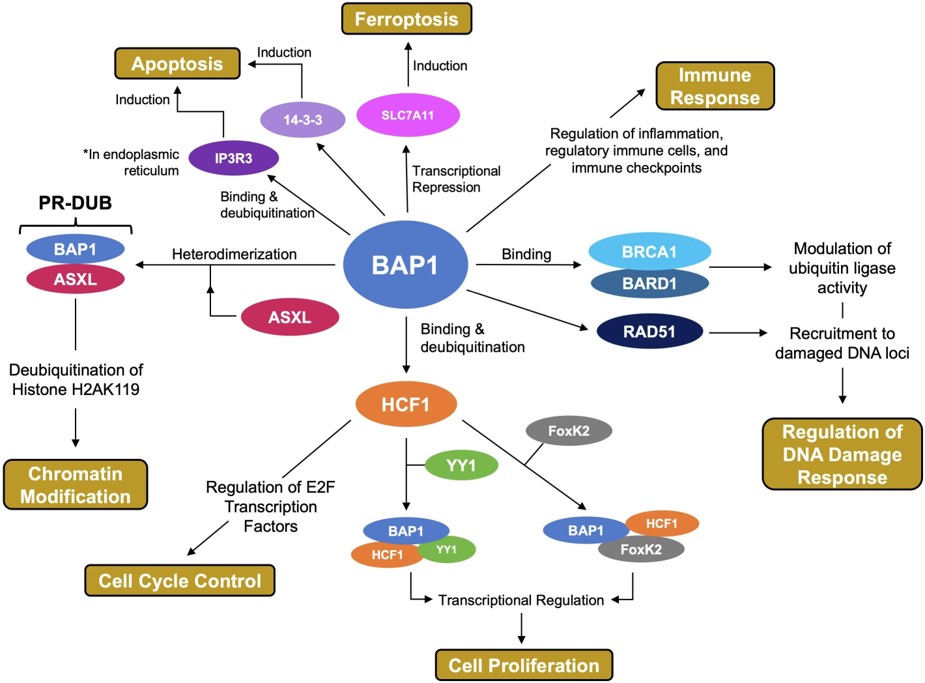 Fig.1 Comprehensive overview of BAP1 functional roles.1
BAP1 Analysis Services at Creative Biolabs
BAP1-related research necessitates a multifaceted laboratory approach to distinguish between somatic loss and germline inheritance. Creative Biolabs provides a comprehensive suite of customized BAP1 analysis services tailored to specific research goals.
Popular analysis services targeting BAP1 include but are not limited to the following:
BAP1 Antibody Development
Immunohistochemical (IHC) Analysis
Utilizing standardized protocols, we assess nuclear BAP1 expression in paraffin-embedded sections, providing a rapid surrogate marker for inactivating mutations in sporadic and hereditary tumors.
Normal/Loss Protein Profiling
Our platform quantifies protein levels via Western Blot and ELISA, characterizing the biallelic inactivation common in over 60% of sporadic mesotheliomas and 100% of germline carriers.
BAP1-KO Cell Line Construction
We employ gene editing technology to generate stable BAP1 knockout cell models, facilitating the study of tumor progression and the identification of synthetic lethal vulnerabilities.
Comprehensive Genetic Testing
Utilizing next-generation sequencing (NGS), we identify single-nucleotide variants, small indels, and splice-site mutations across the entire BAP1 coding region with high analytical sensitivity.
Germ-line Mutation Analysis
We specialize in detecting heritable pathogenic variants from peripheral blood or saliva, supporting familial risk stratification and the diagnosis of BAP1 tumor predisposition syndrome.
Deubiquitinase (DUB) Activity Assay
Our biochemical assays measure the catalytic efficiency of BAP1 in removing ubiquitin from substrates like H2A, essential for confirming the functional impact of missense mutations.
Phosphorylation Detection
We track BAP1 phosphorylation status using mass spectrometry or phospho-specific antibodies, particularly relevant in studies involving UV-induced DNA damage and cellular stress responses.
Service Workflow
Our BAP1 analysis workflow ensures precision and scientific rigor through these sequential steps:
01Consultation & Scoping
We begin with a technical meeting to define research objectives, select BAP1 analysis strategies (e.g., IHC or NGS), and establish customized project timelines.
02Sample Provision
Clients provide starting materials, including frozen tissue, FFPE slides, peripheral blood, or cell lines. We offer detailed preparation and shipping guidelines to maintain biological integrity.
03Quality Control (QC)
Our team conducts comprehensive QC assessments, evaluating tissue cellularity or DNA purity to ensure samples meet requirements for high-depth sequencing and functional testing.
04Analytical Execution
Following QC approval, we proceed with high-fidelity staining, library preparation, or specialized biochemical processing to measure BAP1 deubiquitination and phosphorylation levels.
05Data Interpretation
Computational experts process raw data, performing variant calling and filtering against international databases to determine the functional significance of identified BAP1 mutations.
06Reporting & Delivery
The process concludes with a professional technical report containing raw data, digital imagery, and a summary of findings.
Applications
Differential Diagnosis of Mesothelioma
Assessment of BAP1 status serves as a definitive tool in distinguishing malignant mesothelioma from reactive mesothelial hyperplasia. The loss of nuclear BAP1 staining is a highly specific marker for malignancy, streamlining the pathology workflow for pleural and peritoneal biopsies.
Uveal Melanoma Prognostication
Analysis of BAP1 expression in ocular tumors is a primary predictor of metastatic potential. Tumors lacking BAP1 functionality are significantly more likely to spread to the liver, allowing clinicians to implement more aggressive surveillance and personalized intervention strategies.
Hereditary Cancer Risk Screening
Identification of germline BAP1 variants enables the early detection of BAP1-TPDS in at-risk relatives. This application supports lifelong monitoring for a spectrum of cancers, including renal cell carcinoma and cutaneous melanoma, often before clinical symptoms manifest.
Therapeutic Vulnerability Mapping
BAP1-deficient cells exhibit specific metabolic and epigenetic dependencies, such as increased reliance on aerobic glycolysis and sensitivity to EZH2 inhibitors. Analysis helps researchers identify cohorts likely to respond to PARP inhibitors or platinum-based chemotherapy agents.
DNA Repair and Chromatin Research
In basic science, BAP1 analysis facilitates the study of histone H2A deubiquitination and its impact on the polycomb repressive complex. This is vital for understanding how cells maintain genomic stability and respond to ionizing radiation or environmental carcinogens.
Development of Targeted Biologics
By characterizing the structural impact of BAP1 mutations, researchers can develop small molecules or stabilizers that restore DUB activity. Analysis services provide the essential baseline data required for pharmacological screening and lead optimization.
Service Highlights
- Integrated Multi-Omics Approach: We combine protein-level IHC with gene-level sequencing to provide a holistic view of BAP1 inactivation mechanisms.
- High-Resolution Structural Validation: Our DUB assays utilize Ub-AMC substrates to provide kinetic data on the functional impact of specific BAP1 variants.
- Standardized Pathology Scoring: We employ double-blinded pathology reviews for IHC to ensure the highest accuracy in reporting nuclear versus cytoplasmic protein loss.
- Scalable Customization: Whether processing a single clinical sample or a large-scale research cohort, our workflows adapt to meet specific depth and throughput needs.
FAQs
-
Q: Which sample type is most suitable for distinguishing between somatic and germline BAP1 mutations?
A: To differentiate these two states, we recommend a paired analysis of tumor tissue (FFPE or frozen) alongside a germline sample, such as peripheral blood or a buccal swab. Somatic mutations are restricted to the tumor, whereas germline mutations will be present in both, providing a clear map of the patient's hereditary risk profile.
-
Q: Can BAP1 IHC effectively replace genetic sequencing in a research setting?
A: While nuclear BAP1 loss in IHC is a highly reliable surrogate for inactivating mutations, it cannot identify the specific molecular nature of the variant, such as a particular missense or splice-site change. We generally advise IHC as a primary screening tool, followed by NGS to confirm the exact mutation and assess for potential therapeutic targets.
-
Q: Why does BAP1 phosphorylation increase after UV damage, and can you detect this?
A: Phosphorylation at specific serine/threonine sites is a critical regulatory signal that recruits BAP1 to sites of DNA damage to facilitate repair. We offer specialized phospho-specific Western blotting and mass spectrometry services to quantify these specific post-translational modifications in response to experimental stimuli.
-
Q: Is BAP1 protein loss always indicative of a mutation in the gene?
A: Not necessarily. While most cases of BAP1 loss are due to biallelic inactivation, protein levels can also be influenced by epigenetic silencing or disruptions in the ASXL binding partners required for BAP1 stability. Our service includes the option to analyze binding partners to ensure a comprehensive understanding of the protein's absence.
-
Q: What is the benefit of the BAP1 DUB Assay for drug discovery?
A: This assay provides a quantitative measure of enzyme kinetics (Km and Vmax). In drug discovery, it is used to screen for small molecules that either inhibit BAP1 in specific contexts or, more commonly, to identify compounds that can stabilize or restore the function of mutant BAP1 proteins.
Creative Biolabs provides advanced BAP1 analysis, combining deep technical expertise with customizable workflows to accelerate your oncology research. Contact us today to discuss your project.
Reference
- Louie, Bryan H., and Razelle Kurzrock. "BAP1: Not just a BRCA1-associated protein." Cancer treatment reviews 90 (2020): 102091. Distributed under Open Access license CC BY 4.0, without modification. https://doi.org/10.1016/j.ctrv.2020.102091.
For Research Use Only.