
Pseudotyping Service of Lentiviral Vectors with Ebola Virus
Pseudotyping lentivirus vector has been proved to be a useful strategy for gene therapy. Currently, a wide variety of heterologous viral envelope glycoproteins have successfully been used to pseudotype lentiviral vectors, including those from vesiculoviruses, hepadnaviruses, flaviviruses, baculovirus, alphaviruses, and filoviruses. Working in the field of gene therapy for many years, Creative Biolabs is capable of offering high-quality lentiviral vector construction and optimization service for global customers. Here, we are happy to help customer construct lentiviral vector harboring Ebola virus-derived glycoprotein.
What Is Ebola Virus (EBOV)?
Ebola viruses are the causative agent of a severe hemorrhagic fever disease associated with mortality rates of up to 88% in humans. As a nonsegmented, negative-sense RNA virus of the Filovirus family, it has a unique filamentous morphology with a uniform diameter of 80 nm and variable length of up to 14 μm. Infection of Ebola virus can be initiated by virus entry into the body through mucosal sites or by direct contact. Once inside the body, the primary target cells for Ebola are thought to be dendritic cells and macrophages. These infected cells then carry the virus to the primary organs of viral replication, including the liver, spleen, lung, and lymph nodes.
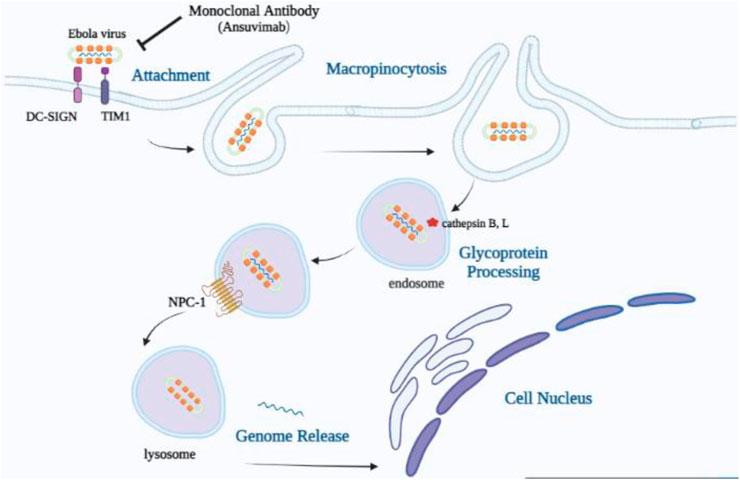 Figure 1. Mode of cellular uptake and entrance of the Ebola virus.1
Life Cycle of the Ebola Virus
Understanding the natural life cycle of EBOV is essential for appreciating how our pseudotyped lentiviral vectors mimic the entry phase while eliminating the replication phase. The EBOV life cycle is a complex multi-step process orchestrated primarily by the GP protein.
-
Attachment and Macropinocytosis
Unlike many viruses that use receptor-mediated endocytosis, EBOV primarily enters cells via macropinocytosis—a form of bulk endocytosis. The GP1 subunit mediates attachment to the host cell surface, often interacting with C-type lectins (like DC-SIGN) or phosphatidylserine receptors (TIM-1). -
Endosomal Processing
Once internalized into the macropinosome, the vesicle matures into an endosome. Here, the acidic environment activates host proteases, specifically Cathepsin B and L. These enzymes "trim" the GP1 subunit, removing the glycan cap and the mucin-like domain. This trimming is a critical "unmasking" step that reveals the Receptor Binding Domain (RBD). -
NPC1 Binding and Membrane Fusion
The unmasked RBD binds to the endosomal membrane protein Niemann-Pick C1 (NPC1). This binding event triggers a conformational change in the GP2 subunit, inserting the fusion peptide into the endosomal membrane. The subsequent "zippering" of GP2 brings the viral and cellular membranes together, creating a fusion pore through which the viral ribonucleoprotein (RNP) complex is released into the cytoplasm.
Role of GP in Viral Entry and Membrane Fusion
The EBOV genome encodes a single glycoprotein (GP) that is post-translationally cleaved by the host cell protease furin into two subunits: GP1 and GP2. These subunits remain linked by a disulfide bond, forming a trimeric spike on the viral surface.
- GP1 Subunit: This is the "attachment" component. It contains the Receptor Binding Domain (RBD) and a heavily glycosylated mucin-like domain (MLD) that shields the protein from immune recognition.
- GP2 Subunit: This is the "fusion" machinery. It contains the hydrophobic fusion peptide and transmembrane domain necessary for merging the viral envelope with the host endosomal membrane.
EBOV-GP is unique because it facilitates a complex endosomal entry pathway. Unlike many viruses that fuse at the plasma membrane, EBOV is internalized via macropinocytosis. Once inside the endosome, host cathepsins (B and L) cleave the GP to expose the RBD, which then binds to the intracellular receptor Niemann-Pick C1 (NPC1), triggering membrane fusion.
Pseudotypes Based on Ebola-derived GPs
Ebola virus envelope glycoprotein (Ebo-GP) has a molecular mass of approximately 140 kDa. As the sole viral spike protein, Ebo-GP is presumed to mediate viral entry into target cells. In recent years, vectors derived from lentiviral offer particularly flexible properties in gene transfer applications. Given the numerous possible associations between various viral surface glycoproteins (which determine cell tropism) and different types of lentiviral cores, the boundaries of the host immune system and its host range have been significantly broadened. Indeed, vesicular stomatitis virus (VSV) pseudotypes based on Ebola-derived GPs have been widely employed in studies investigating mechanisms of Ebola virus entry into target cells, in the screening of antiviral compound libraries, in the development of tests for the identification of neutralizing antibodies, and as vaccine vectors.
Services at Creative Biolabs
We offer fully customizable pseudotyping services to meet your exact experimental needs:
- Choice of Lentiviral Backbone: HIV-1-based, self-inactivating (SIN) vectors with WPRE for enhanced expression.
- Reporter Genes: Luciferase (firefly, Renilla), fluorescent proteins.), or secreted alkaline phosphatase (SEAP) for easy quantification.
- Promoter Selection: Constitutive promoters, inducible systems, or tissue-specific promoters.
- Experimental Design: Single-round infection vectors or specialized designs for CRISPR/Cas9 libraries, shRNA delivery, or cDNA expression.
- Scale-up Options: From small-scale research batches (10^7 TU) to large-scale preclinical production (10^10+ TU).
Biosafety Advantages Compared with Live Ebola Virus
Working with replication-competent Ebola virus requires maximum containment (BSL-4), severely limiting its accessibility for most research institutions. Our EBOV GP-pseudotyped lentiviral vectors offer a critical solution:
- Replication-Incompetent: The vectors are based on third-generation lentiviral systems, with all viral genes (gag, pol, rev) provided in trans on separate plasmids. The resulting viral particles can mediate only a single round of infection.
- No Pathogenic Genome: The vector carries only your gene of interest or reporter construct, not the Ebola viral genome. It cannot cause EVD.
- BSL-2/BSL-2+ Compatibility: Research can be conducted safely under Biosafety Level 2 or enhanced BSL-2+ conditions, vastly broadening the potential for research on Ebola virus entry, neutralization, and countermeasure development.
Overview of Applications: The Versatility of Ebola Virus-Pseudotyped Lentiviral Vectors
The table below details the key application areas of Ebola virus glycoprotein (EBOV GP)-pseudotyped lentiviral vectors, demonstrating their powerful utility in both basic research and translational medicine.
| Application Area | Core Advantages | Typical Use Cases & Our Related Services |
|---|---|---|
| Neutralizing Antibody Evaluation & Vaccine Development |
|
Evaluating the neutralization activity of monoclonal antibody drug candidates, vaccine immune sera, and convalescent plasma. We offer ready-to-use EBOV GP-pseudotyped reporter viral particles and support custom vector construction for high-throughput screening platforms. |
| Viral Entry Inhibitor Screening |
|
Discovery of novel antiviral compounds, such as cathepsin inhibitors or NPC1 receptor antagonists. We provide custom pseudotyped virus production services and can incorporate various reporter genes to meet different detection readout needs. |
| Viral Entry Mechanism & Cellular Tropism Studies |
|
Elucidating viral pathogenesis, identifying novel host dependency factors, comparing functional differences among GPs from different Ebolavirus species. We offer GP mutant pseudotyping services and optimized transduction protocols for specific primary cells. |
| Pseudotyped Virus Vaccine Platform Validation |
|
Developing novel vaccine strategies, particularly against other highly pathogenic agents. We provide vaccine vector design and construction services to assist clients in validating antigen display and immune effects on our EBOV GP-pseudotyped platform. |
| Gene Delivery to Hard-to-Transduce Cells |
|
Used for immune cell gene function studies, ex vivo gene therapy prototype validation, and disease modeling. We provide optimized transduction kits and technical services tailored for specific hard-to-transduce cells (e.g., primary macrophages). |
Elevate Your Project with Creative Biolabs
In the rapidly evolving landscape of gene therapy and virology, the caliber of your viral vectors can be the deciding factor between a breakthrough and a setback. Choosing Creative Biolabs for your EBOV-GP pseudotyping needs means moving beyond "off-the-shelf" solutions and into a realm of precision engineering designed to elevate your research.
Specialized Expertise in Filovirus Biology
We don't just package vectors; we understand the underlying molecular biology of the Ebola virus. Our scientists can help you select the specific GP strain—whether it be the highly EBOV, the antigenically distinct Sudan (SUDV), or the Bundibugyo (BDBV) variants—to ensure your results are relevant to the latest epidemiological and therapeutic trends.
Precision Engineering for Higher Impact
We use advanced codon optimization for the EBOV-GP sequence to maximize protein expression and achieve higher functional titers. Pair your EBOV-GP with our proprietary lentiviral backbones, which offer enhanced safety profiles and minimal immunogenicity, ideal for sensitive in vivo lung or liver studies.
Comprehensive Analytical Support
Every project is supported by a comprehensive technical dossier that encompasses not only the titers but also thorough insights into the quality and purity of the particles involved. This meticulous documentation ensures that you receive the "Gold Standard" data that meets the rigorous requirements set forth by high-impact journals and regulatory bodies, thereby enhancing the credibility and scientific validity of your research.
Accelerating the Path to Discovery
By utilizing our BSL-2-ready pseudotyped systems, you can significantly compress your project timelines. Avoid the months of regulatory hurdles and the extreme costs associated with obtaining access to a BSL-4 facility. Our platform enables high-throughput screening, neutralization assays, and tropism studies in your own laboratory, accelerating the pace of your innovation.
Frequently Asked Questions
Q: Is Ebola virus–pseudotyped lentivirus safe to use?
A: Yes, it is fundamentally safe for use in a BSL-2 laboratory. The system is engineered to be replication-incompetent, meaning the viral particles can infect cells only once and cannot produce new infectious virus. Crucially, the lentiviral vector carries no Ebola virus genomic material—it contains only your gene of interest or a reporter construct, eliminating any risk of causing Ebola Virus Disease. All production and handling are conducted under strict BSL-2 containment protocols, ensuring operator and environmental safety.
Q: What biosafety level is required?
A: Standard Biosafety Level 2 (BSL-2) practices and facilities are sufficient for routine handling and transduction experiments. However, some Institutional Biosafety Committees (IBCs) may recommend enhanced BSL-2+ precautions for specific procedures, such as large-scale production, concentration of viral stocks, or work involving aerosol-generating activities. We provide comprehensive biosafety documentation to help you obtain the necessary approval from your local biosafety office for your intended experimental workflow.
Q: Can EBOV GP–pseudotyped vectors be used for neutralization assays?
A: Absolutely. This application is the gold standard surrogate for live Ebola virus neutralization tests. By using particles pseudotyped with the authentic EBOV GP and encoding a quantifiable reporter gene (e.g., luciferase), researchers can accurately measure the titer of neutralizing antibodies in serum or the potency of inhibitory compounds. This provides highly correlative, quantitative data in a format that is safe, scalable, and adaptable to high-throughput automation, bypassing the need for BSL-4 containment.
Q: What cell types can be efficiently transduced?
A: EBOV GP-pseudotyped vectors exhibit broad cellular tropism, efficiently transducing standard cell lines such as Vero E6, HEK293, and Huh-7. Notably, they show superior efficacy for many primary and difficult-to-transduce cells, including various types of primary macrophages, monocyte-derived dendritic cells, and endothelial cells. This makes them particularly valuable for immunological studies, host-pathogen interaction research, and modeling infection in biologically relevant cell systems that are often refractory to other pseudotypes, such as VSV-G.
Q: Can the system be customized for high-throughput screening (HTS)?
A: Yes, our platform is specifically designed for HTS compatibility. We routinely produce vectors with highly sensitive, luminescent reporters like firefly or Renilla luciferase, which are ideal for automated readouts. The entire system—from virus production to the infection protocol—is optimized for consistency and scalability in 96-well and 384-well plate formats. We offer comprehensive custom service packages for HTS campaigns, including ready-to-use, titer-matched viral aliquots and optimized assay protocols to ensure robust Z'-factors and reliable discovery data.
We're Here to Help—Contact Us!
Working in the field of gene therapy for years, Creative Biolabs has constructed and optimized numerous glycoprotein based lentiviral vectors for global customers. In addition to VSV pseudotypes, we are committed to developing and optimizing more and more specific virus for glycoprotein pseudotypes. Our professional scientists will try their best to offer high-quality lentiviral vector construction services in the most high-quality and cost-effective way to make your project a success. For more detailed information, please feel free to contact us or directly send us a quote.
Reference
- Taki E, Ghanavati R, Navidifar T, et al. Ebanga™: The most recent FDA-approved drug for treating Ebola. Frontiers in Pharmacology, 2023, 14: 1083429. https://doi.org/10.3389/fphar.2023.1083429 (Distributed under Open Access license CC BY 4.0, without modification.)
