Creative Biolabs has a tradition of commitment. To achieve efficient execution and regulatory approval, we offer careful considerations of your program for the development of a cellular or gene therapy product – now and in the future.
EXPLORE MORE HighlightsWe focus on unmet needs and develop novel cellular and gene drugs and solutions that offer significant benefits over existing options.
EXPLORE MORE HighlightsThe advent of Chimeric Antigen Receptor T-cell (CAR-T) therapies has revolutionized the field of oncology, providing new avenues for treating various forms of cancer. Our 20 years of experience in the biotechnology sector have equipped us with the expertise and technological capabilities to support the entire lifecycle of CAR-T products, from early development to commercialization.
EXPLORE MORETo accelerate advanced breakthroughs of your projects, we offer broad range of platforms which enable our clients be free to tackle problems with cutting-edge technologies from different angles and in different methods.
EXPLORE MORE HighlightsUse the resources in our library to help you understand your options and make critical decisions for your study. We offer oncolytic virus, CAR-T, and dendritic cell related documents, as well as newsletter. If you don't find the answers you're looking for, contact us for additional assistance.
EXPLORE MORE HighlightsGet a real taste and understanding of the business and culture of one of the world's great research-based cellular and gene therapy discovery and development companies.
EXPLORE MORE
To advance research in the CIK therapy field, the establishment of appropriate animal models and effective management practices is crucial. Creative Biolabs is eager to partner with you on the journey of CIK therapy research, offering comprehensive services for animal model design and management.
Animal models play an indispensable role in CIK therapy. These models can replicate tumor progression, shedding light on the effects and mechanisms of CIK therapy at various stages, thus providing valuable data for further research.
In CIK therapy, Creative Biolabs can establish a variety of animal models, among which the most common include:
Mouse Models
In our labs, mouse models are the most widely used due to their high genomic similarity to humans, making them easy to manipulate genetically, such as through gene knockout or transgenesis. These models can also be used to create xenograft models by transplanting human tumor cells, effectively simulating the immune response seen in human cancer patients.
Rat Models
At Creative Biolabs, rat models are larger than mouse models, which makes them more suitable for complex physiological and behavioral studies. Moreover, rats often exhibit more pronounced responses to various CIK therapies, providing more reliable data for preclinical research.
Monkey Models
Primate models, such as monkeys, are more closely aligned with human physiological and immune mechanisms, which can help assess the biosafety and efficacy of CIK therapy. As a result, the findings are more readily translatable to clinical studies, allowing for better predictions of their effects on the human body.
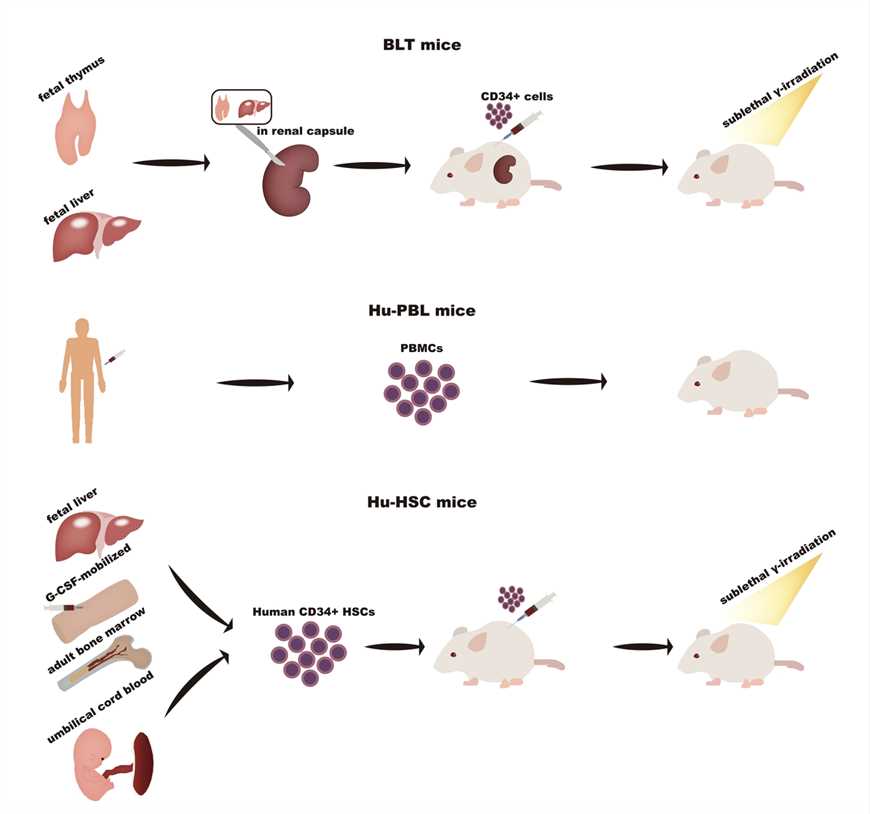 Fig.1 The Common Mice Models for for Cancer Immunotherapy.1,3
In recent years, Creative Biolabs has played a pivotal role in the design and management of animal models related to cell immune therapy, specifically CIK cells.
|
Creative Biolabs ensures that all experiments adhere to ethical standards and relevant regulations, providing needed regulatory support to assist clients through the approval process, thereby facilitating smooth research progression. |
|
Depending on the specific needs of the research, Creative Biolabs assists clients in selecting the most appropriate animal models. This may involve mice, rats, or other suitable laboratory animals to ensure that the models accurately predict the biological responses to CIK therapy. |
|
Our laboratory is tasked with establishing suitable animal models, including the creation of tumor models and the use of immunodeficient animals. |
|
In alignment with clients' research objectives, our scientists provide comprehensive experimental design services. This includes devising treatment protocols for CIK cells, selecting dosages, scheduling timelines, and ensuring that the experiments are scientifically sound and effective. |
|
Our team is responsible for gathering various metrics during animal experiments, such as tumor growth, immune responses, and cell infiltration rates. |
|
Upon completion of the experiments, we deliver a comprehensive report detailing the findings and offering research recommendations, enabling clients to effectively plan their subsequent research strategies. |
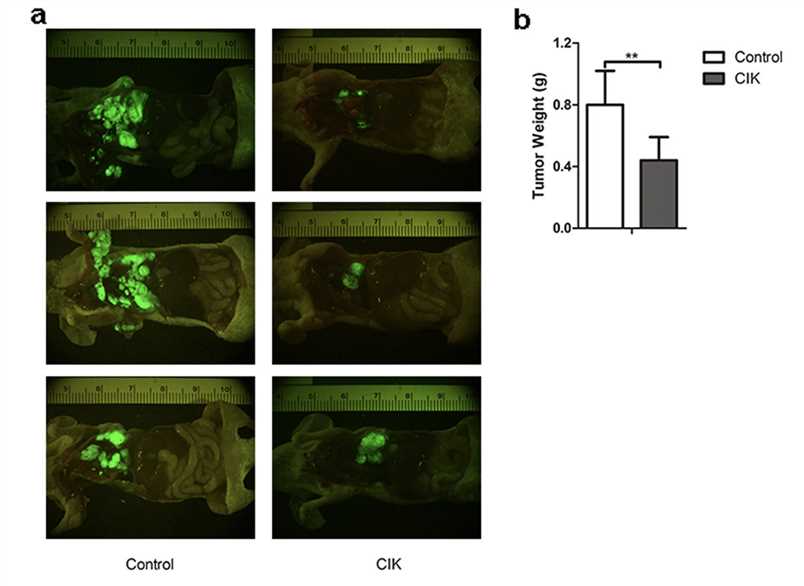 Fig.2 In Vivo Fluorescence Images Demonstrating a Substantial Reduction in Tumor Mass Size in Mice From the CIK Group.2,3
In a new project, Creative Biolabs has investigated the immunotherapeutic effects of CIK cells on human-derived tumors using a mouse model.
The specific goals include:
1. To assess the capacity of CIK cells to inhibit tumor growth.
2. To examine the survival and distribution of CIK cells in vivo.
3. To evaluate the immune response of mice following CIK cell therapy.
PART II. Selection of Animal ModelsFor this study, immunodeficient mice (such as Nude or BALB/c-nu/nu mice) were chosen due to their lack of T cells, allowing them to accept human tumor cells without triggering rejection. Various quantities of human tumor cells (for example, the HCT116 colorectal cancer cell line) were injected to create the tumor model.
PART III. Project Design1. Grouping: Mice in the experiment were randomly assigned to four groups:
- Control group (no CIK cell treatment)
- Low-dose CIK group (1×10⁶ CIK cells injected)
- Mid-dose CIK group (5×10⁶ CIK cells injected)
- High-dose CIK group (1×10⁷ CIK cells injected)
2. Pre-Treatment: Before injecting tumor cells, immunosuppressive agents (like cyclophosphamide) were administered to the mice to enhance the success rate of tumor implantation.
3. Treatment Protocol: After tumor establishment, corresponding doses of CIK cells were intravenously infused into the mice. Tumor volume was measured at regular intervals post-injection, along with monitoring survival rates.
PART IV. Data Collection and Analysis1. Tumor Monitoring: Tumor volume was measured periodically using calipers, and the tumor growth inhibition rate was calculated.
2. Immunological Analysis: Flow cytometry was employed to analyze the proportions of immune cells in the peripheral blood and tumor microenvironment, assessing the infiltration and activity of CIK cells.
3. Survival Analysis: Kaplan-Meier survival curves were generated to evaluate the survival rates associated with different dosages.
Creative Biolabs specializes in designing animal models for CIK therapy, equipped with modern laboratories and animal care facilities to ensure the standardization of experiments and the reliability of data. We offer a comprehensive service that covers everything from the selection of animal models and experimental design to data analysis, minimizing the time and resources required from our clients. If you are looking to accelerate the development of research related to CIK therapy and optimize the design and management of preclinical animal models, we warmly invite you to contact us.
References
For any technical issues or product/service related questions, please leave your information below. Our team will contact you soon.
All products and services are For Research Use Only and CANNOT be used in the treatment or diagnosis of disease.
 NEWSLETTER
The latest newsletter to introduce the latest breaking information, our site updates, field and other scientific news, important events, and insights from industry leaders
LEARN MORE NEWSLETTER NEW SOLUTION
CellRapeutics™ In Vivo Cell Engineering: One-stop in vivo T/B/NK cell and macrophage engineering services covering vectors construction to function verification.
LEARN MORE SOLUTION NOVEL TECHNOLOGY
Silence™ CAR-T Cell: A novel platform to enhance CAR-T cell immunotherapy by combining RNAi technology to suppress genes that may impede CAR functionality.
LEARN MORE NOVEL TECHNOLOGY NEW SOLUTION
Canine CAR-T Therapy Development: From early target discovery, CAR design and construction, cell culture, and transfection, to in vitro and in vivo function validation.
LEARN MORE SOLUTION