Creative Biolabs has a tradition of commitment. To achieve efficient execution and regulatory approval, we offer careful considerations of your program for the development of a cellular or gene therapy product – now and in the future.
EXPLORE MORE HighlightsWe focus on unmet needs and develop novel cellular and gene drugs and solutions that offer significant benefits over existing options.
EXPLORE MORE HighlightsThe advent of Chimeric Antigen Receptor T-cell (CAR-T) therapies has revolutionized the field of oncology, providing new avenues for treating various forms of cancer. Our 20 years of experience in the biotechnology sector have equipped us with the expertise and technological capabilities to support the entire lifecycle of CAR-T products, from early development to commercialization.
EXPLORE MORETo accelerate advanced breakthroughs of your projects, we offer broad range of platforms which enable our clients be free to tackle problems with cutting-edge technologies from different angles and in different methods.
EXPLORE MORE HighlightsUse the resources in our library to help you understand your options and make critical decisions for your study. We offer oncolytic virus, CAR-T, and dendritic cell related documents, as well as newsletter. If you don't find the answers you're looking for, contact us for additional assistance.
EXPLORE MORE HighlightsGet a real taste and understanding of the business and culture of one of the world's great research-based cellular and gene therapy discovery and development companies.
EXPLORE MORE
CIK cells represent a heterogeneous group of highly proliferative, cytotoxic NK-like T lymphocytes derived from peripheral blood mononuclear cells (PBMCs). These cells are heterogeneous, consisting of a mix of different cell populations, including CD3+CD56− T cells, CD3−CD56+ natural killer (NK) cells, and the hybrid CD3+CD56+ natural killer T (NKT) cells. The cytotoxic activity of CIK cells is chiefly facilitated through direct recognition and binding to tumor antigens, a process enhanced by their expression of both T-cell receptors and NK cell-associated markers such as NKG2D. This enables CIK cells to bypass major histocompatibility complex (MHC) restrictions, thereby effectively recognizing a broad spectrum of tumor cells. Upon engagement with target cells, CIK cells release cytotoxic granules containing perforin and granzymes, which perforate the tumor cell membrane, inducing apoptosis. In addition to direct killing, CIK cells secrete pro-inflammatory cytokines, enhancing the recruitment and activation of other immune cells to the tumor site.
CIK cells exhibit unique advantages, including:
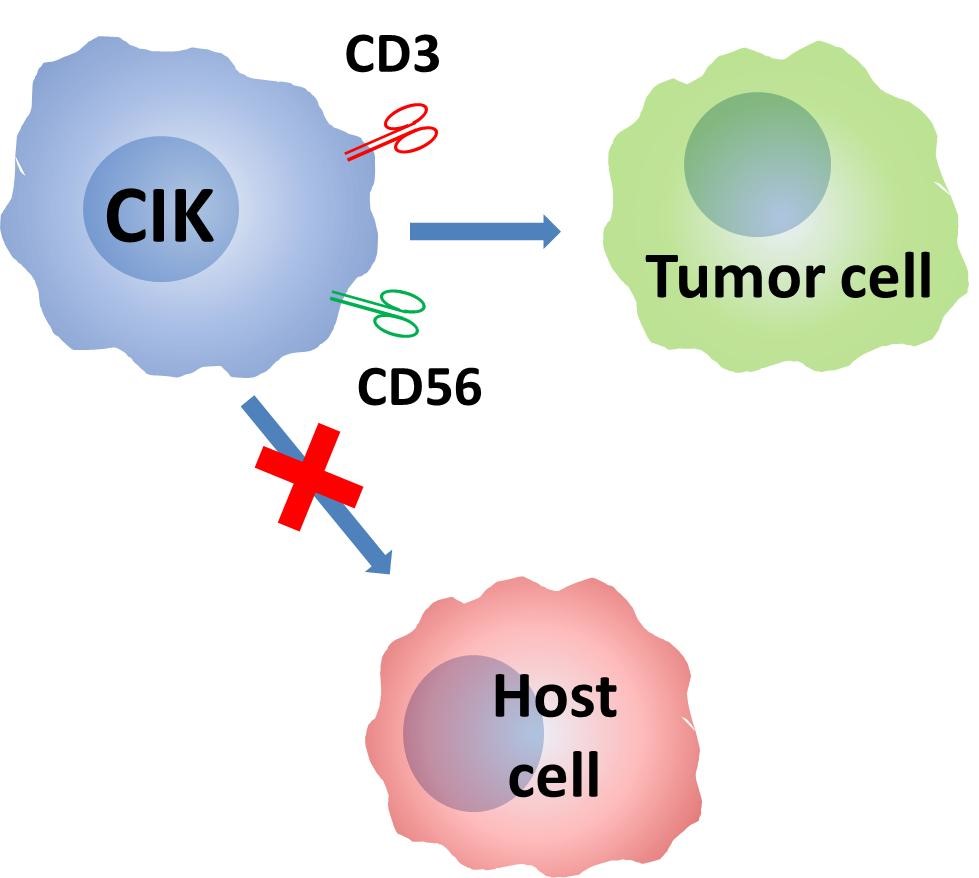 Fig.1 CIK therapy.1
At Creative Biolabs, we provide a comprehensive CIK-tumor cells cytotoxicity analysis service, designed to meticulously evaluate the cytotoxic capabilities of CIK cells against tumor cells. We cultivate CIK cells under optimal conditions to ensure their peak performance in cytotoxicity. Subsequently, these cells are co-cultured with the selected tumor cell lines at various effector/target (E/T) ratios over set cultivation periods. Various assays are then employed to measure the resulting cytotoxic effects. This comprehensive service not only provides detailed insights into the functional capabilities of CIK cells but also aids in customizing therapies tailored to target specific types of tumors. Whether for research or clinical applications, our cytotoxicity analysis service provides you with the data needed to make informed decisions regarding the use of CIK cells in combating cancer.
Our team employs state-of-the-art techniques to quantify the cytotoxic activity of CIK cells.
This assay measures the release of LDH enzyme from damaged cells. This is typically used as an indicator of cell membrane integrity, which is compromised during cytotoxic events.
Flow Cytometry can determine cell viability using dyes that label dead cells or living cells. In addition, the expression of crucial cytotoxic molecules such as NKG2D, NK1.1, perforin, FasL, and granzyme B is monitored using flow cytometry. This analysis helps in understanding the mechanisms through which CIK cells exert their antitumor effects.
This assay is a classic method for assessing cell-mediated cytotoxicity by labeling target cells with radioactive chromium-51. Upon lysis by cytotoxic cells, the 51Cr is released into the supernatant and measured.
Several colorimetric assays like CCK-8, XTT and MTT assays measure cell metabolic activity. Colorimetric assays are convenient because they are relatively simple, cost-effective, and allow high-throughput screening.
At Creative Biolabs, we are committed to accelerating cancer research by delivering superior cytotoxicity analysis services. Our comprehensive service meticulously evaluates the cytotoxic strengths of CIK cells against diverse tumor types. Our experts are dedicated to delivering reliable and reproducible results tailored to your project needs. Contact Creative Biolabs today for more information or to discuss your project requirements.
Reference
For any technical issues or product/service related questions, please leave your information below. Our team will contact you soon.
All products and services are For Research Use Only and CANNOT be used in the treatment or diagnosis of disease.
 NEWSLETTER
The latest newsletter to introduce the latest breaking information, our site updates, field and other scientific news, important events, and insights from industry leaders
LEARN MORE NEWSLETTER NEW SOLUTION
CellRapeutics™ In Vivo Cell Engineering: One-stop in vivo T/B/NK cell and macrophage engineering services covering vectors construction to function verification.
LEARN MORE SOLUTION NOVEL TECHNOLOGY
Silence™ CAR-T Cell: A novel platform to enhance CAR-T cell immunotherapy by combining RNAi technology to suppress genes that may impede CAR functionality.
LEARN MORE NOVEL TECHNOLOGY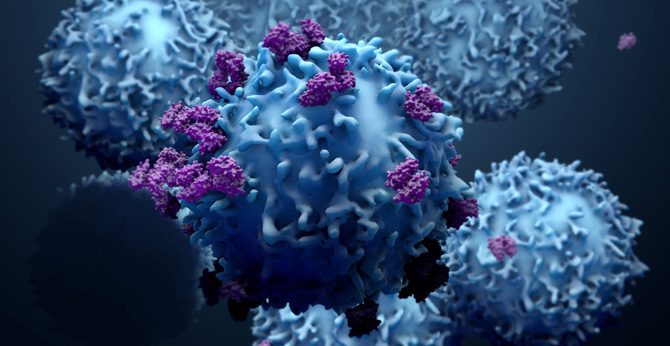 NEW SOLUTION
Canine CAR-T Therapy Development: From early target discovery, CAR design and construction, cell culture, and transfection, to in vitro and in vivo function validation.
LEARN MORE SOLUTION