Creative Biolabs has a tradition of commitment. To achieve efficient execution and regulatory approval, we offer careful considerations of your program for the development of a cellular or gene therapy product – now and in the future.
EXPLORE MORE HighlightsWe focus on unmet needs and develop novel cellular and gene drugs and solutions that offer significant benefits over existing options.
EXPLORE MORE HighlightsThe advent of Chimeric Antigen Receptor T-cell (CAR-T) therapies has revolutionized the field of oncology, providing new avenues for treating various forms of cancer. Our 20 years of experience in the biotechnology sector have equipped us with the expertise and technological capabilities to support the entire lifecycle of CAR-T products, from early development to commercialization.
EXPLORE MORETo accelerate advanced breakthroughs of your projects, we offer broad range of platforms which enable our clients be free to tackle problems with cutting-edge technologies from different angles and in different methods.
EXPLORE MORE HighlightsUse the resources in our library to help you understand your options and make critical decisions for your study. We offer oncolytic virus, CAR-T, and dendritic cell related documents, as well as newsletter. If you don't find the answers you're looking for, contact us for additional assistance.
EXPLORE MORE HighlightsGet a real taste and understanding of the business and culture of one of the world's great research-based cellular and gene therapy discovery and development companies.
EXPLORE MORE
Except for analyzing the cell types, flow cytometry can be applied to immunology to ensure that, before a transplant procedure, interactions between donor and recipient immune components do not cause an adverse immune reaction. Creative Biolabs provides flow cytometric crossmatch (FCXM) test to detect donor-specific antibodies pre- or post-transplant (donor cells as targets) and autoantibodies (recipient cells as targets).
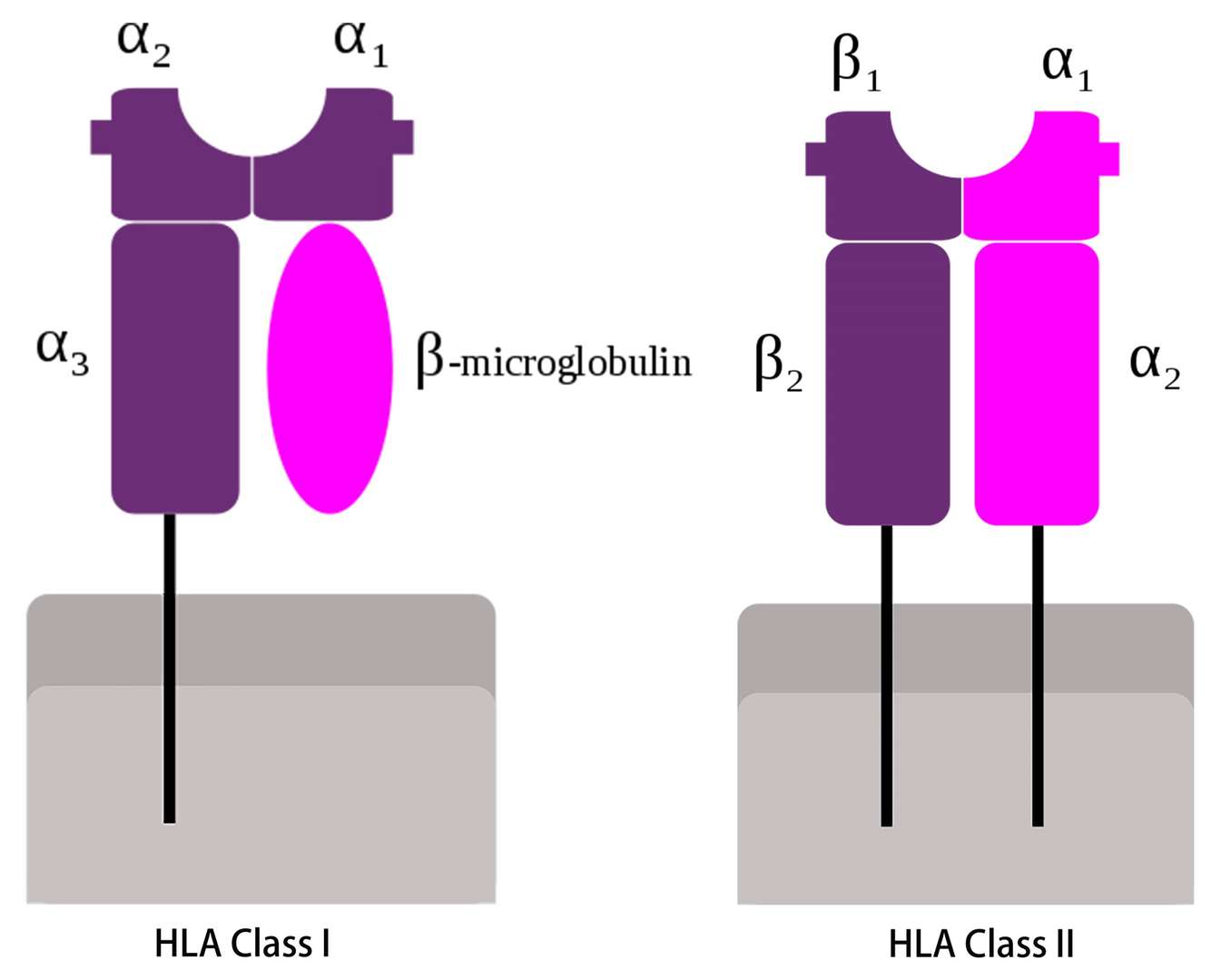 Fig.1 HLA class I (left) and HLA class II (right). Distributed under CC BY 2.5, left from Wiki, right from Wiki, without modification.
The HLA proteins are crucial for the body's immune defense against potentially harmful foreign substances. HLA class I and class II proteins are the ones involved with the immune response and transplantations.
The HLA-peptide complex (composed of HLA proteins and peptides) subsequently interacts with effector T-cells causing intracellular signals in both cells, which determines if a specific immune response occurs.
Three genes contribute to the formation of HLA I proteins, and six genes contribute to the formation of HLA II proteins, which leading the high specificity of HLA proteins.
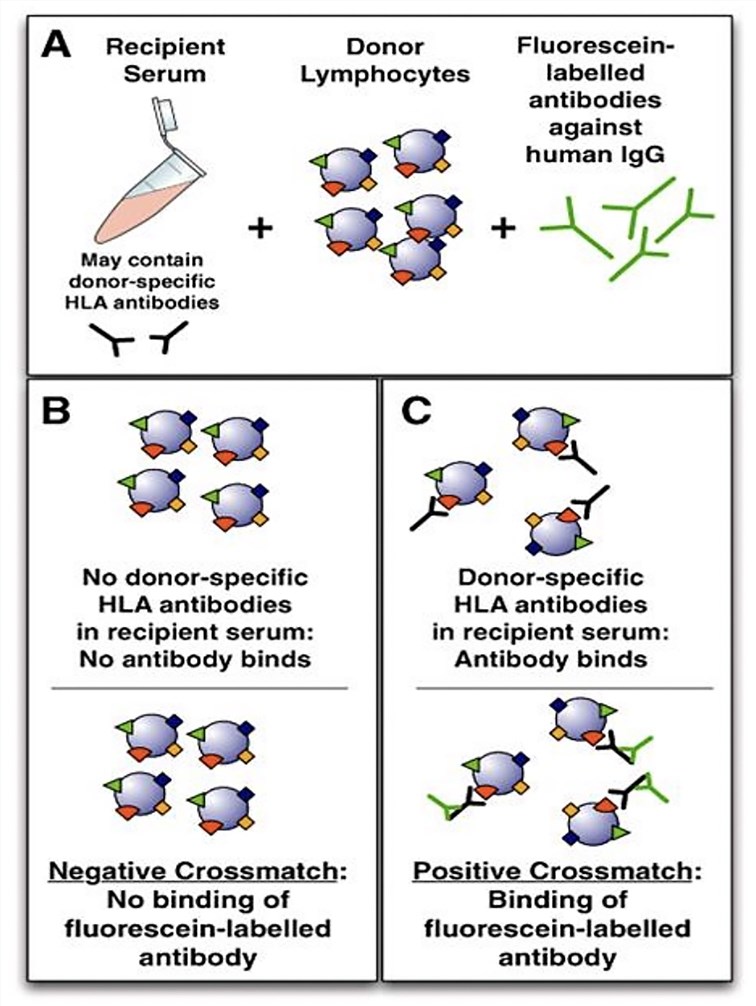 Fig.2 Flow cytometry crossmatch technique.1
Flow cytometry is used to study both the physical and chemical properties of cells and/or particles. During flow cytometry, the sample is suspended in a fluid and injected into the flow cytometer. Usually, only one cell at a time is passed through a laser beam for analysis purposes. The scattering of light gives information on the characteristics of the cells of the sample.
The cells are fluorescently labeled before being passed through the cytometer. The labels contain antibodies that are attached to fluorochromes. Separate labels can be used for different cells within a sample, which allows for a heterogeneous population to be analyzed.
FCXM involves mixing donor lymphocytes, the recipient's immune serum, and fluorescent-labeled antibodies into a sample. The antibodies used are specific to the donor HLA and various T-cell and B-cell specific markers (e.g. CD3, 5, and 8 for T-cells, and CD19, 20, and 21 for B-cells).
Then, the sample runs through a cytometer, so the lymphocytes can interact with the antibodies in the recipient's serum. If there are donor-specific HLA antibodies in the serum, they will bind to the donor lymphocytes, which allows the fluorescently labeled antibodies to bind, giving a positive cross-match in turn.
As a leader in HLA antibody detection, Creative Biolabs offers a full range portfolio of assays for low- to high-resolution detection. We also offer the most cost-effective multiplex assays and a wide range of singleplex kits. If you are interested in our FCXM test, please feel free to contact us directly.
Reference
For any technical issues or product/service related questions, please leave your information below. Our team will contact you soon.
All products and services are For Research Use Only and CANNOT be used in the treatment or diagnosis of disease.
 NEWSLETTER
The latest newsletter to introduce the latest breaking information, our site updates, field and other scientific news, important events, and insights from industry leaders
LEARN MORE NEWSLETTER NEW SOLUTION
CellRapeutics™ In Vivo Cell Engineering: One-stop in vivo T/B/NK cell and macrophage engineering services covering vectors construction to function verification.
LEARN MORE SOLUTION NOVEL TECHNOLOGY
Silence™ CAR-T Cell: A novel platform to enhance CAR-T cell immunotherapy by combining RNAi technology to suppress genes that may impede CAR functionality.
LEARN MORE NOVEL TECHNOLOGY NEW SOLUTION
Canine CAR-T Therapy Development: From early target discovery, CAR design and construction, cell culture, and transfection, to in vitro and in vivo function validation.
LEARN MORE SOLUTION