Creative Biolabs has a tradition of commitment. To achieve efficient execution and regulatory approval, we offer careful considerations of your program for the development of a cellular or gene therapy product – now and in the future.
EXPLORE MORE HighlightsWe focus on unmet needs and develop novel cellular and gene drugs and solutions that offer significant benefits over existing options.
EXPLORE MORE HighlightsThe advent of Chimeric Antigen Receptor T-cell (CAR-T) therapies has revolutionized the field of oncology, providing new avenues for treating various forms of cancer. Our 20 years of experience in the biotechnology sector have equipped us with the expertise and technological capabilities to support the entire lifecycle of CAR-T products, from early development to commercialization.
EXPLORE MORETo accelerate advanced breakthroughs of your projects, we offer broad range of platforms which enable our clients be free to tackle problems with cutting-edge technologies from different angles and in different methods.
EXPLORE MORE HighlightsUse the resources in our library to help you understand your options and make critical decisions for your study. We offer oncolytic virus, CAR-T, and dendritic cell related documents, as well as newsletter. If you don't find the answers you're looking for, contact us for additional assistance.
EXPLORE MORE HighlightsGet a real taste and understanding of the business and culture of one of the world's great research-based cellular and gene therapy discovery and development companies.
EXPLORE MORE
T cell receptors (TCRs) play a role in cellular immunity by identifying short peptide antigens that are attached to major histocompatibility complex (MHC) proteins. Creative Biolabs' framework engineering service leverages advanced technology and rich experience to increase the specificity of TCR to meet the special needs of our customers.
The loop motion refers to the dynamic movements and conformational changes that occur in the complementarity-determining region (CDR) loops of the TCR structure. When TCR binds to peptide-MHC complexes, the CDR loops undergo structural adjustments and movements to accommodate the specific antigenic peptide. These changes are important for the TCR to form stable interactions with the peptide-MHC complexes and initiate downstream signaling cascades in T cells.
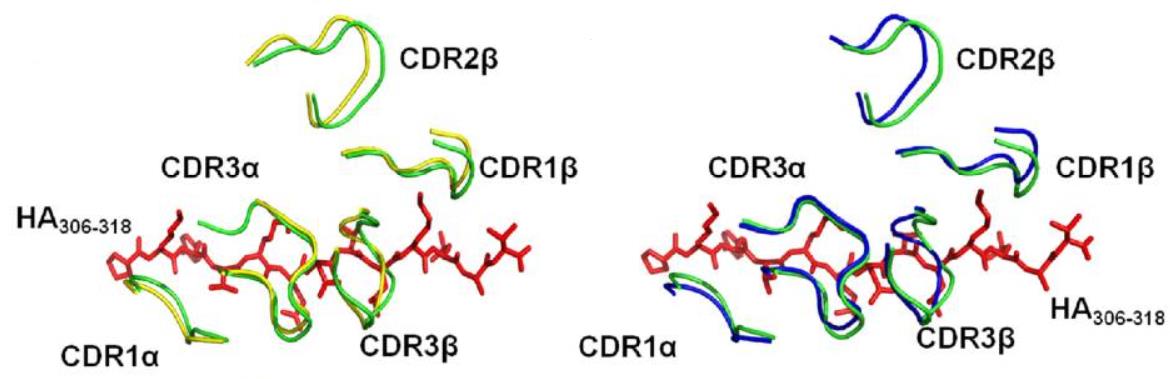 Fig. 1 The same TCR binds to different pMHC ligands at different positions of the CDR loop.1
The dynamic nature of loop motion enables the TCR to sample different conformations and optimize its binding affinity and specificity for various antigens. Understanding the TCR loop motion is essential for elucidating the mechanisms of antigen recognition, T cell activation, and immune responses.
The role of TCR specificity is important in the immune response. TCR specificity involves antigen recognition, initiation of immune response, and avoidance of autoimmunity. Also, it enables T cells to continuously adapt and recognize new antigens, promoting adaptive immune responses against infections, tumors, and other diseases.
Framework engineering can enhance TCR specificity by controlling the loop motions through mutations in the framework regions. By reducing loop flexibility, the framework mutation improves the specificity of TCRs by restricting their ability to adjust to various ligands and peptides.
The specificity of 868 TCR for HIV SL9 presented by HLA-A2 was studied in a study. A G to P (glycine to proline) mutation has been identified above the CDR3β loop through deep mutational scanning. While the mutation had no significant effect on binding affinity and functional avidity for the SL9 epitope, it weakened recognition of SL9 escape variants, indicating a more focused response.
The framework region of the TCR can be exploited to improve TCR specificity and reduce the risk of off-target recognition when used with TCR-based therapies. Creative Biolabs is committed to developing TCR framework engineering to optimize your TCR products. We would be glad to provide you with further details upon request, please don't hesitate to contact us.
References
For any technical issues or product/service related questions, please leave your information below. Our team will contact you soon.
All products and services are For Research Use Only and CANNOT be used in the treatment or diagnosis of disease.
 NEWSLETTER
The latest newsletter to introduce the latest breaking information, our site updates, field and other scientific news, important events, and insights from industry leaders
LEARN MORE NEWSLETTER NEW SOLUTION
CellRapeutics™ In Vivo Cell Engineering: One-stop in vivo T/B/NK cell and macrophage engineering services covering vectors construction to function verification.
LEARN MORE SOLUTION NOVEL TECHNOLOGY
Silence™ CAR-T Cell: A novel platform to enhance CAR-T cell immunotherapy by combining RNAi technology to suppress genes that may impede CAR functionality.
LEARN MORE NOVEL TECHNOLOGY NEW SOLUTION
Canine CAR-T Therapy Development: From early target discovery, CAR design and construction, cell culture, and transfection, to in vitro and in vivo function validation.
LEARN MORE SOLUTION